
Samsung Patents an On-Device AI That Builds Its Own Team to Handle Your Requests
Instead of one AI trying to do everything, Samsung's new patent describes a system where your device automatically assembles a team of specialized AI agents — and reassembles it on the fly if the first lineup isn't working.
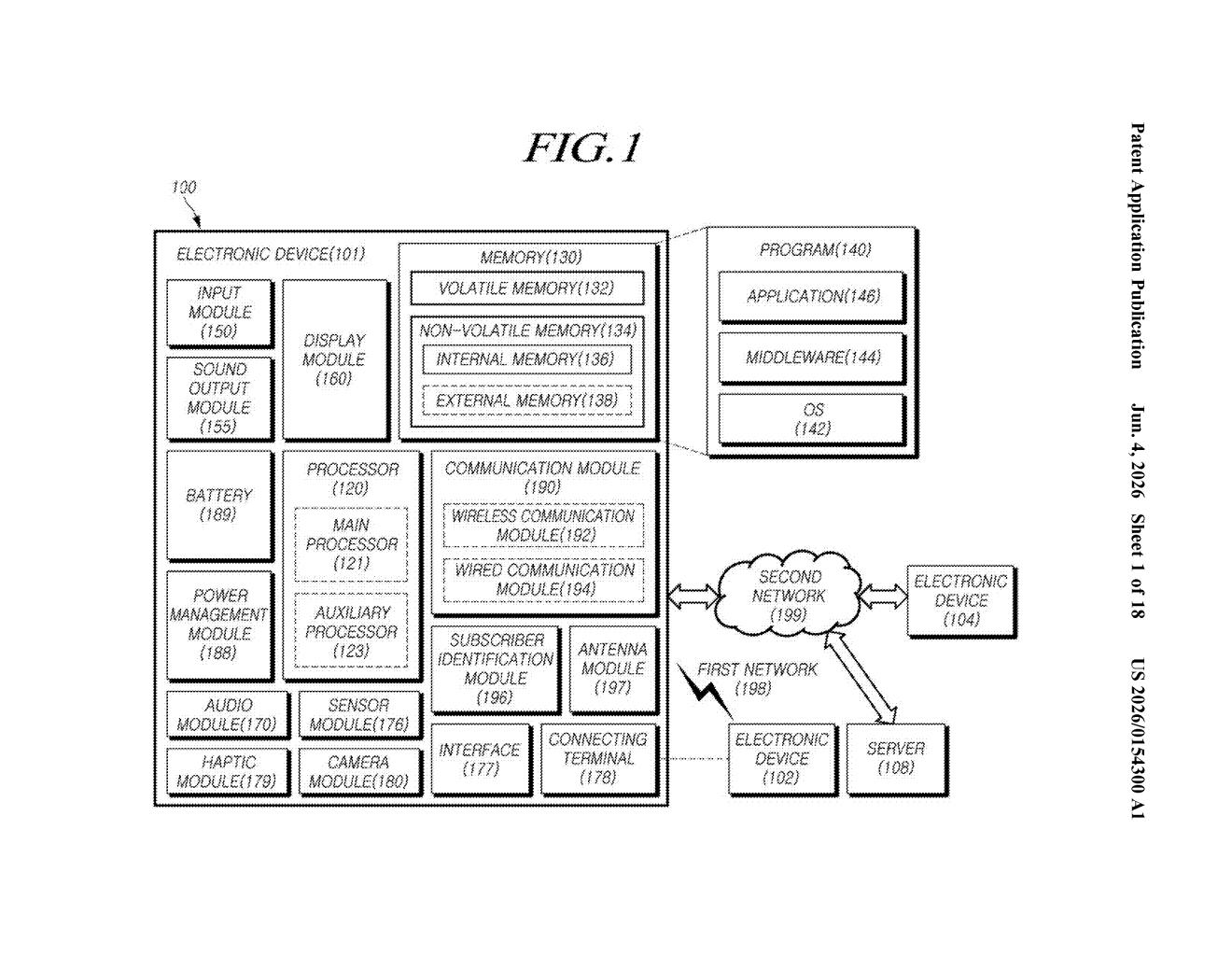
What Samsung's multi-agent AI actually does on your device
Imagine asking your phone to "book me a dinner and add it to my calendar with directions." That's actually three different jobs — finding a restaurant, making a reservation, and updating your schedule. Today, most AI assistants try to handle all of that themselves, which works until it doesn't.
Samsung's patent describes a different approach: a lead AI agent that acts like a project manager. When you ask it something, it breaks your request into smaller subtasks, then consults a kind of internal directory to find out which specialized agents on your device are best suited for each piece. It assembles a temporary team, delegates the work through plain-language conversation between the agents, and checks whether the team is actually delivering before deciding if it needs to swap anyone out.
The whole thing is designed to run on the device itself — not in the cloud — which means your requests stay private and the system can work even without a strong internet connection. Think of it less like a single AI and more like a self-organizing crew that forms around whatever you need done.
How the orchestrator agent picks and delegates subtasks
The patent describes a multi-layered agent architecture stored in the device's own memory. Here's how the layers break down:
- First agent (orchestrator): Receives your query, identifies the underlying task, and decomposes it into one or more subtasks.
- Second agent (registry/metadata manager): Holds a directory of all available agents and their capabilities. The orchestrator queries this agent to find out which specialists are available for each subtask.
- Worker agents: The specialists selected based on metadata — each one handles a specific subtask delegated to it via natural language conversation between agents.
Once the team is assembled, agents communicate with each other using natural language (rather than rigid API calls), which gives the system flexibility to handle ambiguous or evolving instructions. After the agents report back, the orchestrator evaluates the results and decides whether to reconfigure the multi-agent team — swapping in different agents or adjusting assignments if something didn't go as planned.
The key engineering choice here is that all of this — the agents, their programs, and the metadata registry — lives in the device's local memory. This is distinct from cloud-based multi-agent frameworks (like many LLM orchestration systems) and positions the system for low-latency, offline-capable operation. The reconfiguration loop is essentially a lightweight feedback mechanism that lets the system self-correct without re-involving the user.
What this means for Galaxy AI and on-device assistants
For Samsung Galaxy devices, this kind of architecture could meaningfully raise the ceiling on what on-device AI can handle — moving beyond single-turn Q&A toward genuinely complex, multi-step tasks that today require multiple app switches or cloud roundtrips. If the agent registry is extensible, third-party apps could eventually register their own agents, turning your phone into a programmable task-automation platform rather than just a smarter search box.
The reconfiguration mechanism is worth watching closely. Most current AI assistant failures are silent — the assistant gives you a wrong or incomplete answer and you don't know why. A system that actively monitors its own team's output and reshuffles agents based on results is a step toward AI that fails more gracefully and recovers on its own.
This is a credible, well-structured patent for something Samsung clearly needs: a path from Galaxy AI's current chatbot-style interactions to a genuinely agentic assistant that can handle multi-step real-world tasks. The on-device emphasis is the most strategically interesting detail — it's a direct counter to cloud-dependent approaches and aligns with Samsung's privacy positioning. The natural-language agent-to-agent communication is clever but also the part most likely to be messy in practice.
There are more where this came from
We read every patent application Big Tech publishes and send you the ones worth knowing. Plain English, free, every week.
Want this weekly breakdown for a company we don't cover? Patentlyze Pro →