
Sony's New Patent Catches Tampered Camera Footage Before Software Can Be Fooled
Faked or altered sensor footage is a real risk in cameras used for security, self-driving cars, and surveillance. Sony has patented a system that catches tampering at the hardware level, before any software ever sees the image.
What Sony's sensor tamper-check actually does
Every time a security camera or a car's sensor captures a frame, that raw data travels from the sensor chip to a processor chip. In that gap, someone with the right tools could, in theory, intercept and swap out the real data for fake data.
Sony's patent describes a way to make that kind of swap detectable. The sensor chip picks a few random bits of image data, encrypts them using a secret pattern, and sends that encrypted fingerprint along with the full image. The receiving chip then independently encrypts those same bits using the same secret pattern. If the two fingerprints don't match, something has been changed.
The clever part is that the random selection follows a shared but unpredictable pattern, so an attacker can't easily guess which bits are being checked. It's a lightweight way to give sensor data a seal of authenticity without slowing down the whole pipeline.
… generates the first encryption information by encrypting a part of data randomly selected from the sensing data according to a random number generation procedure shared with the first processing unit or adding authentication information to the part of data …
Translation: The hardware creates a secure code using random snippets of data shared between processors.
How the random encryption spot-check is performed
The system splits responsibility between two chips: a second processing unit (the sensor side, where raw image data originates) and a first processing unit (the application side, which acts on that data).
Here's how the verification flow works:
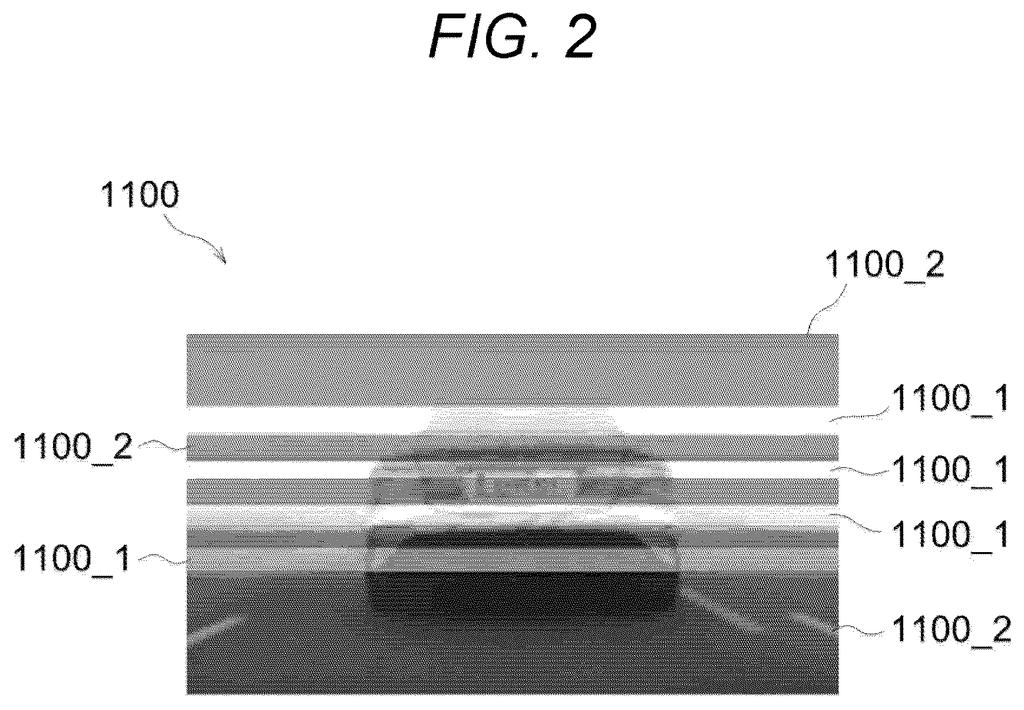
- The sensor chip selects a small, random slice of the image data. The selection follows a shared random number generation procedure (a synchronized algorithm both chips know, so they always pick the same slice without transmitting which slice it is).
- That slice is encrypted or tagged with authentication information, producing what the patent calls first encryption information.
- Both the full sensing data and the encrypted fingerprint are sent to the processor chip.
- The processor chip independently runs the same selection-and-encryption routine on the data it received, producing second encryption information.
- A verification unit compares the two. A mismatch means the data was altered in transit.
Because only a random subset of data is encrypted each time, the computational cost stays low. The randomness is what makes it hard to fool: an attacker would have to correctly guess which pixels are being spot-checked and forge only those, which is impractical without knowing the shared procedure.
… verifies whether or not the first encryption information matches the second encryption information …
Translation: The system checks if the two security codes match to prove the video hasn't been altered.
What this means for cameras in cars and security systems
Sensor data integrity is one of the more pressing problems in autonomous vehicles, surveillance infrastructure, and industrial automation. If a bad actor can replace a camera feed with fabricated footage and the system can't tell, the consequences range from a security breach to a vehicle making a fatal decision based on fake data. Sony's push into sensor security reflects how much of that infrastructure depends on Sony's image sensor chips, which power cameras across many of those categories.
For everyday users, this probably won't show up as a visible feature. But if this technology reaches production sensors, it would mean that your dashcam, doorbell camera, or a car's collision-avoidance sensor has a built-in way to prove its footage hasn't been doctored, which matters a lot when that footage ends up as evidence.
Sony's 21st filing we've tracked since July in our self-driving sensing race follows one on remote human takeover and one on self-detecting lenses.
Faking a camera feed to fool a self-driving car or an automated security gate is not a theoretical threat. It is the sort of attack that causes crashes or lets the wrong person through a door, and it gets more dangerous as more physical systems hand decision-making over to what a sensor reports.
Sony's answer is to bake the verification directly into the sensor chip, which matters because software-layer checks can themselves be tampered with. The approach also skips encrypting every pixel, instead spot-checking random slices of the footage using a shared secret, which keeps the processing load manageable without making tampering easy to hide.
The protection is only as strong as that shared secret stays secret, a standard trade-off in any cryptographic system. For the threat it targets, though, the scale of the solution fits the scale of the danger.
Get our take in your Top Stories
Liked this breakdown? Add Patentlyze as a preferred source on Google, and our plain-English take shows up more often in your Top Stories the next time Sony patent news breaks.
There are more where this came from
We read every patent application Big Tech publishes and send you the ones worth knowing. Plain English, free, every week.
The drawings
10 drawing sheets from US 2026/0260020 A1 · click any drawing to enlarge


Show the other 2 sheets


Want this weekly breakdown for a company we don't cover? Patentlyze Pro →
Be the first to weigh in