
Samsung Display Patents a Dual-Zone Active Layer for Brighter, More Efficient LEDs
Samsung Display is rethinking what happens inside the light-emitting heart of an LED. By splitting the active layer into two chemically distinct zones, the company is trying to squeeze more light out of the same tiny chip.
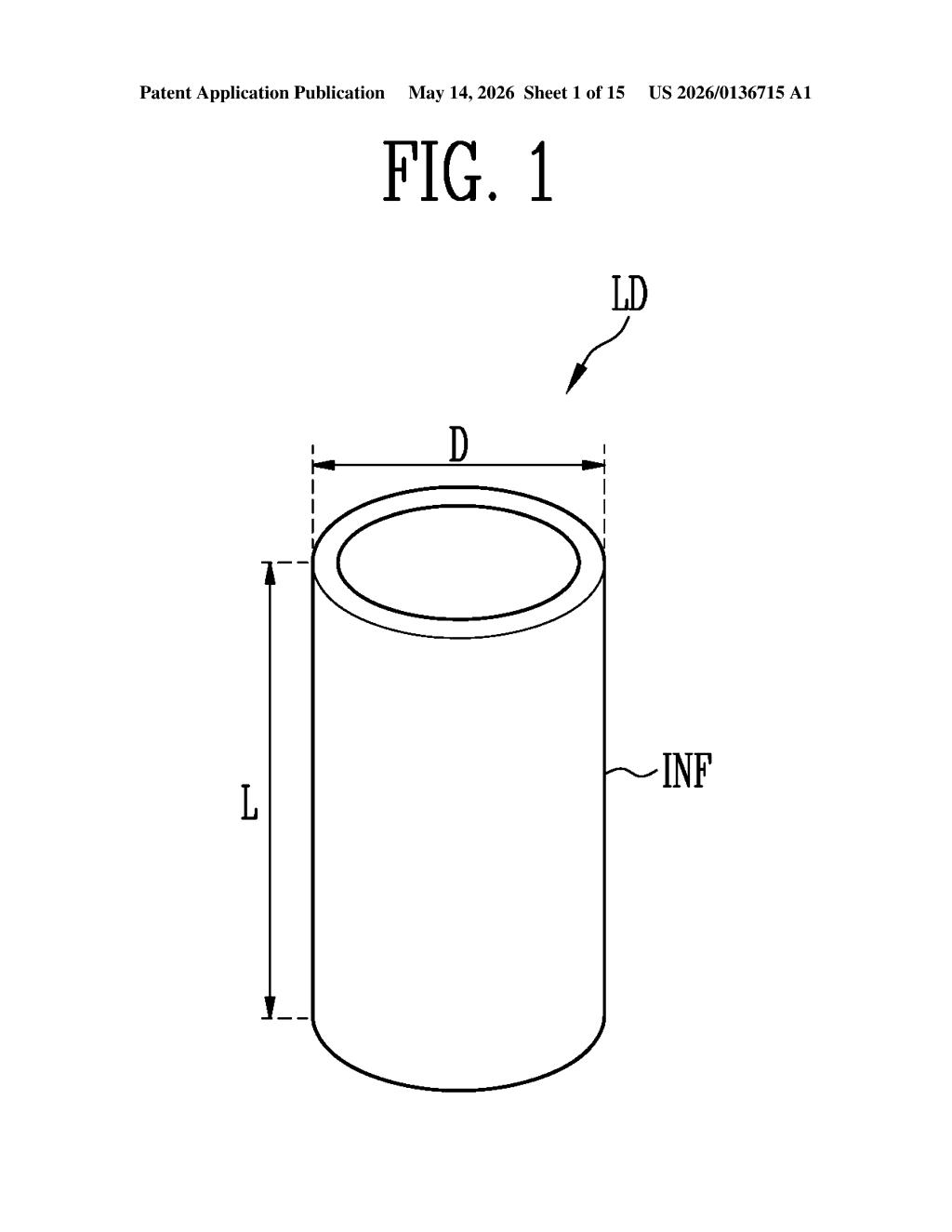
What Samsung's two-zone LED structure actually does
Imagine a tiny LED as a sandwich. The middle layer — called the active layer — is where electricity turns into light. Normally that middle layer is pretty uniform. Samsung's patent describes splitting it into two separate zones, each tuned to emit light slightly differently.
The key trick is that the two zones have different band gaps — essentially, different energy levels that determine what color and how efficiently light is produced. The zone with the narrower band gap (meaning it takes less energy to emit a photon) is positioned closer to one side of the sandwich, at a very specific distance from the outer layers.
By carefully controlling where each zone sits and how much of the band-gap-determining chemical each zone contains, Samsung is aiming for LEDs that are more efficient and potentially more color-accurate — exactly the kind of incremental improvement that quietly makes next-generation displays look noticeably better.
How the band-gap zones are positioned inside the LED
The patent describes an LED structure built on a substrate with three core layers: an N-type semiconductor on one side, a P-type semiconductor on the other, and an active layer sandwiched between them. The active layer is where electron-hole recombination happens and light is emitted.
The innovation is dividing that active layer into a first active area and a second active area, each containing a different well layer with a different band gap (the energy threshold that determines how photons are generated — a narrower band gap means lower-energy, longer-wavelength light and typically higher recombination efficiency at lower voltages). The second active area has the smaller band gap and sits closer to the P-type layer.
Positioning is tightly specified in the claim:
- The second active area must be at least 10% of the total semiconductor distance away from the P-type layer
- Its distance from the N-type layer is 0.2–0.35× the active layer height
- Its distance from the P-type layer is 0.2–0.25× the active layer height
The first active area is further subdivided into a (1-1)th area directly adjacent to the N-type layer and a (1-2)th area directly adjacent to the P-type layer — effectively wrapping around the second active area. This geometry controls where carriers (electrons and holes) recombine, steering them toward the higher-efficiency zone.
What this means for next-gen Samsung display panels
For display makers, LED efficiency is a constant arms race. Brighter panels with lower power draw — think thinner phones with longer battery life, or AR glasses that don't overheat — depend on squeezing every photon out of each LED chip. Micro-LED displays, which Samsung is actively developing as a successor to OLED, are especially sensitive to active-layer design because each pixel is its own tiny LED.
This patent suggests Samsung is doing serious materials engineering work at the atomic level to optimize how charge carriers move and recombine. The very specific distance ratios in the claim (0.2–0.35×, 0.2–0.25×) indicate this isn't a broad conceptual filing — it's rooted in empirical testing, which is usually a sign the company has working prototypes.
This is a focused, technically dense patent that reflects genuine semiconductor engineering rather than speculative IP land-grabbing. The tight numerical constraints on layer positioning suggest lab-validated results. It won't make headlines on its own, but it's exactly the kind of foundational work that separates competitive micro-LED products from also-rans.
There are more where this came from
We read every patent application Big Tech publishes and send you the ones worth knowing. Plain English, free, every week.
Want this weekly breakdown for a company we don't cover? Patentlyze Pro →