
Samsung Patents an AI System That Fills In Video Edges Instead of Cropping Them
Every phone camera crops your video to hide the wobble — Samsung's new patent wants to stop throwing away those pixels by having AI paint them back in, in real time.
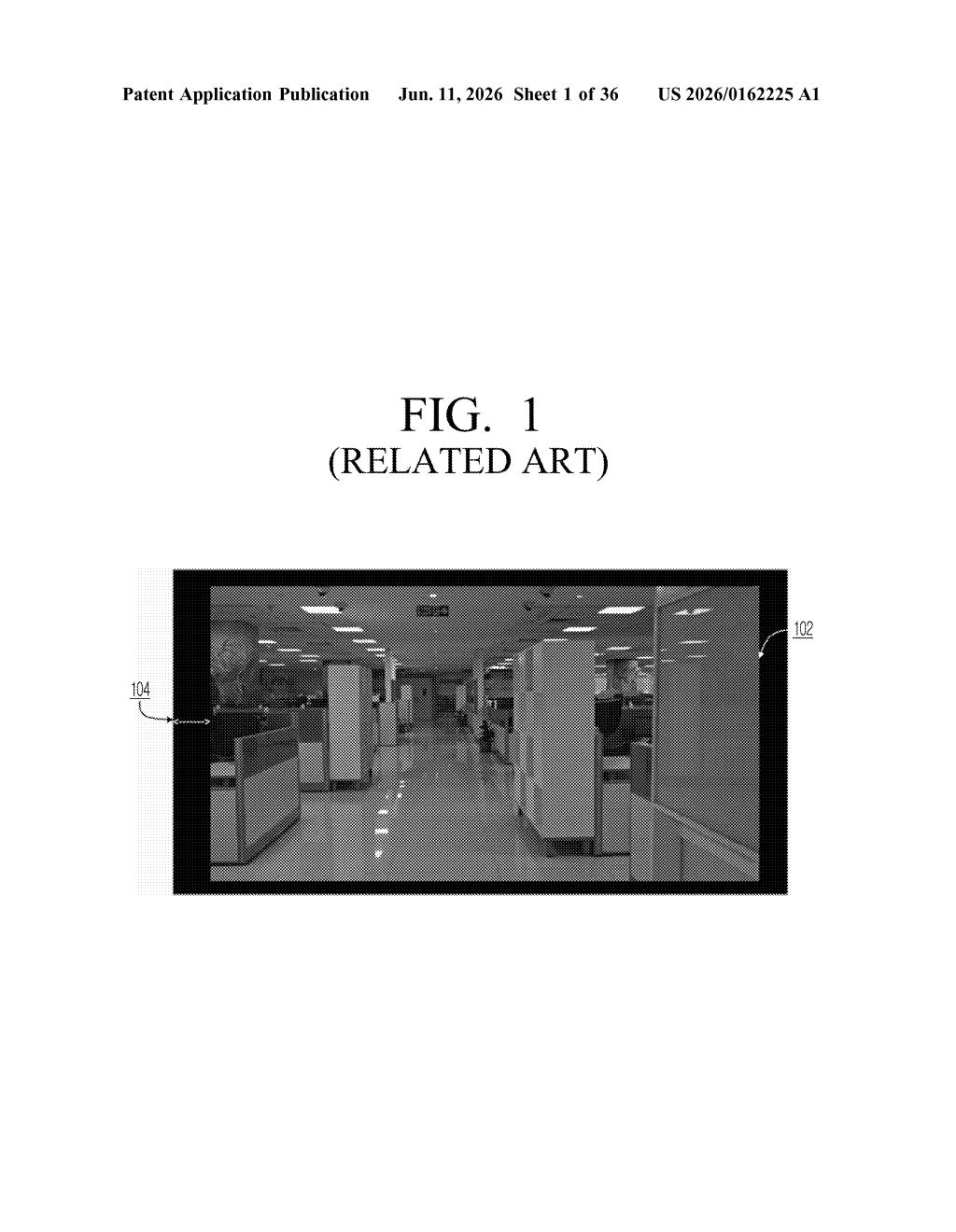
What Samsung's full-frame video stabilization actually does
Imagine you're recording a video while walking. Your phone's stabilization software smooths out the shaking, but to do that it silently crops the edges of every frame — you lose maybe 10–15% of your picture, every single shot. That's the unavoidable trade-off every phone camera makes today.
Samsung's patent describes a system that refuses that trade-off. Instead of cropping away the wobbly edges, it uses AI to reconstruct what should be there — filling in background details and repositioning any people or objects that got cut off, so the full frame looks natural and complete.
The system uses two cameras at once to get a richer picture of the scene, separates people and objects from the background, rebuilds the background first, then places the subjects back in — all guided by an AI model that tracks how objects are moving and relates to each other. The goal: stabilized video that keeps every pixel rather than sacrificing the frame edges to hide the shake.
How Samsung rebuilds cropped-out edges frame by frame
The patent describes a pipeline that runs across two camera sensors simultaneously — think a wide lens and a telephoto, or a wide and an ultrawide — to gather richer depth and motion data than a single camera can provide.
From there, the system works in distinct stages:
- Crop margin calculation: The system figures out the smallest stable "window" across all frames — the region every frame shares, accounting for camera shake.
- Foreground segmentation: People, animals, and other moving subjects are identified and lifted out of each frame, along with their shadows, leaving a clean background plate.
- Background inpainting: The missing edge areas of each background frame are filled in using context from surrounding frames — essentially reconstructing what the camera would have seen if it hadn't moved.
- Object relationship graph: An object relationship context graph (a data structure that tracks how subjects relate to each other and how they're moving over time) generates flow field prompts — motion maps that tell the AI exactly where each subject should appear in the reconstructed frame.
- Guided diffusion model: A generative AI model (similar in principle to image-synthesis tools, but tightly constrained by those motion maps) places subjects back into each rebuilt background frame in the correct position and orientation.
The result is a full-resolution stabilized frame with no cropped edges and no visible seams.
What this means for Galaxy camera video quality
The crop penalty is one of the most quietly frustrating limitations of modern smartphone video. Shooting stabilized 4K already means your sensor is working harder than the output resolution, and then software crops it further. Samsung's approach — if it ships — would let you keep the full field of view you composed, which matters especially for action shots, wide-angle scenes, and any moment where the edges of the frame are part of the story.
For Samsung, this also represents a meaningful AI-camera differentiator. The patent leans on generative AI not as a gimmick but as a core part of the image pipeline, which signals where Galaxy camera software may be heading — toward real-time scene reconstruction rather than just frame selection and color processing.
This is a genuinely interesting patent because it attacks a real, annoying limitation that every phone user experiences but almost nobody thinks to question. The technical approach — segmenting subjects, rebuilding backgrounds, then reinserting objects guided by a motion graph — is ambitious and would require serious on-device compute to run at video frame rates. Whether Samsung can pull that off in real time on a phone chip is the key question, but the problem it's solving is real and the approach is more principled than simple inpainting.
There are more where this came from
We read every patent application Big Tech publishes and send you the ones worth knowing. Plain English, free, every week.
Want this weekly breakdown for a company we don't cover? Patentlyze Pro →