
Google Patent Targets Media Subscription Filtering to Reduce Device Update Overload
Every time you cast a video or stream audio to a connected device, there's a lot of behind-the-scenes chatter happening between machines. Google's latest patent describes a way to cut most of that chatter out, letting devices ask for only the updates they care about.
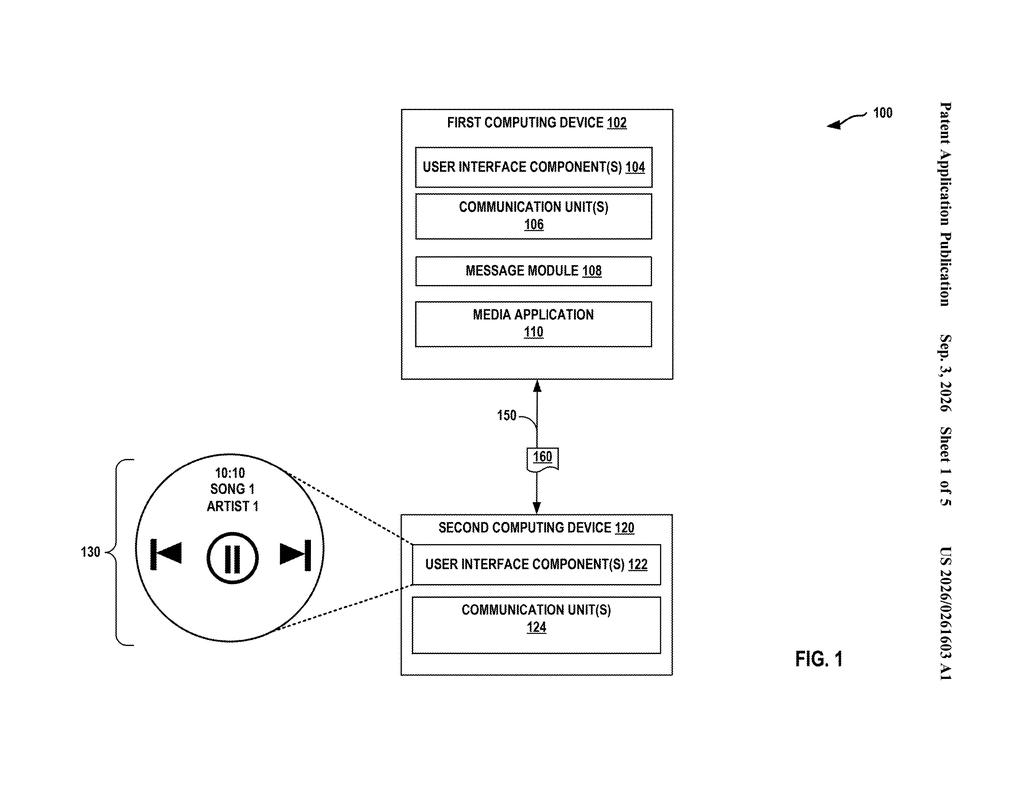
What Google's selective media messaging actually does
Imagine two smart devices talking to each other while streaming media: one is the source, the other is the receiver. Right now, the source might flood the receiver with every kind of status update it generates, even ones the receiver has no use for. That wastes data and processing power on both ends.
Google's patent describes a kind of subscription system between devices. Instead of shouting every update into the room, the receiving device tells the sending device exactly which types of messages it wants. The sender then filters its output and delivers only that relevant slice.
Think of it like switching from a newspaper subscription where you get every section to one where you only receive the sports pages. Less noise, faster delivery, lighter workload for both the device sending and the one receiving.
receiving, by a first computing device, an indication of a subscription request to at least one data field of a plurality of data fields of a bridging protocol …
Translation: One device gets a request from another to follow specific types of data channels.
How the bridging protocol filters and routes subscribed messages
The patent centers on what Google calls a media bridging protocol, a communication layer that sits between two computing devices and coordinates media-related data (things like playback state, volume levels, track info, buffering status, and so on).
Here is how the system works step by step:
- The receiving device sends a subscription request to the sending device, specifying exactly which data fields (categories of information) it wants to hear about.
- The sending device continues generating the full set of messages it normally would for all data fields.
- Before passing anything along, it filters that full set down to only the messages matching the subscribed fields.
- It then delivers just that subset of messages to the requesting device over the bridging protocol.
The key design choice here is that the sender still does its full internal work but acts as a gatekeeper before transmission. The receiving device does not have to process and discard irrelevant messages on its own end.
This approach is described in terms of a general computing model, but the abstract calls out media specifically, suggesting this is built for scenarios involving playback, casting, or device-to-device media handoff.
… determine a subset of the generated messages that are associated with the subscribed data fields to be provided to the second computing device.
Translation: The system filters out unwanted updates so the receiving device only gets relevant messages.
What this means for multi-device media streaming setups
For everyday users, this kind of efficiency work shows up as faster, more reliable media handoffs between devices, whether that is casting to a TV, handing audio from a phone to a speaker, or coordinating playback across a household. Less unnecessary data moving around means less lag and fewer dropped updates.
Google's ongoing work in media protocols tends to ripple out into products like Chromecast, Android TV, and Google Home. A filtering layer like this one could reduce the bandwidth tax on home networks when multiple devices are all trying to stay in sync, which becomes a real problem as households run more and more connected screens and speakers simultaneously.
Google's 635th filing in our Google coverage since May adds to a camera thread that includes a fix for low-hardware photo detail and one-shot focus for backlit scenes.
The filter works at the wire, not at the source. The sending device still does all the work of assembling a full set of updates internally, then discards the parts the receiver did not request before transmitting. That keeps the connection clean but does nothing for a small, underpowered device struggling to keep up.
The sharper risk is timing. If the receiving device asks for too little upfront because it cannot predict what it will need, it misses updates and has to request more mid-session, which is exactly the delay the whole system is designed to prevent.
For situations where one device plays and another controls, and both sides know their roles from the start, this design earns its tradeoff. The efficiency gain at the transmission level is real, and in stable playback scenarios that is usually where the problem lives.
There are more where this came from
We read every patent application Big Tech publishes and send you the ones worth knowing. Plain English, free, every week.
The drawings
5 drawing sheets from US 2026/0261603 A1 · click any drawing to enlarge


Want this weekly breakdown for a company we don't cover? Patentlyze Pro →