
Google
Google · AI / ML · Filed May 15, 2025 · USPTO published Oct 15, 2026 · Oct 15 release
Google Files Patent for an AI That Writes Differently to Your Boss Than to Your Friends
Ask an AI to answer your boss and your best friend, and today you often get the same stiff, generic voice for both. Google's new patent application tries to fix that by studying how you actually write to different people.
- Publication number
- US 2026/0320304 A1(US20260320304A1)
- Applicant
- GOOGLE LLC
- Filed · Published
- May 15, 2025 · Oct 15, 2026
- Inventors
- Antonio Gaetani, Patrick Andreas Zoechbauer, Carsten Isert, Mugurel-Ionut Andreica, Martin Baeuml, Kyle Gerard
- Status when we published
- Examiner raised objections; the company can respond
- Document
- 20 claims
- US classification
- 704/9
- Examiner
- MASTERS, KRISTEN MICHELLE (Art Unit 2659)
- Parent application
- Claims priority from a provisional application 63788539 (filed Apr 14, 2025)
What Google's recipient-aware AI writer does
You're replying to your boss's request for a project update, and the AI draft opens with a goofy greeting and three emojis. Wrong audience, wrong voice. Google's new patent application is aimed at stopping that.
The idea is that the AI first works out who the message is for, such as a supervisor or a close friend. Then it looks at how you have written to similar people before, in emails, documents, or even social media posts, and picks up your habits: short or chatty, jokes or none, contractions or none.
The draft then comes out in that style, so your note to your boss stays formal and concise while the concert invite to your friend gets the emojis. You stay in charge, too. The filing says the draft can be shown to you for approval or edits before it goes out.
identifying, based on an input received from a user, one or more context characteristics that are related to one or more intended recipients of digital content that is to be generated in response to the input, wherein the one or more intended recipients are different than the user …
Translation: The system figures out who you are writing to based on what you type.
How Google picks your past emails as a style guide
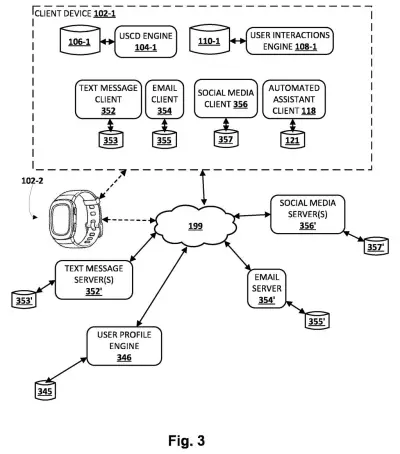
The claimed method starts with your request, such as "reply to Bob's email." From that, the system pulls out context characteristics, which are facts about the person receiving the message. Examples include your relationship (professional or personal), the language they speak, and the delivery method (email versus text). The recipient has to be someone other than you.
Next, it finds user-specific conditioning data, or USCD. Think of it as a profile built from your earlier digital activity that matches those context characteristics. The sources can include sent emails, documents you wrote, search queries, and social media posts. The USCD can be built ahead of time, or on demand using retrieval augmented generation (RAG), which means fetching relevant examples of your past writing and handing them to the AI along with your request.
From that data the system identifies tonal characteristics, such as:
- Vocabulary you tend to use
- How concise you are
- Whether you use contractions
- Whether you use humor
- Whether you use emojis
A generative model (AI that writes text) then produces the message in that tone, and the message is sent to the recipient. The filing also describes borrowing style from similar contacts when you have no history with someone, falling back to a formal, neutral tone when the system is unsure who the recipient is, and learning from your edits to its drafts.
… identifying tonal characteristics within this USCD. A generative model then creates digital content incorporating these tonal characteristics, which is transmitted to the intended recipients, thereby personalizing the communication.
Translation: The AI copies your past writing style for that specific person and generates a tailored message.
Why your boss and friends may get different drafts
If this ever shows up in an email app or AI writing assistant, the practical payoff is fewer rewrites. Most people who try AI drafting end up editing the voice more than the content. A tool that already knows you are curt with coworkers and chatty with family could save that step, and the filing points to uses beyond email, such as documents and even custom maps for wedding guests.
There is a privacy catch. The system works by reading your past messages and posts, so the filing leans heavily on opt-in permission, encryption, and letting you control what gets used. Procedurally, the examiner's first review rejected the claims as filed, which is routine at this stage and usually followed by amendments.
Google's 39th filing we've tracked since May on our AI assistants that remember you watchlist adds to a picture that includes the fixed-size memory application and the answer-style preferences one.
Source: US 2026/0320304 A1 at the USPTO (PDF). Full patent text and figures are in the official publication.
Get our take in your Top Stories
Liked this breakdown? Add Patentlyze as a preferred source on Google, and our plain-English take shows up more often in your Top Stories the next time Google patent news breaks.
Add Patentlyze on Google
One click.
There are more where this came from
We read every patent application Big Tech publishes and send you the ones worth knowing. Plain English, free, every week.
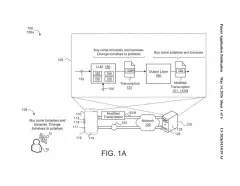
The drawings · 5 sheets
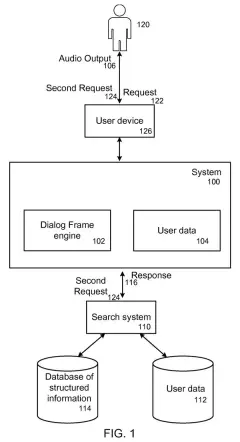
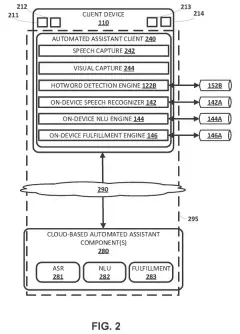
5 drawing sheets from US 2026/0320304 A1 · click any drawing to enlarge


More from Google
All 1,079 Google patents →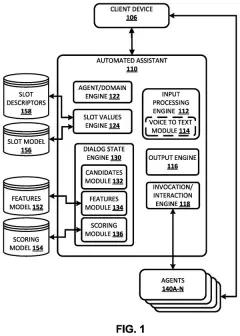
More in AI / ML
All 2,637 AI / ML patents →
Samsung
Samsung Patents a Voice Assistant That Plans Its Own Path Through Any App
Samsung
Samsung Patents a Voice Recognition System That Double-Checks Its Own Transcriptions
Samsung
Samsung Patent Covers AI Call Summarizer That Weighs Words by Speaker Relationship
Samsung
No comments yet