
Google Files Patent to Delay Assistant Updates Until You Finish Editing Settings
Every time you change a setting or refine a search, your other devices may get pinged with the news. Google's filing describes a way to wait until you're done, so they only hear the final version.
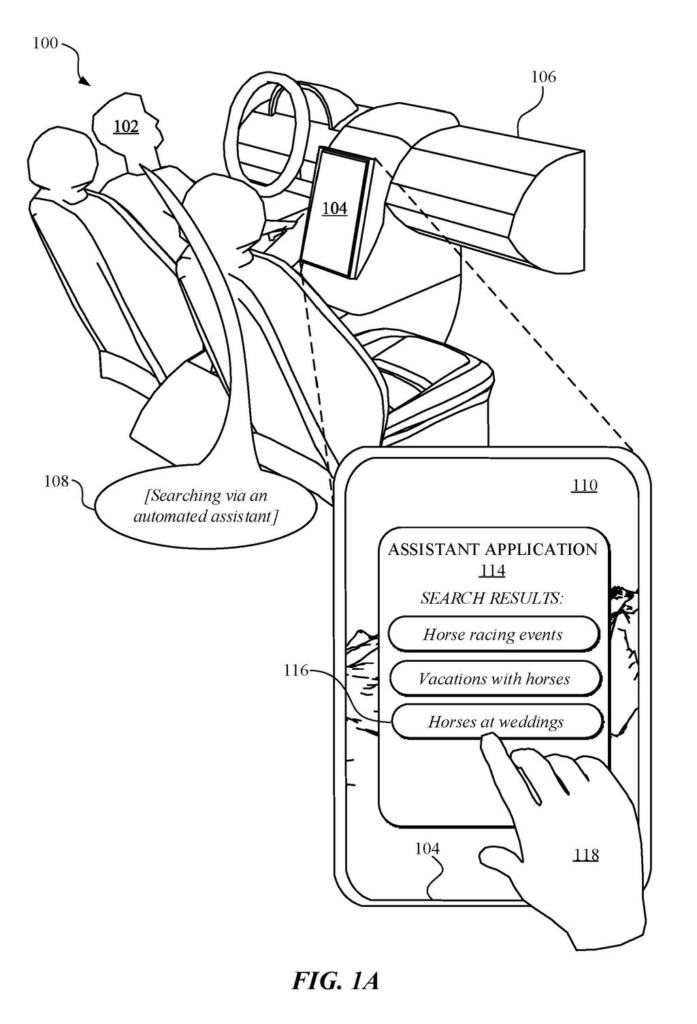
What Google's assistant update delay actually does
A driver sits in a parked car, searching for horse-related events on a phone. Every new tap changes what the assistant knows about their interests, and each change could be sent to every speaker, tablet and display they own at home.
Google's patent describes a way to stop that flood. Instead of sending new information the moment it exists, the server first tells your devices that an update is waiting. Your devices can then ask for it, and the server decides whether now is a good time to hand it over.
If you're still in the middle of searching, the server can hold off. By the time you finish, the first version may be out of date, so your devices get one fresh update instead of several. Urgent things, like privacy settings, would still go out fast.
… causing, in response to determining to provide the updated system data to one or more of the additional computing devices, a notification to be provided to one or more of the additional computing devices, wherein the notification provides an indication that the updated system data is available to one or more of the additional computing devices; …
Translation: The system tells your other devices that a settings update is ready.
How the server decides when to send the update
Claim 1 covers a fairly general chain of steps. A first computing device (typically a server) receives updated system data, meaning fresh information produced when someone uses a third-party app on another device. It then checks characteristics of that data to decide whether other devices should get it at all.
If the answer is yes, the server sends a notification, which is a short message saying an update is available. A device that gets the notice sends back a request, and only then does the server transmit the data.
The dependent claims list checks the server can run before sending:
- The data's priority level, compared against a threshold (the description says security and privacy updates rank highest).
- How much time has passed since the user's last interaction with the app.
- Whether this data is newer than other pending data.
- An operating metric, such as how heavy the computing load is on the server.
The description adds extras. Devices can wait to ask until their battery is charged enough or they are not busy. The server can check a timestamp on each request and skip outdated ones. Several updates can be bundled into one package, and a trained model might predict whether data will go stale soon.
Why your devices may stop pinging Google's servers
For you, the best case is invisible: fewer background updates hitting your phone, speaker and tablet, so less battery and data go to information that is already out of date. Devices in the filing can even wait to ask for an update until the battery is charged enough or you aren't mid-conversation with the assistant.
For Google, the benefit is cost and traffic. Servers that send updates the instant they exist get hit by spikes, and the filing says some of those updates go stale shortly after arriving. Urgent items such as security and privacy changes would still go first, while things like recommended content can wait for a quiet moment or be bundled into a single package.
Google's 42nd filing we've tracked since May builds on earlier work like radar to tell guests apart and a chatbot with reopenable questions, all part of our assistants that remember you watch.
Claim 1 is wide. It never mentions voice, delay or bandwidth. It says a computer receives data created by someone using a third-party app, decides whether other devices should get it, sends a notice, waits for a request, and then sends the data.
On its wording, that notify-then-request pattern covers a lot of ground, since many apps and services sync this way. The ideas that give the filing its character, like priority levels, time since your last tap and server load, sit in the narrower claims 3 through 7.
Our verdict: sensible plumbing. It saves Google server costs and may spare your battery, and you will likely never notice it.
Get our take in your Top Stories
Liked this breakdown? Add Patentlyze as a preferred source on Google, and our plain-English take shows up more often in your Top Stories the next time Google patent news breaks.
There are more where this came from
We read every patent application Big Tech publishes and send you the ones worth knowing. Plain English, free, every week.
The drawings
8 drawing sheets from US 2026/0352610 A1 · click any drawing to enlarge


Want this weekly breakdown for a company we don't cover? Patentlyze Pro →
Be the first to weigh in