
Google Files Patent for Car Keys That Work Only Under Rules You Set
Your phone is your car key, until the battery dies. Google's patent describes a way to hand out temporary keys that come with rules attached, so a mechanic, a renter or a teenager gets only the access you choose.
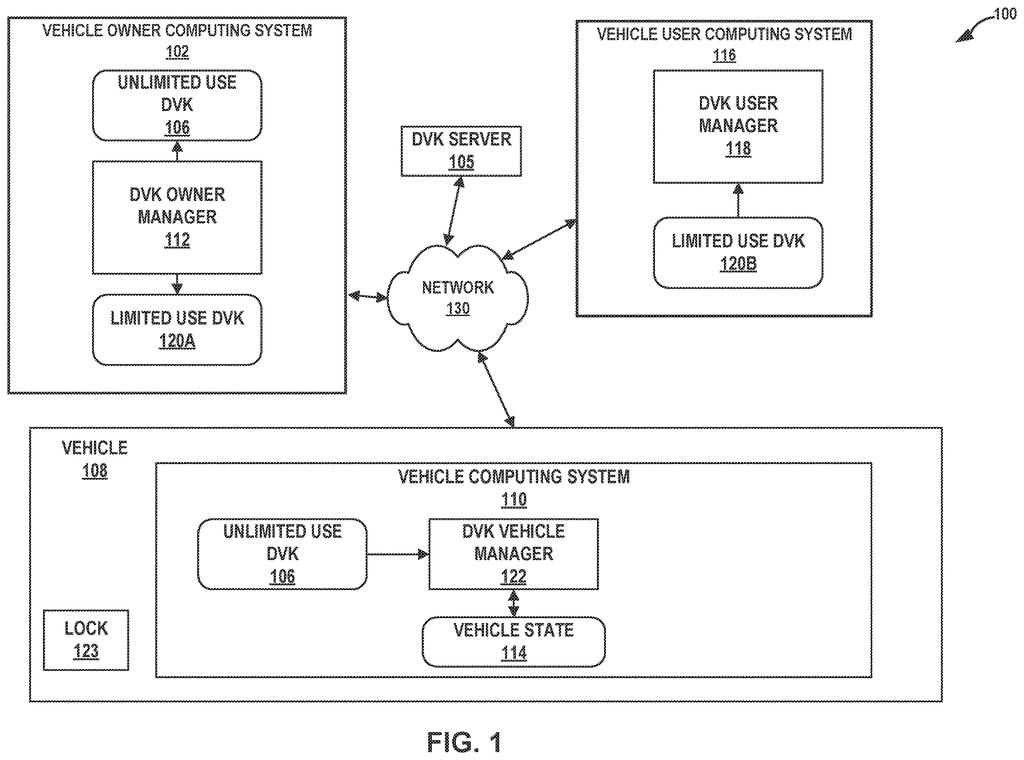
What Google's limited-use car key actually does
Imagine your phone dies in a parking lot, and your actual keys are sitting on the kitchen counter at home. Your car stays locked and you have no way in. Or imagine you want your teenager to borrow the car, but only until 9 p.m. and without flooring it on the highway.
Google's patent describes a limited use digital key for exactly these situations. You create it on your phone and send it to someone else's device. The key carries rules, such as a time window, a location, a speed cap or an acceleration limit. When that person holds up their phone to the car, the car checks the key and lets them in only if the rules fit.
The car also has a mode that you set, like Rental, Repair or Roadside Assistance. A mechanic's key does nothing until you put the car in repair mode, and it stops working the moment you switch back.
receiving, by a vehicle, a limited use digital vehicle key, the limited use digital vehicle key indicating one or more conditions for one or more of access to and use of the vehicle …
Translation: The car receives a digital key that comes with specific rules for how it can be used.
How the car checks a key against its own mode
The patent covers a method that the car itself carries out. The car receives a "limited use" digital key that spells out one or more conditions for getting into or using the vehicle. It then checks that key against its vehicle state, a stored setting that describes what situation the car is currently in. If the key's conditions match that state, the car allows access or use.
The claims and description fill in the details:
- Conditions named in the claims include time, location, speed limit and acceleration. The description adds braking, seatbelt use, stereo volume and more.
- Vehicle states include rental, repair, roadside assistance and insurance.
- Access can mean unlocking a door or opening a trunk or frunk (the front trunk on many electric cars).
The state can be set by the owner from their own device. It can also be set by the car, based on its own operating status. If the car is inoperable, it can switch itself into a repair, roadside assistance or insurance state. The description gives a crash sensor as an example: after serious damage, the car flips to an insurance mode, which activates a key for the insurance company so an agent can move the car remotely.
The key can also come from someone who is not the owner. In the rental example, the owner gives a rental service a limited key, the service issues its own keys to renters, and ending the rental deactivates all of them.
… verifying, by the vehicle, the limited use digital vehicle key based at least in part on a vehicle state of die vehicle …
Translation: The car checks if the key's rules match its current situation before unlocking.
What this could change for lending your car
Phone-based car keys are only as useful as the phone. The filing's own background lists a locked phone, a dead battery and a lost or broken device as ways to end up standing outside your own car. A key you can hand to someone else, with limits, gives you a backup plan that does not depend on you being there.
It also covers a growing list of people who need your car for a short time: mechanics, tow companies, insurance adjusters and renters. Today you would hand over a full key or a physical fob. Under this approach, you decide what each person can do, and you can switch their access off by changing your car's mode. For parents, the speed and acceleration limits could also add some peace of mind when a new driver borrows the car.
That makes this Google's 977th filing in our Google coverage since May, adding to work like grading routes step by step and cargo-swap truck stops.
Claim 1 is short and wide. It has three steps: the car receives a key listing conditions, checks it against the car's own state, and allows access when the two match. It does not mention rentals, mechanics, speed limits or who sends the key. Those details show up only in the dependent claims, which narrow the idea down.
That breadth is the interesting part. On paper, the wording would reach any car that compares a temporary digital key's rules against its own current mode, whatever the rule is and whoever holds the key. Patent offices often push back on language that wide, so the final version could end up closer to the narrower claims.
The idea itself is easy to like. A key that carries its own rules, plus a car that knows whether it is on loan, in the shop or wrecked, solves everyday problems that physical keys handle badly. The most distinctive piece is the car setting its own mode after a breakdown or crash, which lets help arrive without you being present.
Get our take in your Top Stories
Liked this breakdown? Add Patentlyze as a preferred source on Google, and our plain-English take shows up more often in your Top Stories the next time Google patent news breaks.
There are more where this came from
We read every patent application Big Tech publishes and send you the ones worth knowing. Plain English, free, every week.
The drawings
4 drawing sheets from US 2026/0336561 A1 · click any drawing to enlarge


Want this weekly breakdown for a company we don't cover? Patentlyze Pro →
Be the first to weigh in