
Waymo Files Patent to Turn a Car's Sensor Washing Into a Health Check
Every time a self-driving car washes its sensors, this patent application has it run a quick health check on them at the same time. The wash becomes the test.
What Waymo's sensor-cleaning health check does
Self-driving cars already carry little sprayers, wipers and air nozzles to keep their sensors clean. What they don't have is an easy way to know whether the cleaning worked, or whether the sensor's window is scratched or its coating has worn down. Waymo's filing says those flaws can throw off what the car thinks is around it, which can mean slower trips or even crashes.
Waymo's idea is to turn the wash itself into a checkup. While the car sprays a little liquid on the sensor window and blows it off, the sensor keeps firing its lasers and measures the light that bounces back from the liquid. How fast that bounce fades tells the car how healthy the window and its coating are.
Because every wash looks the same, the readings can be compared from one day to the next, or against readings taken when the sensor was new. A weak bounce can point to a sprayer that is low on fluid.
applying, using a cleaning device, a cleaning protocol to one or more optical components of a light detection and ranging (lidar) device, wherein the cleaning protocol is applied according to a periodic schedule or in response to a trigger event …
Translation: The system automatically cleans the lidar sensors on a regular timer or when something triggers it.
How the spray shows up in the laser readings
Lidar is the laser-based sensor many self-driving cars use to measure distance. It sends out pulses of light, times how long they take to bounce back, and builds a 3D map of the surroundings. The filing runs a cleaning protocol (a set routine of spraying, wiping or blowing air on the sensor's window) and uses that moment as a test.
While the cleaning runs, the lidar keeps firing light. A controller reads the reflections and decides whether defects are present in the optics or in the cleaning device itself. In the description, the reflections come off the liquid on the window. Their intensity is tracked as the liquid is blown away and fitted to an exponential decay curve (a curve that drops fast, then levels off). The starting peak and the decay speed are compared with readings taken when the sensor was new.
- A weak starting peak can mean the sprayer is not delivering enough liquid.
- A slow fade can mean the water-repelling coating has degraded.
The cleaning can run on a schedule (anywhere from every half hour to once a month) or after a trigger: a rider's request in an app, bad weather, a message from fleet management, misidentified objects, or unusually strong stray light signals. The filing also describes adjusting for rain, a pass/fail score, and fixes such as a stronger clean, a part swap, or correcting the data.
… determining, by a controller of the lidar device based on the detected reflections of the one or more light signals, that one or more defects are present within the one or more optical components or within the cleaning device …
Translation: The computer uses light reflections to figure out if the sensor or cleaner is broken.
What this means for a fleet of robotaxis
A self-driving car is only as safe as what its sensors can see, and a worn coating or clogged sprayer can skew the readings while everything looks fine from outside. The filing itself says bad detections can slow trips or even cause collisions. Turning a routine wash into a test lets a car check itself often, and the description says it works without added optics, emitters or sensors.
For a company running a fleet, it also adds up. Each car can report its numbers to a fleet management system, which can plot them, spot a coating that fails too often, and compare coating types. If a car fails the check, the filing lists remedies: a stronger clean, a repair or swap, flagging the data as unreliable, or correcting the readings. As a patent application, it says nothing about when or whether any of this ships.
Google's 71st filing we've tracked since May on Waymo's robotaxi senses builds on earlier applications like hidden pedestrian memory and one on labeling distant still objects.
Claim 1 covers any lidar sensor that runs a cleaning cycle and then uses its own light readings to decide whether something is wrong, either in the optics or in the cleaning device itself. The cleaning just has to happen on a schedule or after some trigger, which describes nearly every wash system anyone would build. The claim says nothing about how the cleaning works, what fluid is used, or how the defect check is calculated.
That breadth has real consequences. Any company that wipes a lidar lens and uses the sensor's own reflected light to confirm the job worked would fall inside this claim as written.
Claims this broad typically get narrowed during review, but the core idea, letting the cleaner and the sensor check each other, is practical and the claim text currently draws a very wide boundary around it.
Get our take in your Top Stories
Liked this breakdown? Add Patentlyze as a preferred source on Google, and our plain-English take shows up more often in your Top Stories the next time Google patent news breaks.
There are more where this came from
We read every patent application Big Tech publishes and send you the ones worth knowing. Plain English, free, every week.
The drawings
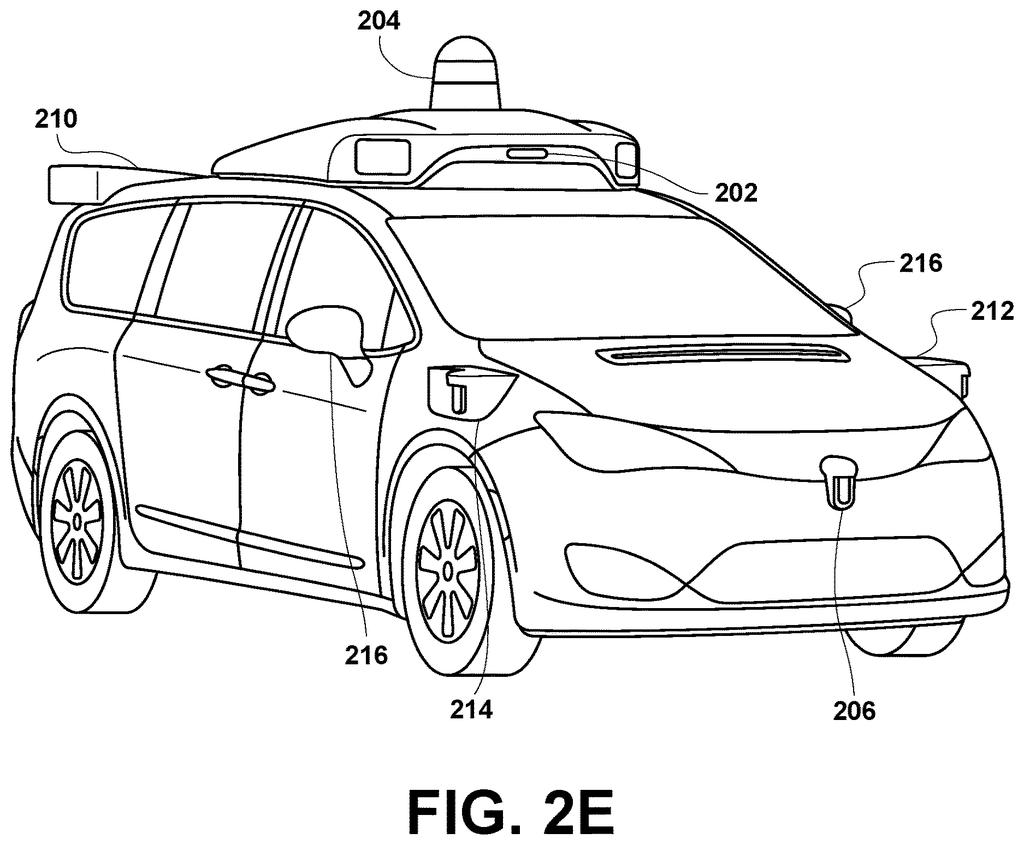
23 drawing sheets from US 2026/0328918 A1 · click any drawing to enlarge


Show the other 15 sheets


Want this weekly breakdown for a company we don't cover? Patentlyze Pro →
Be the first to weigh in