
Google Files Patent to Stop Smart Glasses From Waking Up When You Fold Them
Fold the arms of your smart glasses and a simple sensor can mistake your fingers for your face. Google's patent application has the glasses look back over a recent stretch of readings before deciding whether you're actually wearing them.
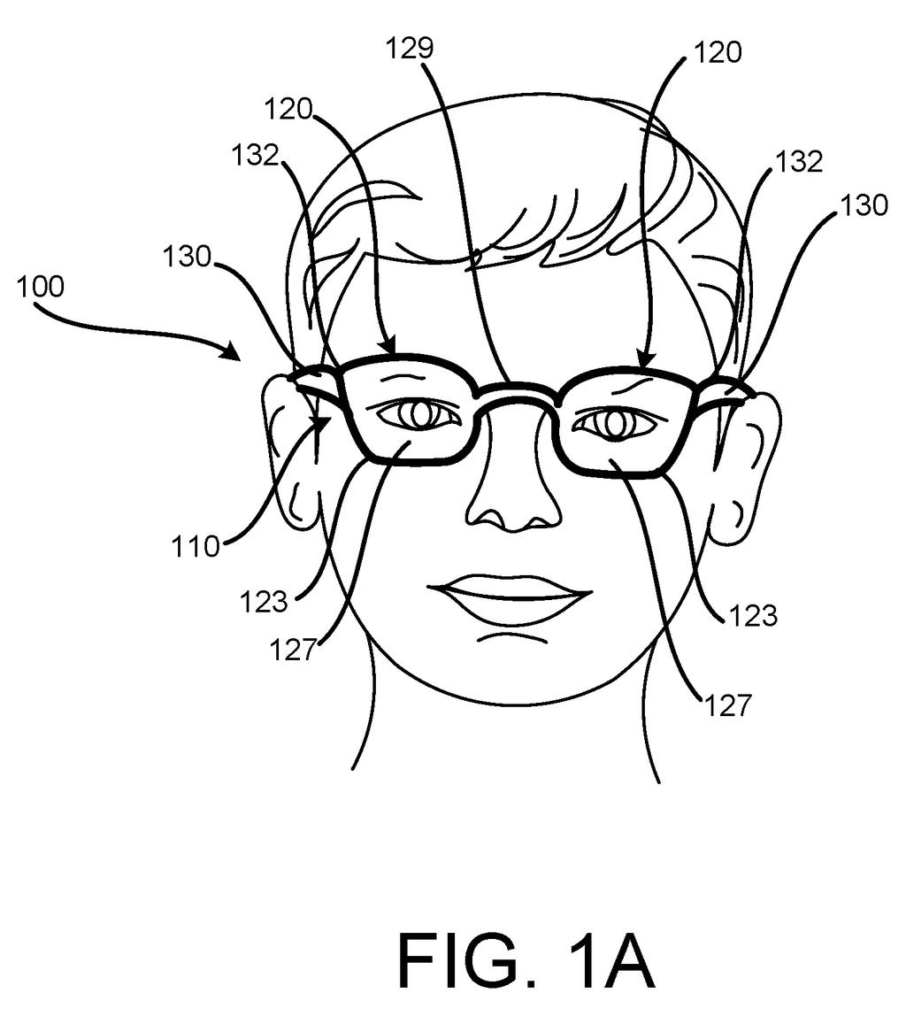
What Google's wear-detection patent actually does
You pick your smart glasses up off the desk and fold the arms to slip them into a case. Their sensors feel something close by, maybe your hand, and decide you've put them on. The display wakes up and burns a little battery for nothing.
Google's patent application describes a fix. Instead of reacting to one sensor reading, a small AI model runs on the device itself and studies a rolling stretch of recent readings from just one or two cheap sensors. It then answers with one of three verdicts: worn, not worn, or not sure.
That verdict decides how awake the device stays. If you're wearing it, everything powers up. If you're not, it drops into a low-power standby. When the model is unsure, it checks its sensors more often until it can tell.
… determining a mode for operating the wearable device based on the state for the wearable device, the model being configured to generate the state for the wearable device based on second data from a second sensor and usage data.
Translation: The glasses decide how to function using sensor inputs and usage history.
How the model weighs recent seconds over old ones
The filing describes a model that decides whether a wearable is being worn, then picks an operating mode from that answer: active when it's on you, standby when it isn't. In standby, only the few low-power sensors needed to notice a wearer stay on. The claims also have the model use a second sensor and usage data (how the device has been used) in addition to the first sensor's reading.
The model is a temporal convolutional network (a neural network built to spot patterns in readings over time). It works on a sliding window, a rolling slice of recent history such as 30 seconds. Inputs can come from proximity sensors, touch-sensing capacitive sensors, or motion sensors.
To fit on a small chip, the network squeezes older data harder than recent data, which the filing calls a recency bias. In one example, a 60-second window starts as 60 data points. The oldest 30 seconds collapse into three summaries while the newest 30 seconds stay detailed. The squeezing is sized to the chip's memory, with a 2 MB example.
The output is worn, not worn, or none when confidence is low. On none, the device can sample its sensors faster to settle the question. The filing also describes a low-power processor running the model, and fine-tuning on the device while it charges.
… the model employs a hierarchical feature consolidation mechanism that applies a recency bias, where historical data is compressed more aggressively than recent data within the sliding window.
Translation: Older activity logs are squeezed down to save memory while keeping recent activity clear.
Why this matters for glasses with tiny batteries
The practical payoff is battery life you don't have to think about. Smart glasses have very little room for a battery, so a display or eye-tracking camera that wakes up in your bag or on your desk takes a real bite out of your day. The same wear detection could pause your earbuds when you take them out or keep a watch from logging steps while it sits in your hand, both uses the filing names.
It also points toward cheaper hardware. The filing says one or two inexpensive sensors can do the job, so the device doesn't need extra parts that add cost and weight. The model can adapt to your habits too, learning from whether you actually use the device after it decides you've put it on. That's a patent application, and nothing here says it will reach a product.
Google's 55th filing we've tracked on our smart glasses display work since May adds to earlier ideas like one on rapid light switching and one on closing image gaps.
Smart glasses that drain their battery from phantom movements never get a second chance. Every false wake-up, every moment the device thinks it's being worn when it's sitting on a nightstand, costs a little energy that the owner never sees but eventually feels as a product that just doesn't last the day.
The fix Google is pursuing is proportionate to the problem: a small piece of software that reads a short history of sensor signals and decides, with real patience, whether the glasses are actually on a face before doing anything demanding. When it isn't sure, it waits and watches rather than guessing.
That willingness to hold off is the core insight. A wrong confident guess is precisely where quiet battery drain begins, and fixing that is what turns a frustrating product into a reliable one.
Get our take in your Top Stories
Liked this breakdown? Add Patentlyze as a preferred source on Google, and our plain-English take shows up more often in your Top Stories the next time Google patent news breaks.
There are more where this came from
We read every patent application Big Tech publishes and send you the ones worth knowing. Plain English, free, every week.
The drawings
9 drawing sheets from US 2026/0349500 A1 · click any drawing to enlarge


Show the other 1 sheets

Want this weekly breakdown for a company we don't cover? Patentlyze Pro →
Be the first to weigh in