
Google's New Patent Uses Rapid Light Switching to Give Smart Glasses Deeper Darks and Finer Shades
The tiny lasers in Google's glasses display can only be set to so many brightness steps, so this patent has each laser flicker between two of them fast enough that your eye sees the average.
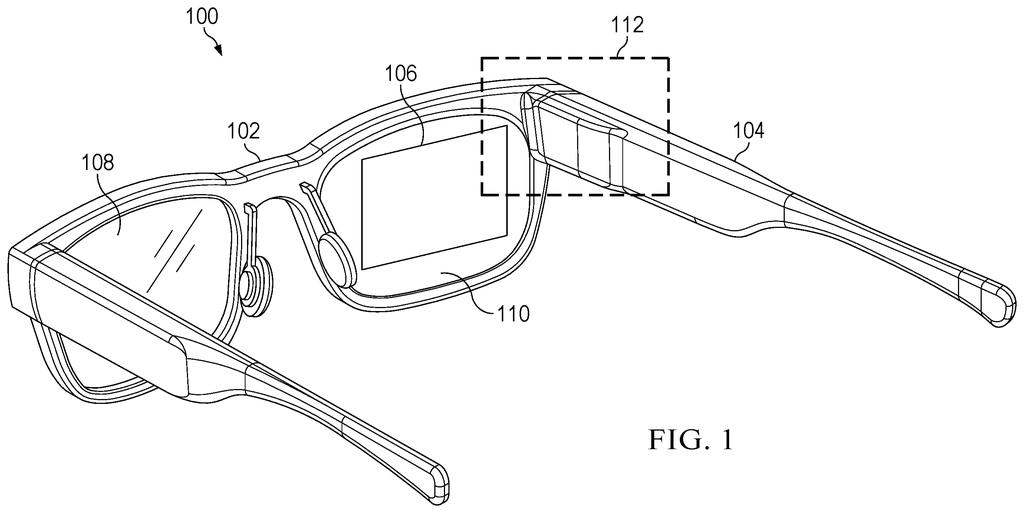
What Google's flickering laser glasses actually do
Imagine you're wearing smart glasses that paint a faint, dim label onto the world in front of you. The tiny lasers inside can only be set to certain power steps, and below a minimum they get unstable. So the dimmest shades can't get dim enough, and some in-between shades simply aren't available.
Google's fix is to have each laser flip between two nearby power settings so fast that your eye never catches it. Your eye averages the flicker into a single in-between brightness. A laser that spends half its time at a low setting and half its time off, for example, looks like half of that low setting.
The patent adds a twist to keep the trick invisible: the pattern of which pixels sit at the higher setting changes from one pulse to the next, so no fixed texture shows up. The result, according to the filing, is a much wider range of shades from the same lasers.
… control a laser to alternate between the first laser drive level and the second laser drive level in a series of laser pulses to emit light at a duty-cycled intensity corresponding to the pixel display intensity.
Translation: It rapidly switches the laser back and forth between two power levels to create the exact brightness needed for each pixel.
How the laser picks two power levels per pixel
Each color laser in the glasses (red, green and blue) is set by a laser drive level, a number that tells a driver chip how much electric current to send. The patent's controller takes a pixel's target brightness, finds the two nearest drive levels in a lookup table (a stored cheat sheet), one just above and one just below, and alternates the laser between them in a series of pulses. The share of time spent at each level sets the brightness you perceive.
The filing describes two uses:
- Below the floor: Lasers turn unstable under a minimum power. The laser instead flips between that minimum and fully off. At a 50% duty cycle (half the time on, half off), a laser whose floor is 10% of full power reads as 5%. The filing says this could stretch the usable range from about 80:1 to about 600:1.
- Between steps: The driver accepts 10-bit levels (0 to 1023), while the image carries 16-bit brightness values. The top bits pick the level and the bottom bits become the fraction of time spent at the next level up, so a 2.5 comes from alternating levels 2 and 3.
To avoid a grainy look, a noise mask (a grid of on/off values tiled across the display) decides which pixels sit at the higher level, spaced evenly so no clumps show. The mask then shifts by a random offset on every pulse, so no pixel gets stuck at one level.
The user perceives the duty-cycled intensity as the target pixel intensity when viewing the image.
Translation: Your eye blends the rapid flashes together so the picture looks like it has smooth and accurate shades of light.
Why dimmer darks matter for Google's AR glasses
In glasses that overlay graphics on the real world, faint shades and smooth gradients are part of what makes an image look clean. This patent aims to give you more of those in-between shades from the same hardware, since it adds no new power settings, only clever timing. The filing's own figure is a jump from about 80:1 to about 600:1 in brightness range.
For Google, it is a way to squeeze better image quality out of the same lasers and driver chips, which matters in a frame with little room for extras. The examiner's first review rejected the claims as filed, which is routine and usually followed by amendments. Nothing in the filing names a product.
Google's 54th filing we've tracked since May on smart glasses display work adds to earlier ideas like closing image gaps and making lenses readable in sunlight.
Claim 1 is short and wide. It asks for a controller in a head-worn display that picks two power settings based on a pixel's brightness, then flips a laser between them across a series of pulses to land on an in-between brightness. The claim names no numbers, no lookup table, and no pattern for which pixels flip.
That breadth means the claim covers the basic idea of averaging two settings. The details Google spends most of the filing on, the pixel patterns and the random shifting, appear only in later, narrower claims. If claim 1 survived as written, its wording would reach any wearable laser display that uses two-level flipping to hit a middle brightness.
Claims this open often draw pushback, and this one has already drawn a first rejection, so the wording may change. The narrower versions with the lookup table and shifting pixel patterns are where the specific engineering lives.
Get our take in your Top Stories
Liked this breakdown? Add Patentlyze as a preferred source on Google, and our plain-English take shows up more often in your Top Stories the next time Google patent news breaks.
There are more where this came from
We read every patent application Big Tech publishes and send you the ones worth knowing. Plain English, free, every week.
The drawings
10 drawing sheets from US 2026/0351154 A1 · click any drawing to enlarge


Show the other 2 sheets


Want this weekly breakdown for a company we don't cover? Patentlyze Pro →
Be the first to weigh in