
Google Patents a Smarter Probability Model Selection System for Video Compression
Every time you stream a video, a codec is making thousands of statistical guesses per frame. Google's new patent tries to make those guesses smarter — by letting each piece of a frame borrow context from the most relevant part of a previous frame, not just the nearest one.
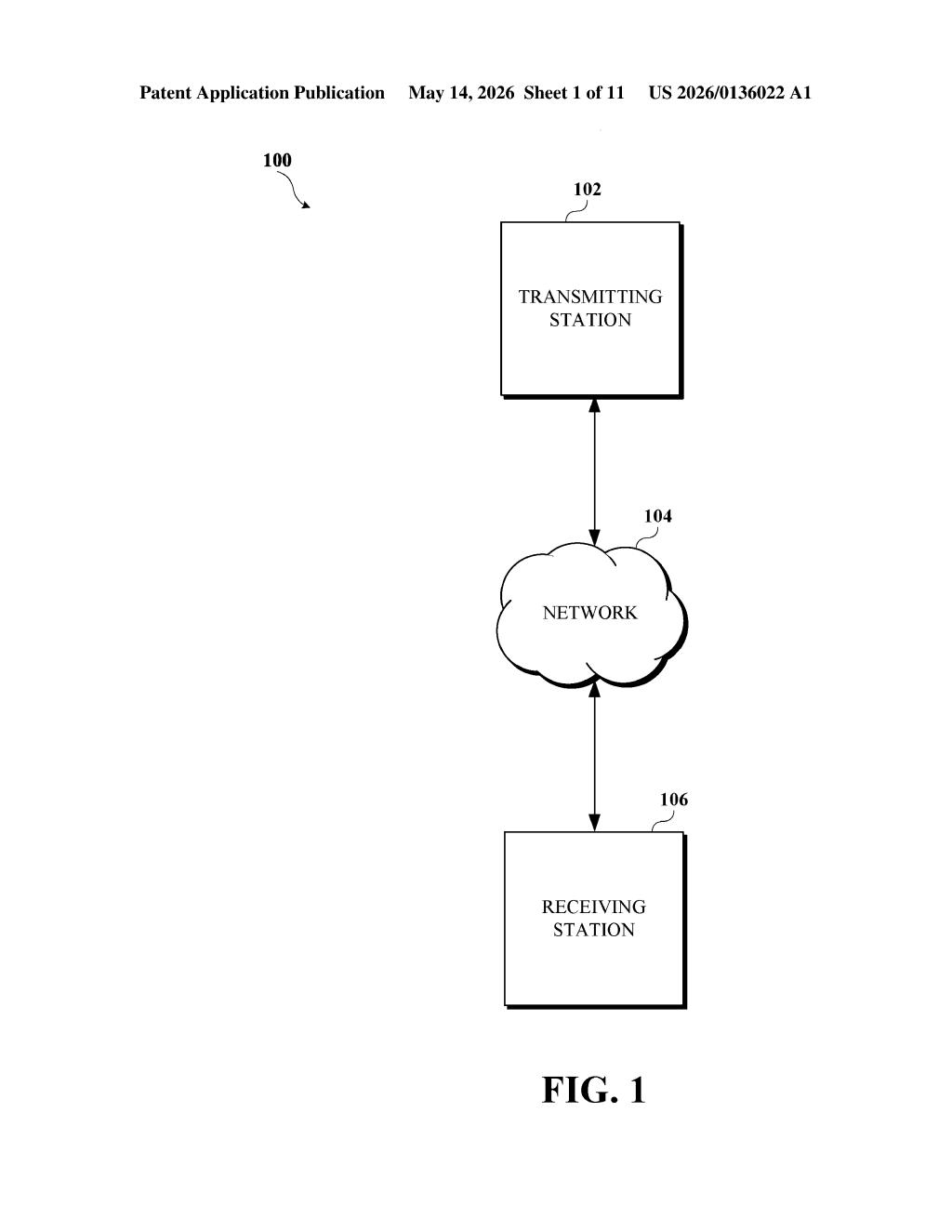
How Google's tile-level codec context selection works
Imagine your video player is trying to predict what each tiny patch of the next frame will look like before it fully decodes it. The better those predictions are, the less data needs to be sent over the wire — which means smoother video at lower bitrates.
The classic approach is to just use whatever statistical model was built from the matching region in the previous frame. Google's patent proposes something more flexible: the encoder first picks a menu of candidate models pulled from several tiles in a reference frame, then for each tile in the current frame, it signals which item on that menu is the best starting point.
The result is that a fast-moving section of your screen — say, a spinning logo — can borrow its prediction context from the part of the previous frame that's most statistically similar, even if that's not the spatially adjacent tile. You get better compression without losing quality.
How the candidate model set is built and queried per tile
The patent describes a two-stage signaling mechanism embedded in a video bitstream — the kind used by codecs like AV1.
Stage 1 — Build the candidate set: A first identification is decoded from the bitstream. It names two or more specific tiles from a reference (already-decoded) frame. The decoder pulls the probability models from those tiles and stores them in a reference frame buffer as a candidate set.
Stage 2 — Pick per current tile: For each tile being decoded in the current frame, a second identification is decoded. This short signal points to exactly one candidate model within the set built in Stage 1. That model is then used to initialize the probability model for the current tile — essentially giving the entropy coder (the part that does the actual bit-squeezing) a warm start tuned to the most relevant statistics.
The key insight is separating which candidates exist (frame-level signaling) from which candidate to use (tile-level signaling). This avoids transmitting full model state per tile while still allowing flexible, content-aware initialization — a meaningful efficiency gain in variable-scene content like sports or gaming streams.
What this means for next-gen video codec efficiency
Video codec efficiency improvements are unsexy but economically enormous. Streaming accounts for a massive share of global internet traffic, and even a small percentage improvement in compression translates directly into lower CDN costs, reduced mobile data consumption, and better quality on constrained connections. Google is one of the primary stewards of the AV1 codec and its successor AV2, so a patent like this almost certainly feeds into that lineage.
For you as a viewer, the payoff is potentially higher-quality video at the same bandwidth — or the same quality at meaningfully lower data usage on your phone plan. For Google, better codec IP reinforces YouTube's competitive position and its cloud video transcoding business.
This is a focused, technically credible codec optimization — not a flashy AI play, but exactly the kind of incremental compression research that compounds into real-world gains at YouTube's scale. The two-stage signaling design is clean and the prior art space here is well-defined, which actually works in Google's favor for grant likelihood. Worth tracking if you follow AV1/AV2 development.
There are more where this came from
We read every patent application Big Tech publishes and send you the ones worth knowing. Plain English, free, every week.
Want this weekly breakdown for a company we don't cover? Patentlyze Pro →