
Google Patents a Two-Stage Person Detection System for Video Alerts
Google is patenting a smarter way to decide whether your security camera just saw a person — or just a rustling tree branch. The trick is doing it in two passes at different resolutions, then scoring whether the result is even worth waking you up for.
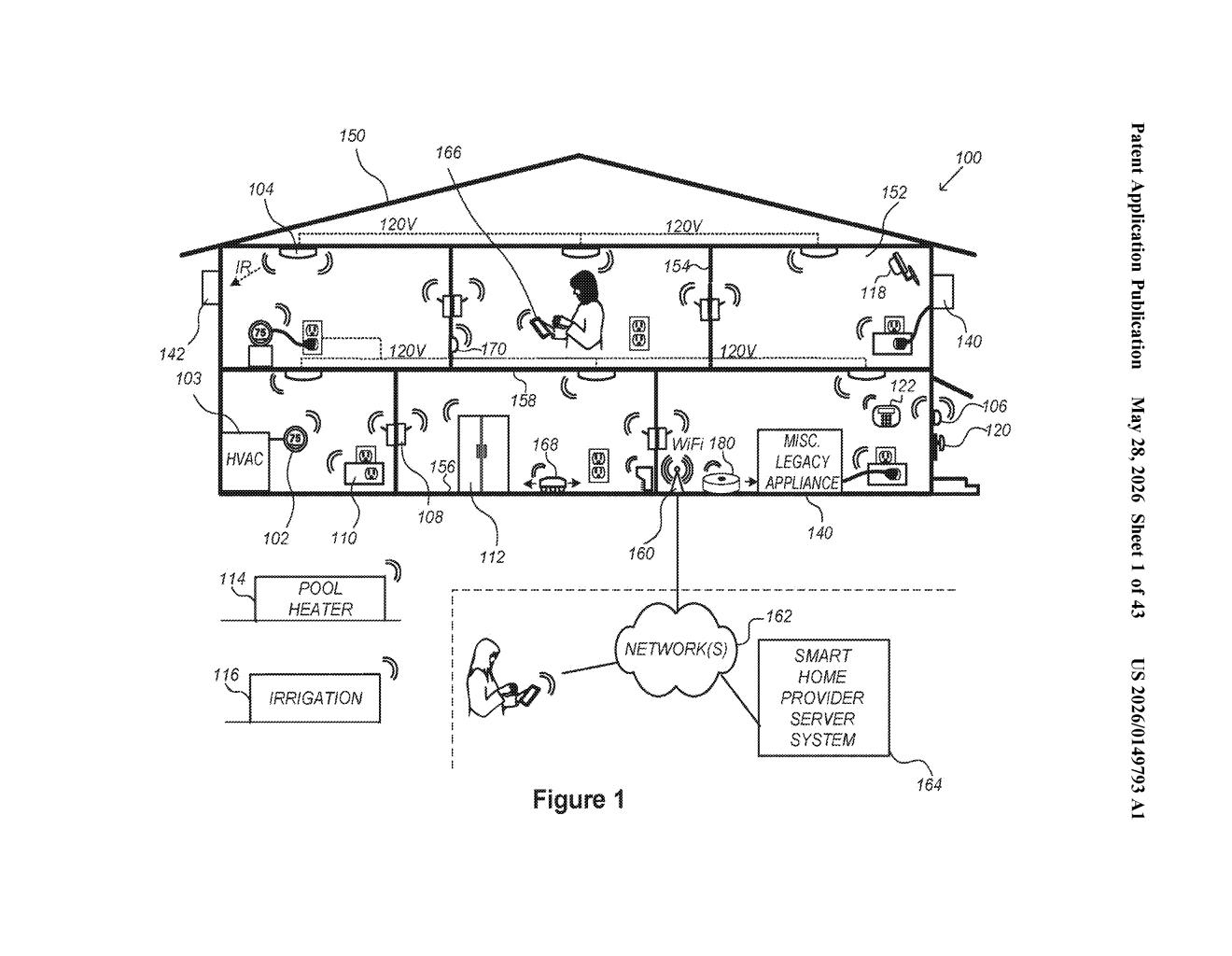
What Google's two-pass video detection actually does
Imagine your home security camera sends you a push notification every time a leaf blows past the lens. That's the alert-fatigue problem Google is trying to solve here.
The idea is a two-step check. First, the camera quickly scans a video frame at low resolution to spot anything that might be a person. If something suspicious shows up, it zooms in on just that region at higher resolution to confirm whether it's actually a human. Only once it's sure does it log the event as person-related.
But detection is only half the story. The patent also describes an importance scoring system — the camera weighs factors like what kind of object was detected, how it fits into a priority hierarchy (motion, audio, alert), and whether you've already been notified recently. You only get pinged if the score clears a threshold and enough time has passed since your last alert for that category.
How the resolution pipeline and importance score work together
The patent describes a pipeline with two distinct phases for processing video frames.
In the first phase, every incoming frame is analyzed at a lower resolution. This is computationally cheap — the system is just asking "does this frame contain anything that looks vaguely human?" If the answer is no, the frame is effectively discarded for person-detection purposes. If the answer is yes, a bounding region is drawn around the candidate area.
In the second phase, only that cropped region gets analyzed at a higher resolution (meaning more detail, more compute). This two-stage approach trades a cheap false-positive sweep for an expensive but accurate confirmation — a classic precision-recall tradeoff that keeps processing costs down without sacrificing accuracy.
On top of detection, the system maintains an event category hierarchy — a ranked structure of event types (motion, audio, alert) that can be tuned by user preferences. Each detected event gets an importance score calculated from multiple factors, including object classification. The system then checks:
- Does the score exceed a defined threshold?
- Has enough time elapsed since the last notification for this event category?
- What category does this event belong to?
Only if all conditions are met does the system fire a notification, which prevents redundant alerts within short time windows.
What this means for Nest camera alert fatigue
For anyone with a Nest or Google Home camera, this is directly relevant. Alert fatigue — getting too many useless notifications — is one of the top complaints about residential security cameras. A system that filters by detection confidence and applies time-based throttling per event category is a meaningful quality-of-life upgrade over simple motion detection.
The architecture also has implications for on-device processing. By doing the first-pass check at low resolution, Google can do more of this work locally on the camera hardware rather than shipping every frame to the cloud — which matters for latency, bandwidth, and privacy. The event hierarchy with user-adjustable preferences also hints at more granular notification controls coming to the Google Home app.
This is practical, unsexy engineering — but it's exactly the kind of thing that makes products actually usable. Two-stage detection pipelines aren't new in computer vision, but packaging it with a priority-scoring and time-throttling system for consumer camera alerts is a real product problem getting a real solution. If this ends up in Nest cameras, fewer people will turn off notifications entirely out of frustration.
There are more where this came from
We read every patent application Big Tech publishes and send you the ones worth knowing. Plain English, free, every week.
Want this weekly breakdown for a company we don't cover? Patentlyze Pro →