
IBM's New Patent Keeps AI Chatbots From Stating False Information as Fact
AI chatbots confidently make things up, and most of the time neither the system nor the user catches it. IBM is patenting a way for the AI to flag its own shaky answers and retrain itself on the spot.
What IBM's hallucination-catching AI loop actually does
An AI assistant gives you a confident-sounding answer to a question at work. The answer is completely wrong, but it reads so smoothly you don't notice. That's an AI hallucination, and it happens more than most people realize.
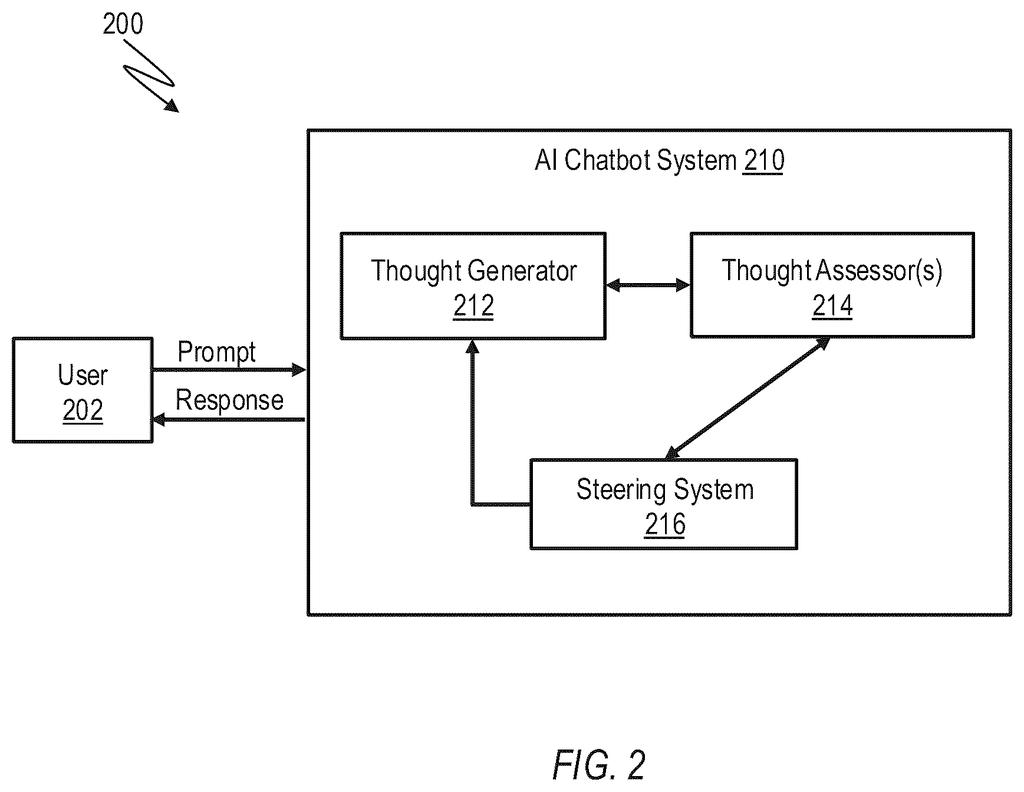
IBM's patent describes a two-layer checking system built around a chatbot. The first layer, called a "thought generator," produces the answer. A second layer, called a "thought assessor," then puts a confidence score on that answer. If the score falls below a set threshold, the system runs a deeper check to see whether the answer actually contains a hallucination.
Here's the part that goes further than most approaches: if a hallucination is confirmed, the system doesn't just flag or discard the bad answer. It uses that mistake to retrain the underlying AI model right away, so the same error is less likely to repeat. You get a correction loop baked directly into the chatbot.
… calculating, by a thought assessor, a confidence score for the output; based on a determination that the confidence score of the output does not exceed a threshold value, performing a supplemental review of the prompt and the output …
Translation: A secondary checker evaluates the chatbot response whenever its initial confidence score is too low.
How the thought assessor scores and fixes bad AI answers
The patent describes a pipeline with three main components working in sequence.
The thought generator is the core AI (one or more large language models) that produces a response to whatever the user asked. Nothing unusual here; this is the standard chatbot layer most people interact with.
The thought assessor is the new piece. It assigns a numerical confidence score to the output. Think of it like a spell-checker that doesn't look for typos but instead measures how certain the AI is that its answer is grounded in real information. If the score clears a preset threshold, the answer goes through. If it doesn't, the system escalates.
That escalation is the supplemental review. This deeper check examines both the original question and the AI's response to determine whether a hallucination is actually present. The patent doesn't lock in one specific method for this review, which leaves IBM room to plug in different verification techniques.
If the supplemental review confirms a hallucination, the system triggers fine-tuning of the thought generator. Fine-tuning (updating a model's internal weights using new examples) means the model is adjusted based on the confirmed mistake. The loop closes: a bad answer becomes training data that directly reduces the chance of the same error happening again.
… based on a determination that the confidence score of the output does not exceed a threshold value and based on a determination that the output includes the hallucination, fine-tuning the thought generator.
Translation: The underlying AI model is automatically adjusted when low confidence and false information are both detected.
What this means for people who rely on AI chatbots daily
For anyone using an AI assistant at work, the stakes of hallucinations are real. A wrong date in a legal summary, a made-up citation in a research brief, or a fabricated product specification can cause genuine problems before anyone notices the AI slipped up.
What IBM is describing here is a system that doesn't depend on users to catch mistakes. The self-correction loop means errors can be reduced over time without manual intervention. That's a meaningful shift if it works as described, though the practical effectiveness would depend heavily on how well the confidence scoring and supplemental review are calibrated. IBM's run of AI-reliability filings suggests this is an area the company is treating as a foundation, not a feature.
IBM's 53rd filing we've tracked in our AI guardrails race since May follows one where AI grades itself and one probing audio weaknesses.
Fewer moments where an AI hands you wrong information you then act on, with real confidence behind it, is a meaningful thing to fix. IBM's approach catches a shaky answer, checks it more carefully, and then actually retrains the system on what it got wrong rather than just flagging it and moving on.
The retraining step is where this gets interesting and where the risk lives. Teaching a system to correct one mistake can introduce new ones elsewhere, and the patent doesn't spell out how that's managed.
If IBM gets the loop right, the person asking a question in an enterprise chat tool simply gets a more reliable answer over time, without knowing any of this is happening. That quiet reliability is exactly what makes or breaks whether people trust these tools at work.
There are more where this came from
We read every patent application Big Tech publishes and send you the ones worth knowing. Plain English, free, every week.
The drawings
5 drawing sheets from US 2026/0278347 A1 · click any drawing to enlarge


Want this weekly breakdown for a company we don't cover? Patentlyze Pro →
Be the first to weigh in