
Red Hat Files Patent for a Reservation System That Lets Quantum Programs Share Hardware
Quantum computers have very few working parts, and every program wants them at once. Red Hat's filing sketches something like a hotel front desk to hand those parts out and keep everyone from colliding.
What Red Hat's qubit reservation system does
A quantum computer sits chilled to near absolute zero, and several programs all want the same few working parts at the same moment. Those parts are called qubits, the basic units that do quantum calculations. While one program is using a qubit, nobody else can.
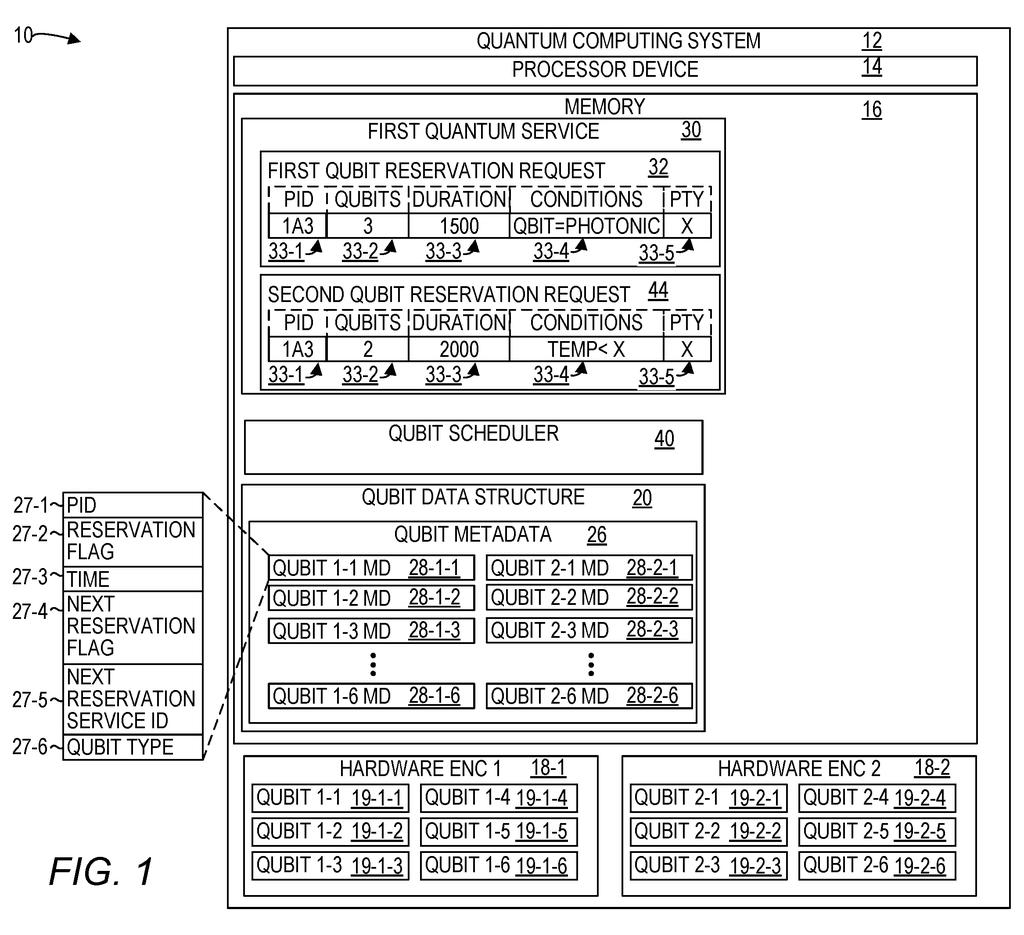
Red Hat's patent application describes a scheduler that works like a booking desk. A program asks for, say, three qubits for 1,500 milliseconds. The scheduler checks its ledger, marks three free ones as taken, and sends back directions for reaching them.
If everything is busy, the program can get in line for the next opening. The stated goal is less idle hardware and fewer clashes between programs, which matters more as a quantum machine gets more users.
receiving, by a quantum computing system that implements a first plurality of qubits, a first qubit reservation request from a first quantum service, the first qubit reservation request identifying a first quantity of qubits; …
Translation: The system listens for programs asking to lock down specific amounts of quantum hardware.
How Red Hat's scheduler books each qubit
The filing centers on a qubit scheduler, a piece of software inside a quantum computing system. Programs (the filing calls them quantum services) send it a reservation request. A request says how many qubits are needed. It can also include a duration, a priority, and conditions such as a maximum temperature, a maximum noise level (unwanted interference), or a specific qubit type like photonic or trapped ion.
The scheduler keeps a qubit data structure, basically a ledger with one entry per qubit. Each entry can record:
- Whether the qubit is reserved, and by which service
- How long the current reservation lasts
- Which service has booked it next
- The qubit's type
In the filing's example, a request for three photonic qubits for 1,500 milliseconds gets three free qubits marked as taken, and the service receives their location. When a timer runs out, or the service reports it is done, the qubits are released. In another example, a request needs a cooler environment. The first hardware enclosure is too warm, so the scheduler checks a second enclosure and books qubits there.
If every qubit is busy, the scheduler reads the booked durations, finds the qubits that free up soonest, and puts the new request next in line.
The qubit data structure is altered to reserve the first set of qubits for the first quantum service.
Translation: An internal ledger is updated to officially assign those specific quantum bits to the requesting program.
Why shared quantum machines need a booking desk
Right now, few people ever worry about who gets to use which qubit, because quantum machines have few users. The filing is a bet that this changes. If several programs share one machine, somebody has to referee, or work collides and expensive hardware sits idle between jobs.
The filing describes bookkeeping that ordinary computers already handle for memory and processors, applied to a much scarcer resource. It also lets a program ask for the right kind of qubit or a cooler, quieter spot, which could matter as machines mix different hardware types. Nothing here describes a product, but it hints at what running a shared quantum machine might involve.
IBM's 23rd filing we've tracked since May in our quantum computing buildout work adds to earlier applications like one on fixing quantum errors and one on scaling quantum controls.
A booking system always costs something. Every qubit needs a ledger entry, and the scheduler has to ask the hardware about conditions like temperature before it can decide. For machines with a handful of qubits, that overhead could outweigh the benefit.
Fixed-length reservations carry their own risk. A program that books 1,500 milliseconds and finishes early wastes the leftover time unless it reports back, and the filing does not say what happens to a program that runs long. The whole scheme also depends on programs describing their needs honestly.
Still, the trade looks sensible. Basic bookkeeping is cheap next to idle quantum hardware, and the design stays simple enough to build. It reads as routine groundwork for a future where quantum machines are shared, and the missing detail on overruns is the first thing to watch.
Get our take in your Top Stories
Liked this breakdown? Add Patentlyze as a preferred source on Google, and our plain-English take shows up more often in your Top Stories the next time IBM patent news breaks.
There are more where this came from
We read every patent application Big Tech publishes and send you the ones worth knowing. Plain English, free, every week.
The drawings
5 drawing sheets from US 2026/0311017 A1 · click any drawing to enlarge


Want this weekly breakdown for a company we don't cover? Patentlyze Pro →
Be the first to weigh in