
IBM Files Patent for Virtual Worlds That Pull In a Bank Advisor While You Shop
IBM's patent application describes a virtual car dealership where saying yes to a sales avatar automatically brings in a loan advisor from a different virtual world.
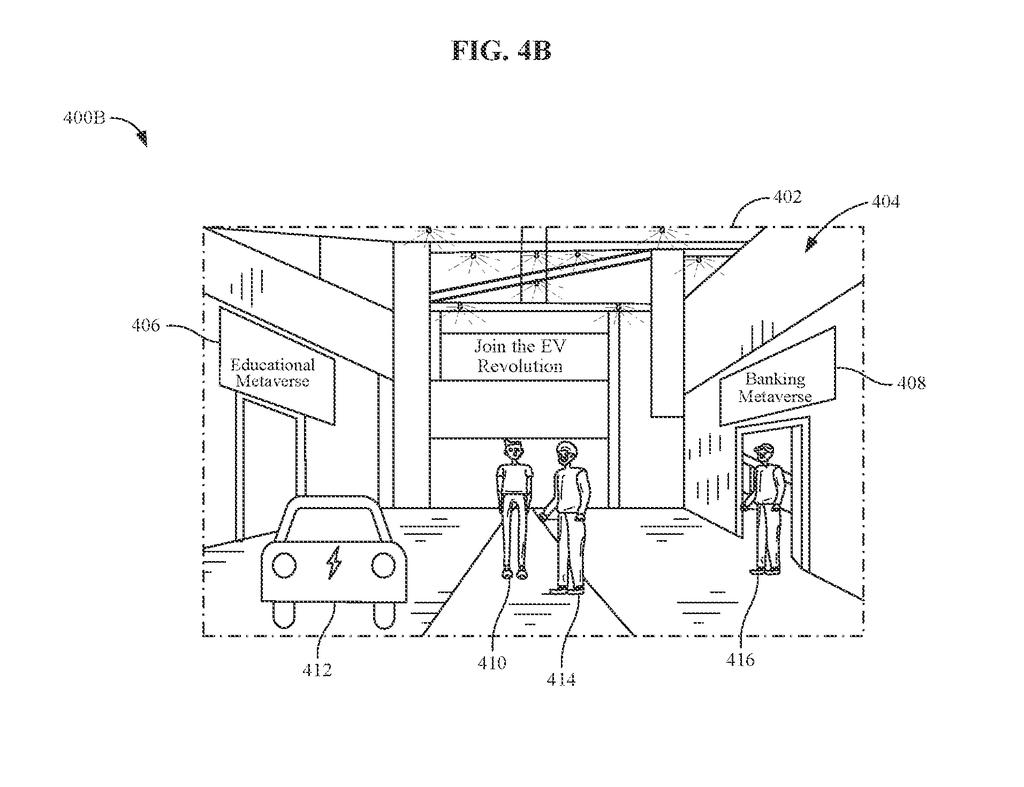
What IBM's linked virtual worlds actually do
A shopper's avatar stands beside a virtual electric car in a digital dealership. A salesperson avatar asks, "Would you like to purchase an EV?" The shopper says yes. Today, that is usually the moment you would have to leave, open another account somewhere else, and log in again to ask about a loan.
IBM's patent application describes a system that handles the handoff for you. Your yes counts as a signal. A digital contract, which is a self-running agreement stored on a blockchain, fires on its own and brings a finance advisor avatar from a bank's virtual world right into the car lot. A page about government subsidies can pop up too.
The filing says you would be asked for consent first. It also says the system tracks how well each suggestion works and adjusts the contract over time.
… integrating, by the computer, the identified first set of metaverse services with a second set of metaverse services of a second metaverse environment, wherein the second metaverse environment is associated with a second distributed ledger; …
Translation: The system connects two different virtual worlds running on separate blockchain ledgers.
How a digital contract starts the bank advisor
The application covers a method for linking two separate virtual worlds, each of which keeps its records on its own distributed ledger (a shared record book copied across many computers so no single party can change it, the idea behind blockchains). The system finds the services one world offers, such as a banking advisor, and plugs them into the world where the user already has an account.
From there, the claimed steps run in order:
- Pull the user's profile data and boil it down to a set of parameters, such as behavior patterns, past interactions, preferences and transaction history.
- Work out which outside service matches those parameters.
- Write a digital contract (an agreement coded to act on its own once set conditions are met) from that match.
- Wait for context data, meaning live signals like what you say or do, then run the contract and start the service.
The description's main example is car shopping. A dealer avatar asks about buying an electric car, the user says yes, and a finance advisor avatar appears. Another example trigger is more than five minutes of engagement plus words like "loan" or "subsidy." A headset with limited power could be offered lightweight services, while a powerful computer could get heavier ones.
Later claims add a feedback loop: results are logged on the ledger and the contract is rewritten when a service underperforms. They also add agreements between the two worlds' operators covering money, technical, operational and governance terms.
A digital contract is generated based on the determined association. Context data associated with the second set of metaverse services is received. The digital contract is executed based on the reception of the context data …
Translation: A smart contract triggers automatically once specific conditions in the virtual world are met.
Why fewer logins could mean more data sharing
If something like this ever shipped, the pitch is less friction. Instead of logging into a bank's world, then a school's world, then a store's, the right service would show up where you already are. The filing says showing every option at once overwhelms users and eats computing power, so it picks one service at a time.
The trade-off is data. To decide what to show, the system draws on your profile, transaction history and behavior. The description also mentions biometric signals and even a salary bonus as a clue that you can afford a purchase. The filing says you would get a consent prompt, with the option to approve some data sharing and decline the rest. It is only a patent application, and it names no product.
This is the 15th IBM filing we've tracked since July in our AI agents that act for you watchlist, following one on building a model from a sentence and one on a new tool per request.
Claim 1 casts a wide net. It never defines a "metaverse service," so a shopping assistant, a bank advisor or a tutoring bot would all fit. The "context data" that sets things off can be any signal about what you are doing in that world.
The pieces it does require are specific: two virtual worlds each tied to a ledger, a user profile boiled down to a few traits, a digital contract written from those traits, and a service that starts when the contract runs. Claim 8 even allows both worlds to share the same ledger, so the two-ledger wording is looser than it sounds.
Machine learning and the consent prompt appear only in the description, so claim 1 does not require them. If granted, claim 1 would reach any contract-triggered handoff between linked virtual worlds. Whether people ever spend enough time in such worlds for that to matter is the bigger open question.
Get our take in your Top Stories
Liked this breakdown? Add Patentlyze as a preferred source on Google, and our plain-English take shows up more often in your Top Stories the next time IBM patent news breaks.
There are more where this came from
We read every patent application Big Tech publishes and send you the ones worth knowing. Plain English, free, every week.
The drawings
8 drawing sheets from US 2026/0342882 A1 · click any drawing to enlarge


Want this weekly breakdown for a company we don't cover? Patentlyze Pro →
Be the first to weigh in