
IBM Files Patent to Let You Build an AI Model by Typing a Sentence
Type "build and deploy a model to predict customer churn," and IBM's patent application describes software that finds the data, reshapes it and starts the job for you.
What IBM's type-a-sentence model builder does
A data scientist sits down to build a prediction model and spends most of the week doing something else: hunting for the right tables, copying files and reshaping them to fit the software. IBM's filing says that prep work eats roughly 60% to 80% of their schedule. If you've ever lost an afternoon moving files between apps, you know the feeling.
IBM's patent application describes a tool where you type a plain request, something like build and deploy a model to predict customer churn, and the system handles the rest. It works out what you're asking for, finds the data wherever it lives, converts it into the shape the software needs, and starts the job.
It can even suggest the rest of your sentence as you type, based on the tables your company actually has.
training, via at least one processor and using natural language expressions with placeholders for attributes, a machine learning model to map natural language expressions to one or more tasks …
Translation: Teaching an AI to connect everyday typed sentences with the specific jobs they are asking it to do.
How IBM turns your sentence into a data pull
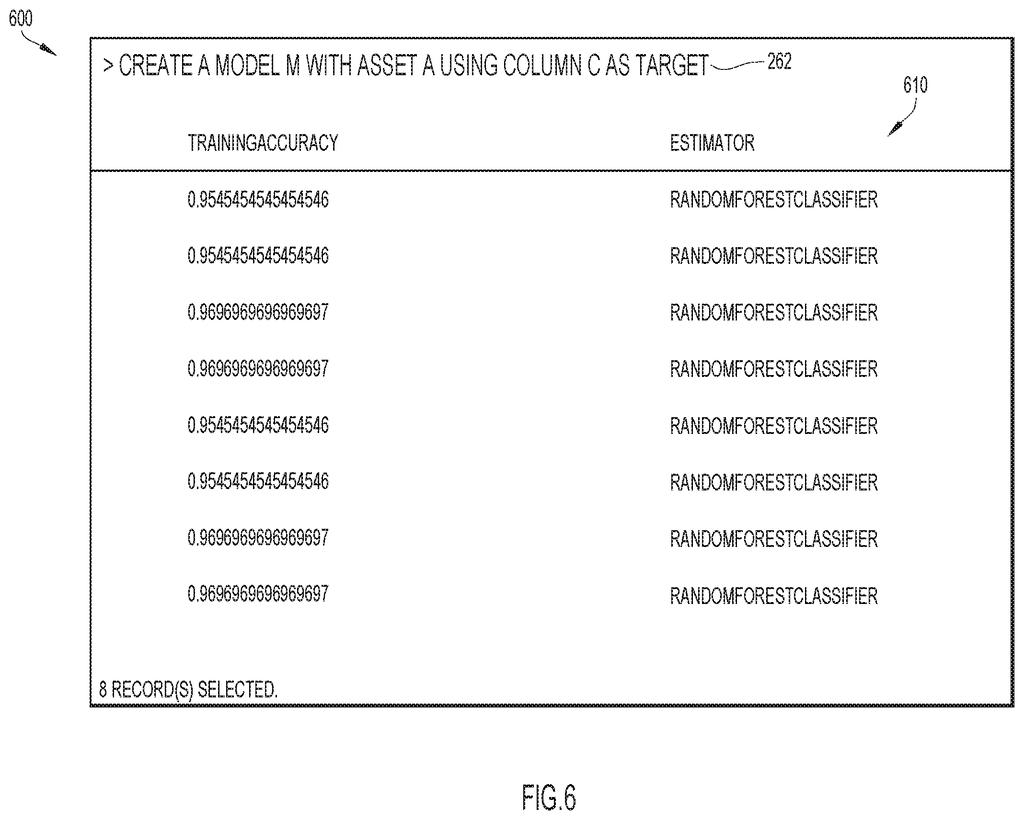
The system starts with training. IBM teaches a language model (software that sorts sentences into categories) using example requests with blanks where company-specific names go, such as Train a model with TABLE 1 using Column 1 as the target. Each task, like building or deploying a model, is tied to a template routine, a stored set of instructions or code for carrying it out. To widen the training set, the system reorders words, adds or drops words, and swaps in synonyms.
When installed at a company, a catalog (a directory describing the company's data tables, columns and where they live) fills in those blanks with real names. Columns with little or irrelevant information get filtered out, so the training set stays small.
Then, when you type a request, the system does this:
- Pulls the key details out of your sentence.
- Lets the trained model pick the matching task.
- Drops catalog names into a query template to write a database query (SQL, the standard database language). One query can join data from a traditional database and file-style object storage.
- Reformats the results to whatever the target platform requires, then runs the task with the stored routine.
The filing also describes API endpoints (connection points) so companies can add their own tasks and phrasings. If you don't name a model type, the system can infer one from context, such as treating a numeric target column as a prediction of a number.
An embodiment of the present invention extracts information from a natural language query requesting performance of a task.
Translation: The system reads a plain text question to figure out what action the user actually wants completed.
Why IBM's patent targets data prep drudgery
The practical payoff is for the people who work with company data. Instead of exporting files, reformatting them and wiring them into a model-building tool, you describe what you want. The filing says data can be queried where it sits, so large datasets don't have to be copied around first, which saves storage and computing time.
The design also shows how a plain-language request could safely reach a company's real systems. The catalog supplies the actual table names, and the stored routines limit what a sentence can trigger. That matters if you want a business analyst, not just an engineer, to start a task. This is a continuation of an application filed in 2022, so the idea has been in development for a while.
IBM's 14th application we've tracked since July on AI agents acting for you, after one that builds tools per request and one running meetings end to end, adds another layer to what these agents can handle.
If you work with company data, the benefit shows up quickly: you ask for a model in one sentence instead of filing a request or waiting on a colleague to export a file. The days the filing says go to data prep are the days you would get back.
The autocomplete step prevents a quieter failure. Typing a request that points at the wrong table or a useless column wastes a long job, and suggestions drawn from the real catalog catch that before you hit enter.
If you don't work with data, you'd likely never notice it. It would sit behind business software, and the only sign would be that company predictions and reports arrive sooner. Typing a request to an AI is a familiar idea by now. The useful part here is connecting that request to the messy, scattered data a real company has.
Get our take in your Top Stories
Liked this breakdown? Add Patentlyze as a preferred source on Google, and our plain-English take shows up more often in your Top Stories the next time IBM patent news breaks.
There are more where this came from
We read every patent application Big Tech publishes and send you the ones worth knowing. Plain English, free, every week.
The drawings
6 drawing sheets from US 2026/0330326 A1 · click any drawing to enlarge


Want this weekly breakdown for a company we don't cover? Patentlyze Pro →
Be the first to weigh in