
IBM Patents an AI Agent That Runs Your Meetings From Start to Finish
IBM has filed a patent for an AI agent that doesn't just take notes in your meetings, it runs them. The system plans the agenda, talks to participants in real language, pulls in outside information, and writes the summary when it's done.
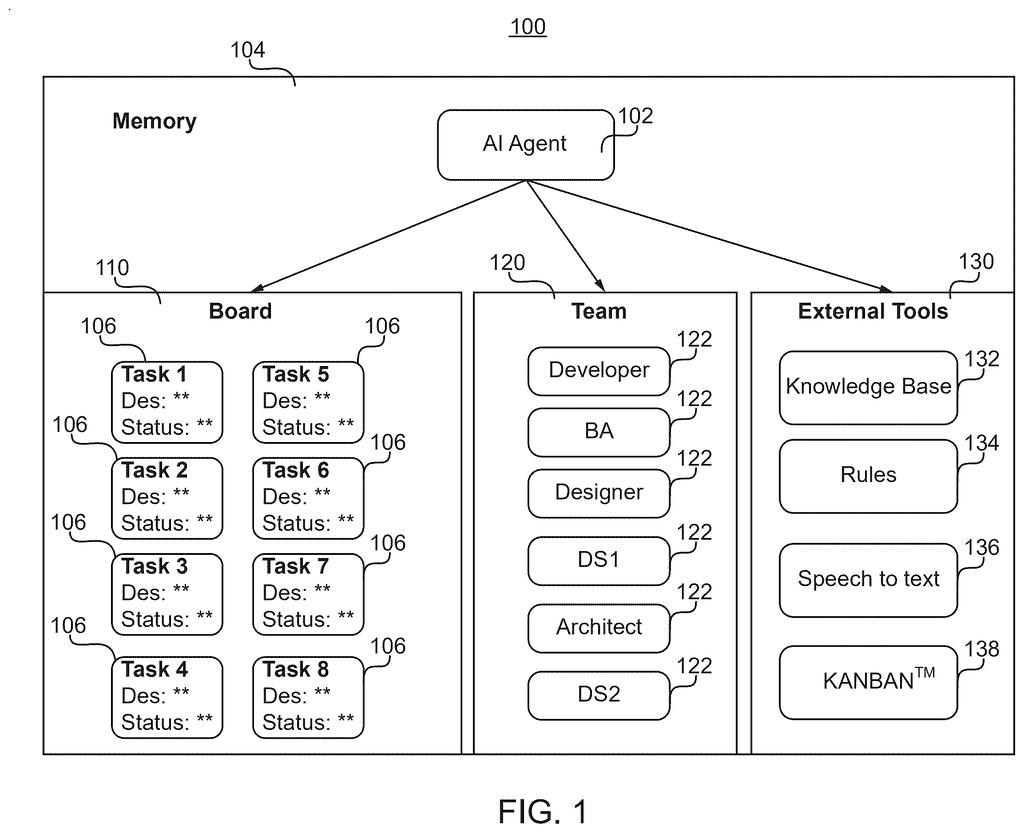
What IBM's AI meeting host actually does for you
A conference room fills with people who don't know what the meeting is supposed to accomplish. That's a familiar problem, and IBM's patent describes an AI agent designed to step into the host role entirely.
The agent starts by reading a request (something like 'schedule a budget review with these four people next Tuesday'), then builds a full meeting plan on its own. During the meeting, it speaks with participants using natural language, pulls in relevant documents or data from connected tools, and keeps records updated as things progress.
When it's over, the agent writes a summary based on everything that happened. You don't assign someone to take notes or chase action items afterward, the AI handles the whole arc from scheduling through recap.
… generating, by the AI agent using a generative machine learning model, a meeting plan based on the request; and executing, by the AI agent, the meeting plan by: interacting with meeting participants using natural language processing …
Translation: The artificial intelligence uses a machine learning model to build and carry out a meeting schedule through natural conversation.
How the agent plans, talks, and summarizes in one loop
The patent describes a system built around a single AI agent, a piece of software that can take instructions, make decisions, and use other tools to complete a multi-step task on its own.
When someone asks the agent to host a meeting, it first assembles the basics: topic, participant list, and start time. It then uses a generative machine learning model (the same class of technology behind chatbots like ChatGPT) to draft a structured meeting plan, essentially an agenda with goals and expected talking points.
During the meeting itself, the agent does three things in parallel:
- Talks with participants using natural language processing (the ability to understand and respond to conversational speech or text)
- Queries external tools, calendars, databases, document repositories, or project management apps, to pull in relevant information on the fly
- Writes updates back to those same tools, keeping records current as decisions are made
After the meeting ends, the generative model produces a summary based on the full record of what was executed. The patent covers the method as a whole, not a specific interface or product form.
The AI agent executes the meeting plan by interacting with meeting participants using natural language processing, accessing relevant information from the one or more external tools, and updating meeting-related data using the one or more external tools.
Translation: During the call, the bot talks to participants, pulls data from external software, and updates records automatically.
What this means for workplace meeting software
Meeting software is already crowded with AI bolt-ons, transcription tools, auto-summaries, smart scheduling assistants. IBM's filing goes further by describing a system where the AI is the host, not a passenger. That's a meaningful difference: instead of assisting a human chair, the agent owns the meeting structure from the first invite to the last action item.
For enterprise software buyers, that framing matters. a growing pile of IBM enterprise-AI filings signals where the company sees agentic AI landing in corporate workflows. Whether this reaches a product is another question, but the direction, AI as a full participant rather than a passive recorder, is where a lot of enterprise tooling is heading.
IBM's 12th filing we've tracked since July in AI agents that act for you extends a pattern seen in one that fixes IT outages and one that manages conversation turns.
What this design gives up is the ability to read a room. A human chair notices when someone has been talked over, or when a decision has landed before the agenda says it should. An AI working from a pre-built plan cannot easily do either, and the filing makes no claim that it can.
That loss matters more in some meetings than others. For a weekly status call or a compliance checklist, the structure is the point and an AI host probably holds up fine. For anything political, emotional, or uncertain, handing over the chair is a real cost, not a small footnote.
The strongest argument for the design is the bundling: scheduling, running the meeting, and writing the summary all happen inside one connected loop instead of three separate tools someone has to juggle. Whether that loop holds together when a meeting goes sideways, which most meetings eventually do, is the question this patent leaves open.
There are more where this came from
We read every patent application Big Tech publishes and send you the ones worth knowing. Plain English, free, every week.
The drawings
8 drawing sheets from US 2026/0300928 A1 · click any drawing to enlarge


Want this weekly breakdown for a company we don't cover? Patentlyze Pro →
Be the first to weigh in