
Intel Patents a Way to Route Data Signals Through a Computer's Metal Frame
Your laptop's metal frame mostly just sits there holding things together. Intel thinks it can do more, routing actual data signals through the chassis so engineers don't have to squeeze as many wires onto the motherboard.
What Intel's chassis-as-wiring idea actually does
Ever opened a laptop and wondered why it's so hard to make them thinner? A big part of the answer is wiring: the motherboard needs cables or printed paths to connect every component, and those paths take up precious space.
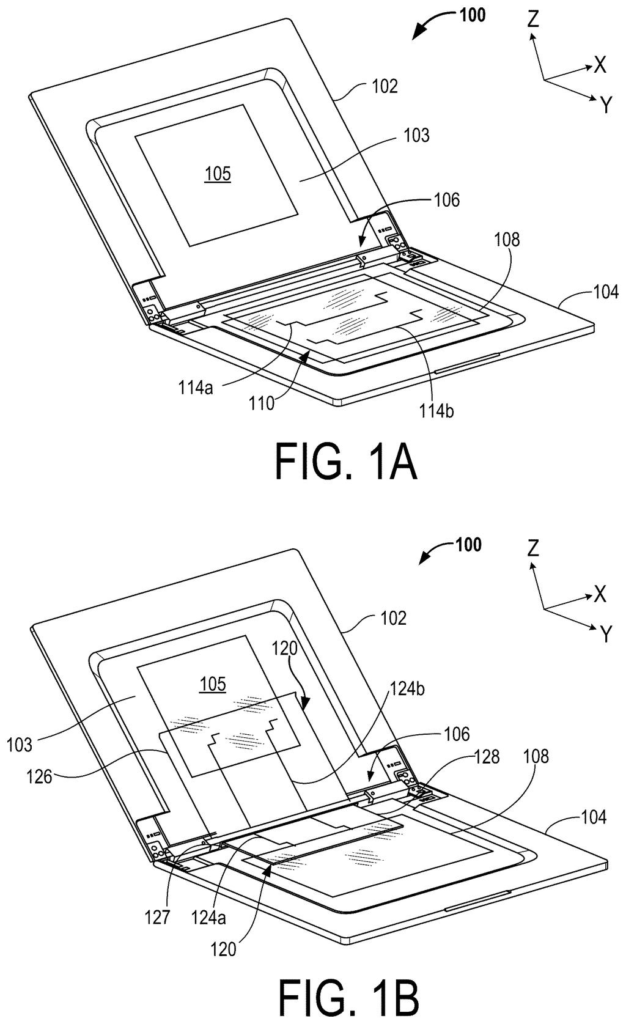
Intel's new patent describes a structural member (think of it as a stiffening plate or part of the chassis) that does double duty. One layer of that plate is made from a thermally conductive material like graphite, which carries heat away from hot components. A second layer is an insulator. A third layer is an actual data-carrying line, connecting peripheral components (like a camera or fingerprint sensor) back to the main circuit board through connectors at each end.
In other words, the frame itself becomes part of the wiring. You get structural support, heat management, and data routing all in one piece, without adding dedicated cables or extra copper traces on the motherboard.
… a member including a first layer, a second layer, and a third layer, wherein the first layer includes a thermally conductive material, the second layer includes a dielectric material, and the third layer includes a first transmission line …
Translation: The device uses a special three layered strip to handle both heat and data signals.
How the three-layer member carries heat and signals
The patent describes a three-layer sandwich structure that Intel calls a "member" (a generic engineering term for a structural piece). Each layer has a specific job:
- Layer 1 (thermally conductive material, e.g., graphite): Spreads and moves heat away from hot components, similar to how a heat spreader works under a processor.
- Layer 2 (dielectric material): An electrical insulator that separates the thermal layer from the signal layer so they don't interfere with each other.
- Layer 3 (transmission line): An actual conductor that carries low-speed signals, the kind used by components like buttons, sensors, LEDs, or simple input/output devices.
Two connectors anchor the system: one attaches a peripheral component (say, a fingerprint reader or power button) to the transmission line, and the other connects that line to the printed circuit board (PCB), the main hub of the computing device.
The phrase "low-speed signals" is doing real work here. High-speed data (video, storage, fast networking) needs carefully engineered, shielded paths. Low-speed signals, status indicators, touch controls, basic sensors, are far more tolerant of a simpler path like this. That distinction is why running them through a chassis layer is credible without major signal-integrity problems.
Graphite is called out specifically as the thermal material, which makes sense: it's light, flat, and a good conductor of heat in two dimensions, all useful properties in a thin laptop chassis.
A heat and signal carrying member provides routing for low-speed signals in a computing device.
Translation: A physical part of the computer is repurposed to also carry basic data signals.
What this means for thinner, cooler laptops
If this approach makes it into production hardware, it could free up real estate on motherboards and eliminate some of the ribbon cables and flex connectors that add thickness and potential failure points to thin laptops and tablets. Fewer discrete cables also means fewer things to crack or detach when a device flexes.
The tradeoff is real, though. Routing signals through a structural chassis layer means the chassis now has to meet both mechanical and electrical specs, and a chassis dent or manufacturing defect could break a signal path, not just cosmetically damage the device. Repair also gets harder: replacing a chassis could mean replacing signal wiring too. Whether that cost is worth the space savings depends on how tightly Intel's manufacturing partners can hold tolerances on the new combined part.
Intel's third antenna and radio filing we've tracked since June follows one on a plug-in mobile broadband device and one on a speed-sensing Wi-Fi scanner.
The core engineering bet here is consolidation: one part doing three jobs instead of three parts each doing one. That's a reasonable direction for thin-and-light computing, where every cubic millimeter is contested.
But the design gives something up. A chassis that also carries signals is harder to test, repair, and replace independently. If a signal path fails, you can't just swap a ribbon cable; you may be looking at a more expensive, structurally involved fix. For consumer laptops, that's a meaningful serviceability tradeoff that doesn't have an obvious answer.
The restriction to low-speed signals is smart self-limiting: Intel isn't claiming the chassis can replace high-speed data lanes, just the slow, low-stakes connections. That humility makes the claim more credible, and the patent more likely to actually work in practice.
There are more where this came from
We read every patent application Big Tech publishes and send you the ones worth knowing. Plain English, free, every week.
The drawings
9 drawing sheets from US 2026/0304596 A1 · click any drawing to enlarge


Want this weekly breakdown for a company we don't cover? Patentlyze Pro →
Be the first to weigh in