
Intel Files Patent for a Dress Rehearsal Step Before AI Goes Live on Cell Networks
Before an AI model is allowed to help run a 5G network, Intel wants it to rehearse in a separate, simulated copy of that network. The result of the rehearsal decides whether the model goes live or goes back to school.
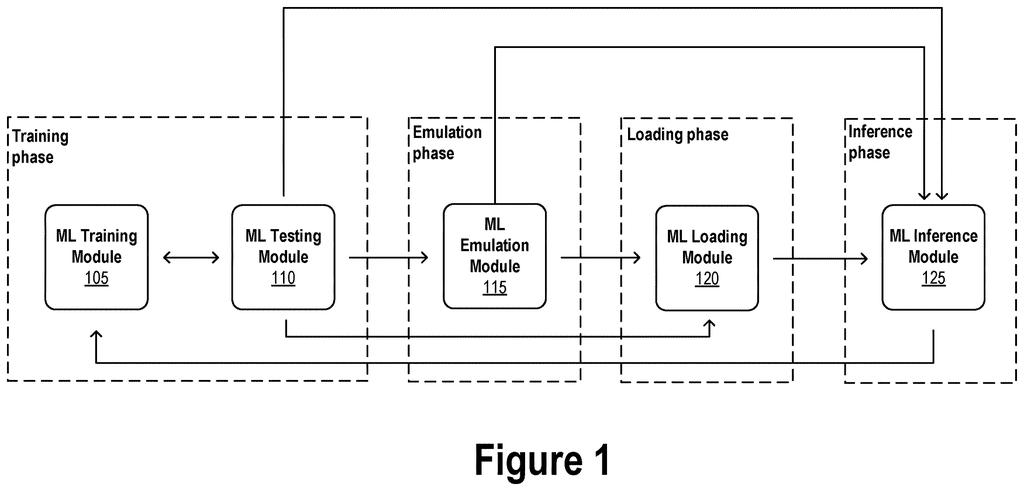
What Intel's network AI rehearsal step does
You're streaming a show on the train when your signal dips for a moment, then bounces back. Behind the scenes, cell networks increasingly use machine learning, software that learns patterns from data, for jobs like balancing traffic across towers and saving energy.
The risk is obvious. If one of those learned models has a flaw, it could hurt the network and the people using it. Intel's patent application describes a rehearsal step: after a model is trained and tested, it runs in a separate, simulated version of the network first.
Based on how that rehearsal goes, the system decides whether the model needs more training or is ready for the real network. It works like a dress rehearsal before opening night, where a botched line costs nothing.
… emulate or facilitate emulation of the trained ML model by a ML emulation module, wherein emulation of the ML model involves performing inference using the ML model in an emulation environment that is different than an inference environment of the cellular network …
Translation: It runs a test version of the artificial intelligence in a separate sandbox environment before deploying it live.
How the rehearsal decides retrain or go live
The claims cover a machine learning management system, meaning software running on processors that looks after the life of an AI model used in a cellular network. It follows four steps in order:
- Train: build the model so it can do a job related to a cellular network system.
- Test: run the trained model against held-back testing data to see how well it performs.
- Emulate: run inference (the model producing predictions or decisions from input data) in an emulation environment that is different from the live network.
- Decide: based on the emulation, either send the model back for re-training or hand it to the part of the network that uses it for real.
The description explains that the emulation environment simulates real-world data without touching the systems that real users depend on. Its example is a model tied to the 5G core network: if the model had an error, running it live could hurt the network and its users.
The filing splits the work between a producer (which trains and emulates the model) and a consumer (which deploys it and runs inference). Either side can ask for an emulation. The filing also says the rehearsal can be skipped when a re-trained model has only small changes, and that some parts may be folded into the 3GPP 5G standard (TS 28.105).
ML emulation may refer to performing inference using the ML model in an emulation environment that is different than an inference environment of the cellular network.
Translation: This means running the artificial intelligence in a separate sandbox before letting it loose on the actual network.
Why phone networks need AI dress rehearsals
For you, the payoff would be a phone network that changes its own behavior less often by mistake. Networks that adjust themselves with AI can only be trusted if a bad model gets caught before it touches live traffic, and a rehearsal step is one way to make that happen.
For Intel, the filing shows a company writing down the order of operations for AI inside cellular networks, a process the filing says may be built into 3GPP standards that carriers and equipment makers share. It describes a workflow rather than a new model or chip, so any effect would show up in how network software is managed, not in anything you would notice on your phone.
Intel's second filing we've tracked in the AI guardrails race since October follows its 6G network oversight application with another approach to keeping humans in control of AI.
Claim 1 is wide. It covers any machine learning model related to a cellular network system, run through four steps: train, test, rehearse in a separate environment, then decide between re-training and going live. It names no particular model, no passing score, and no rule for how the rehearsal results trigger the decision.
That breadth makes the claim a description of a sensible order of operations. If granted, it would reach any network software that follows that sequence. The narrower dependent claims (the 5G core, the radio network, the management system) are where Intel could point to concrete territory.
The filing itself says the workflow is meant for 3GPP standards, the shared rulebook for 5G. A process written for a standards document is groundwork for the whole industry, and as a patent it is routine. Network engineers will care about it, and most everyone else can skip it.
Get our take in your Top Stories
Liked this breakdown? Add Patentlyze as a preferred source on Google, and our plain-English take shows up more often in your Top Stories the next time Intel patent news breaks.
There are more where this came from
We read every patent application Big Tech publishes and send you the ones worth knowing. Plain English, free, every week.
The drawings
7 drawing sheets from US 2026/0320490 A1 · click any drawing to enlarge


Want this weekly breakdown for a company we don't cover? Patentlyze Pro →
Be the first to weigh in