
Samsung Patents a Self-Correcting Voltage Circuit for Memory Chips
Every time a memory chip reads or writes data, tiny voltage spikes can throw off the signal on the wire that selects which row of cells to access. Samsung's new patent describes a circuit that senses those spikes and corrects for them in real time.
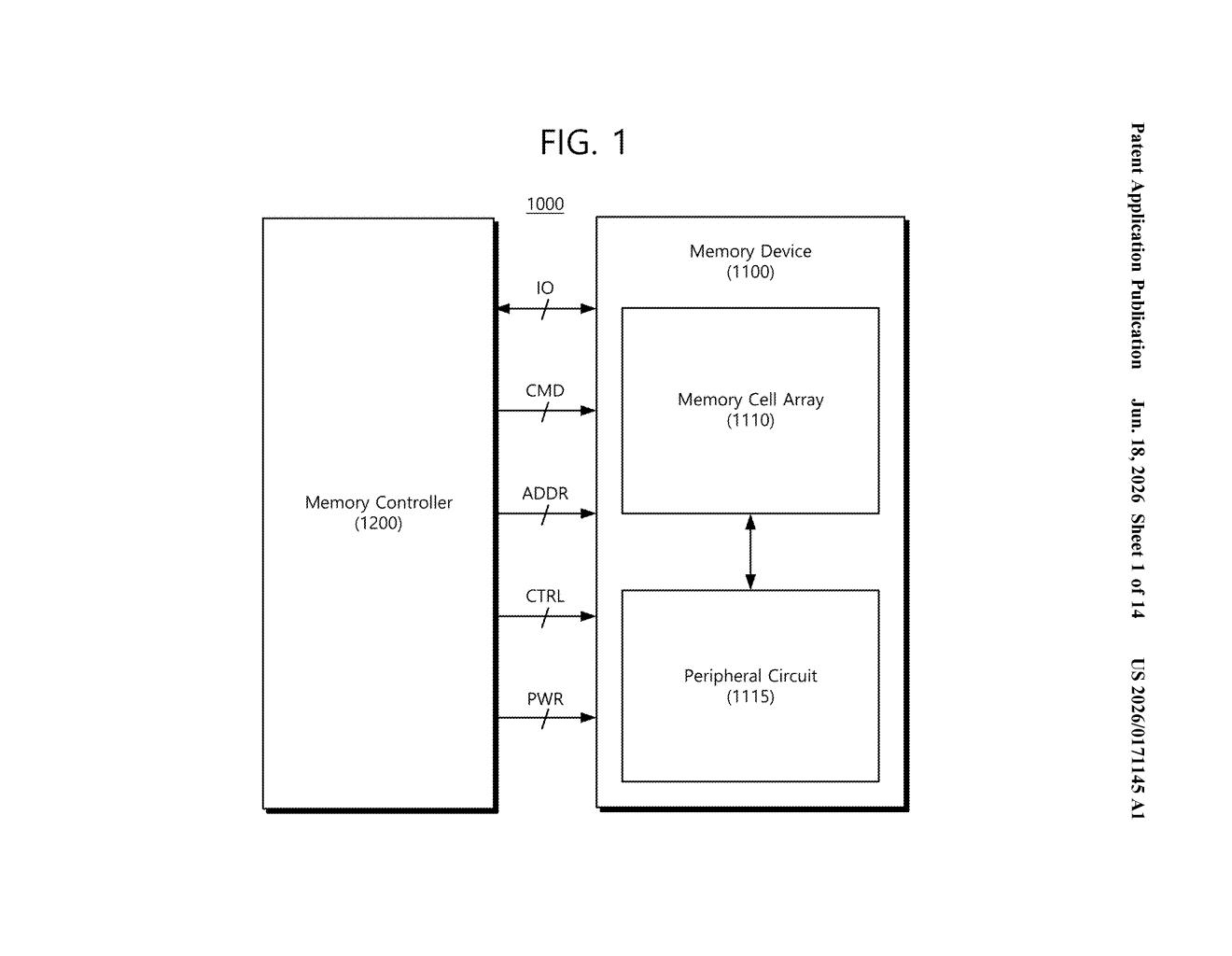
What Samsung's wordline voltage fix actually does
Imagine your home's lights flickering every time the washing machine kicks on — the power draw from one appliance messes with everything else on the line. Something similar happens inside memory chips. When a row of memory cells is activated, the power supply voltage can dip or surge unexpectedly, which in turn distorts the voltage delivered to the wire (called a wordline) that selects which cells to read or write.
Samsung's patent covers a small helper circuit built right into the memory chip that watches for those voltage disturbances and pushes back against them automatically. When the supply voltage climbs, the circuit nudges the driving voltage down; when it dips, the circuit nudges it back up. The goal is to keep the wordline voltage steady even when the chip's power supply is noisy.
The practical payoff is more reliable reads and writes, especially as chips get smaller and more sensitive to voltage variation. It's the kind of under-the-hood fix that doesn't make headlines on a spec sheet but quietly keeps memory from making errors.
How the bump replica circuit keeps voltage stable
The patent describes a wordline voltage generator — the block of circuitry responsible for supplying the correct voltage to whichever row of memory cells a controller wants to access at a given moment.
Inside that generator, three sub-circuits work together:
- Wordline driver: outputs the final voltage onto the selected wordline. Its output is inherently sensitive to the chip's power supply voltage, so any fluctuation in the supply shows up as an error in the wordline voltage.
- Bump replica circuit: a small reference circuit that mimics how the power supply voltage behaves when the wordline is first activated (the transient "bump" that occurs at turn-on). It produces a signal whose level rises or falls in step with those supply fluctuations.
- Wordline voltage control circuit: reads the bump replica's signal and outputs a compensating driving voltage that moves in the opposite direction — if the replica signal goes up, the driving voltage goes down, and vice versa.
The net effect is a negative-feedback loop (a self-correcting cycle where the output is constantly nudged back toward the target). Because the replica circuit is designed to track the same supply-voltage behavior as the real wordline driver, the compensation is timely and proportional rather than a rough approximation.
What this means for memory chip reliability
As DRAM and NAND flash memory cells shrink, the margin between a valid '1' and a valid '0' gets tighter. A wordline voltage that lands even slightly off-target can cause a cell to be misread, leading to data errors that error-correction has to catch and fix — adding latency and power overhead. A circuit that keeps wordline voltage on target regardless of supply noise directly reduces that error rate.
For Samsung, which competes intensely with SK Hynix and Micron on high-bandwidth memory for AI accelerators, incremental reliability gains at the circuit level matter. Data-center customers running GPU clusters care deeply about memory error rates, and patents like this one reflect the engineering work happening at the transistor level to keep up.
This is unglamorous but real engineering work. Voltage compensation circuits for wordlines are a known challenge in memory design, and Samsung's approach — using a replica of the transient 'bump' behavior to generate a complementary correction — is a specific, defensible solution. It won't generate consumer buzz, but it's exactly the kind of filing that shows up quietly in shipping silicon.
There are more where this came from
We read every patent application Big Tech publishes and send you the ones worth knowing. Plain English, free, every week.
Want this weekly breakdown for a company we don't cover? Patentlyze Pro →