
Meta Patents a Face Verification System That Never Sees Your Biometric Data
Meta wants to confirm you are who you say you are — using your face — without your face ever leaving your device. That's a genuinely interesting privacy architecture, and it's worth understanding how.
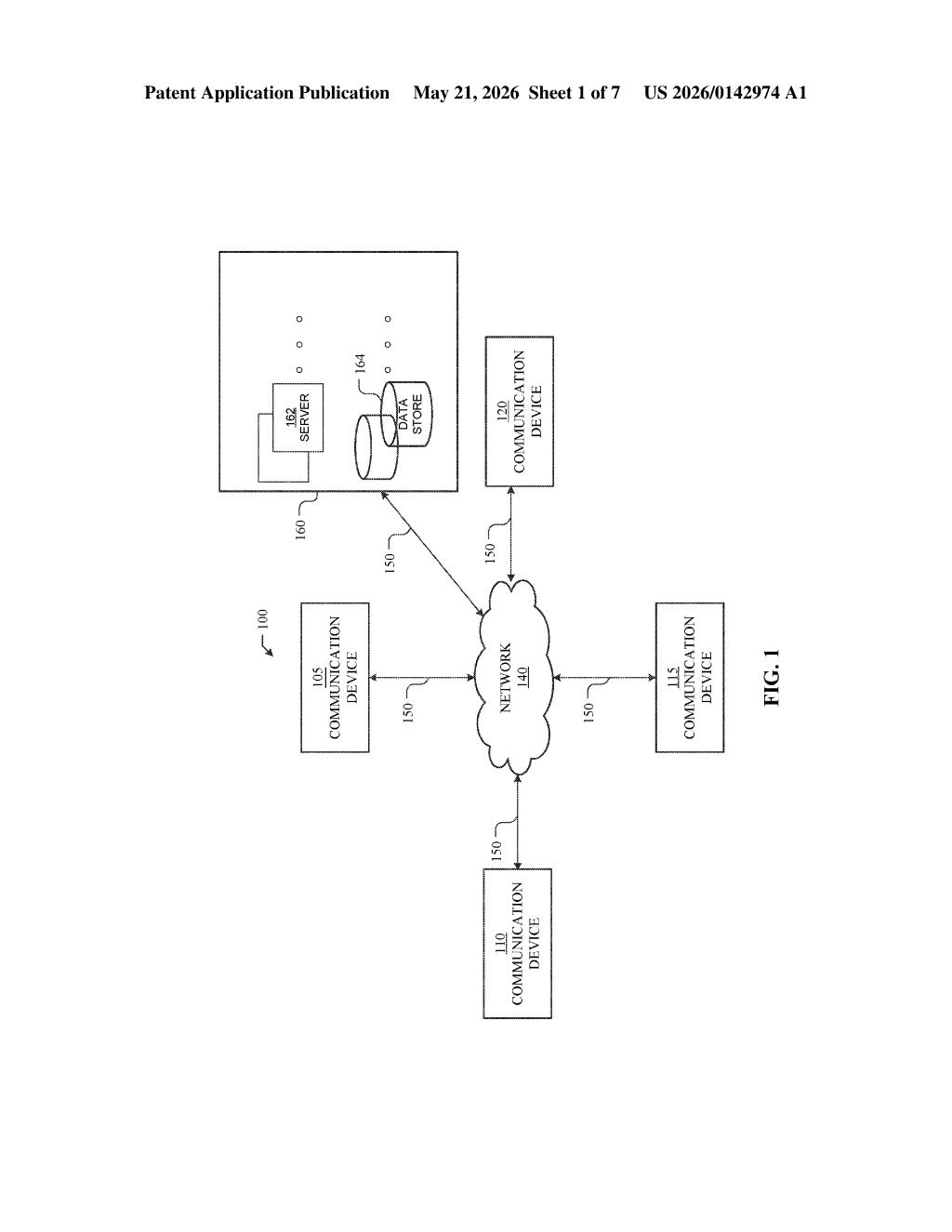
How Meta verifies your face without storing it
Imagine unlocking an app with your face, but the app's servers never actually see your face — not even a scrambled version of it. That's the core idea here. Today, most face-verification systems send a mathematical fingerprint of your face (called an embedding) up to a server, which then compares it to a stored copy. That means a company holds something derived from your biometrics, which is a privacy risk.
Meta's approach flips the script. Your device does the face-matching math locally, and the server only receives scores — numbers that say how similar your face is to a set of random, meaningless reference points the server generated. The server never sees your actual face data. It just checks whether your scores and the scores from your profile picture line up closely enough to grant access.
Think of it like a quiz where the answer sheet stays on your desk. The teacher only sees your grade, not your answers. Meta's server gets the grade; your biometric data stays home.
How the random-embedding comparison actually works
The system centers on a technique called embedding comparison via random projections. Here's the flow:
- A machine learning model on your device converts a photo or video of your face into a set of embeddings — high-dimensional numeric vectors that represent facial geometry without storing a raw image.
- A network device (Meta's server) generates a batch of randomly created embeddings — these are meaningless reference points, not real faces.
- Your device compares its face embeddings against those random reference embeddings and sends back only similarity scores — essentially a list of numbers saying how close your face is to each random point. Your actual embeddings never leave your device.
- The server independently generates its own similarity scores by comparing your profile's known face embeddings against the same random reference set. It then checks whether both sets of scores agree within a threshold — if they do, identity is confirmed.
The clever part is that the random embeddings act as a shared coordinate system. Both sides do math against the same random anchors, so the server can validate a match without ever holding your biometric template. The ML model can be pre-trained or updated periodically to stay accurate as faces change over time.
What this means for privacy in face-based login
Biometric data is uniquely sensitive — you can change a password, but you can't change your face. Regulations like BIPA in Illinois and GDPR in Europe impose strict rules on storing facial data, and several states are adding their own. A system that verifies identity without retaining biometric embeddings on the platform side sidesteps a lot of that legal exposure and, more importantly, reduces the damage radius of a data breach.
For Meta specifically, this is a meaningful signal. The company has faced significant scrutiny and litigation over facial recognition — it paid $650 million to settle a BIPA class action in 2021. A verification architecture where the platform never holds your face data would be a concrete response to that history, and could enable face-based authentication across Meta's apps and hardware products without the same regulatory headaches.
This is a genuinely thoughtful privacy-preserving design, not just a checkbox compliance filing. The random-embedding trick is an elegant way to do cryptographic-style verification with biometric data, and it solves a real problem that affects every company doing face-based auth. Whether Meta actually ships this at scale is another question, but the underlying mechanism is worth paying attention to.
There are more where this came from
We read every patent application Big Tech publishes and send you the ones worth knowing. Plain English, free, every week.
Want this weekly breakdown for a company we don't cover? Patentlyze Pro →