
Meta Files Patent for Eye Tracking Built Into Its Digital Display Headset
Meta has filed a patent that tucks the eye-tracking hardware flat inside the lens assembly of a headset, sidestepping one of the biggest reasons AR glasses still look so chunky.
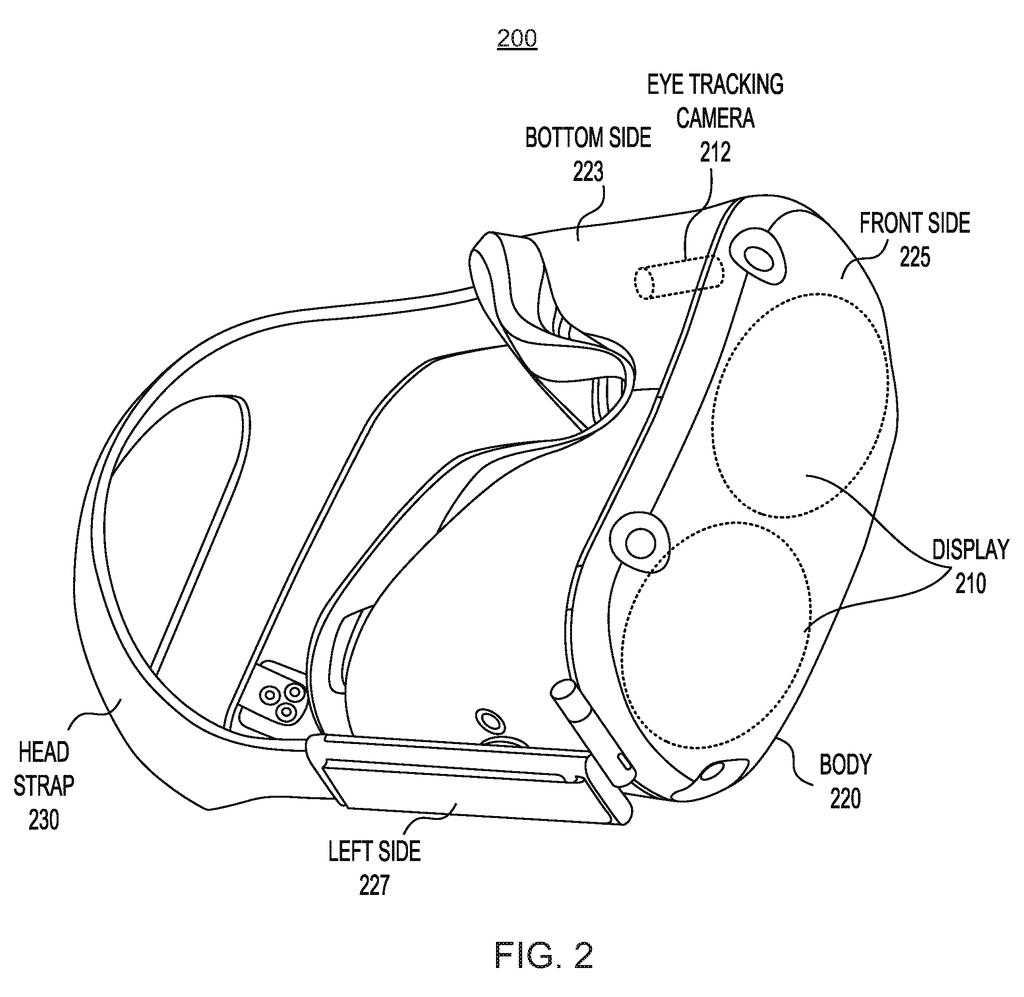
How Meta hides eye tracking inside the lens itself
A person puts on a pair of AR glasses and glances at a menu floating in front of them. The headset instantly knows exactly where they're looking, without any obvious sensors poking out at their eyes.
That's what Meta is working toward here. The patent describes a way to hide the tiny lights that make eye tracking possible inside the lens itself, flush with the optical layer rather than mounted in front of it. Those lights bounce off the eye, creating small reflections called glints, and a camera reads where those glints land to figure out your gaze direction. A small mirror inside the assembly keeps stray reflections from confusing the system.
The practical goal is a headset that's thinner and less intrusive because the eye-tracking gear doesn't need its own extra space. The display and the eye tracker share the same flat optical layer, which is a meaningful step toward glasses that actually look like glasses.
an illuminator configured to direct illumination light to a surface of an eye; an eye tracking camera configured to capture an image of the eye and a glint from the illumination light; a corrective optical assembly positioned between the illuminator and the eye …
Translation: The headset uses a light source and a camera to track the reflection of light off your eye through a corrective lens.
How the mirror, LEDs, and waveguide work together
The system centers on side-emitting LEDs, tiny lights oriented so they fire horizontally along the plane of the optical assembly rather than pointing straight at the eye. That in-plane arrangement keeps the hardware profile thin.
The optical assembly also contains a corrective element in a dedicated zone that bends (refracts) the LED light so it reaches the eye at the right angle, while a separate corrective lens zone handles the incoming light from the environment, the part that lets a user see the real world or a digital overlay. The claim language deliberately splits the corrective assembly into two functional portions, one for ambient light and one for the tracking illumination.
A small mirror sits between the LEDs and the waveguide display (the transparent layer that projects digital images). Its job is to redirect stray LED light away from the display surface, preventing double glints: phantom reflections that would make the system think the eye is in two places at once.
- Side-firing LEDs emit light flat along the lens plane
- A corrective element steers that light toward the eye
- A mirror blocks stray beams from hitting the waveguide
- A camera captures glints; a processor maps them to gaze direction
- The display then renders content based on where the eye is pointed
A mirror is positioned between the LEDs and the waveguide display to reflect light beams generated from the LEDs toward the waveguide display to mitigate any double glints that may cause ghost signals.
Translation: The device includes a mirror to prevent stray light reflections that could confuse the eye tracking software.
What this means for slimmer Meta AR glasses
Eye tracking is already inside Meta's Quest headsets, but those are large, goggle-style devices with room for conventional sensor arrays. Shrinking that hardware to fit glasses-sized frames is one of the hardest engineering problems in consumer AR, and the approach in this patent attacks it by eliminating the need for a separate sensor layer entirely.
Claim 1 is written broadly enough to cover any near-eye display that combines an in-plane illuminator, a split corrective assembly, and glint-based gaze detection in a single optical stack. That scope, if the patent is granted, would give Meta a meaningful position across a wide range of thin-form AR designs. AR optics and wearable sensors are among the more active areas of new Big Tech patents right now, and this filing adds a concrete technical building block to Meta's growing portfolio in that space.
Claim 1 covers a surprisingly broad surface area: any near-eye display that uses in-plane illumination, a corrective assembly split into separate optical paths, and glint-based gaze tracking all in one stack. That combination is not a narrow implementation detail but a structural approach to slim AR optics, which means the claim, if granted, could complicate design choices for any competitor building glasses-form AR with built-in eye tracking. The corrective-element split is the most interesting wrinkle: by explicitly separating the environmental-light path from the tracking-light path in the claim language, Meta creates a distinct legal boundary around a method that other manufacturers would almost certainly need to use. The engineering motivation is real and the claim scope is ambitious.
Get our take in your Top Stories
Liked this breakdown? Add Patentlyze as a preferred source on Google, and our plain-English take shows up more often in your Top Stories the next time Meta patent news breaks.
There are more where this came from
We read every patent application Big Tech publishes and send you the ones worth knowing. Plain English, free, every week.
The drawings
16 drawing sheets from US 2026/0236094 A1 · click any drawing to enlarge


Show the other 8 sheets


Want this weekly breakdown for a company we don't cover? Patentlyze Pro →
Be the first to weigh in