
Meta Patents a Dual-Resolution Display Panel to Widen AR Headset Field of View
Meta is experimenting with a single display panel that carries two different resolution zones side by side — a trick that could let future AR headsets see more of the world without blowing up the power budget.
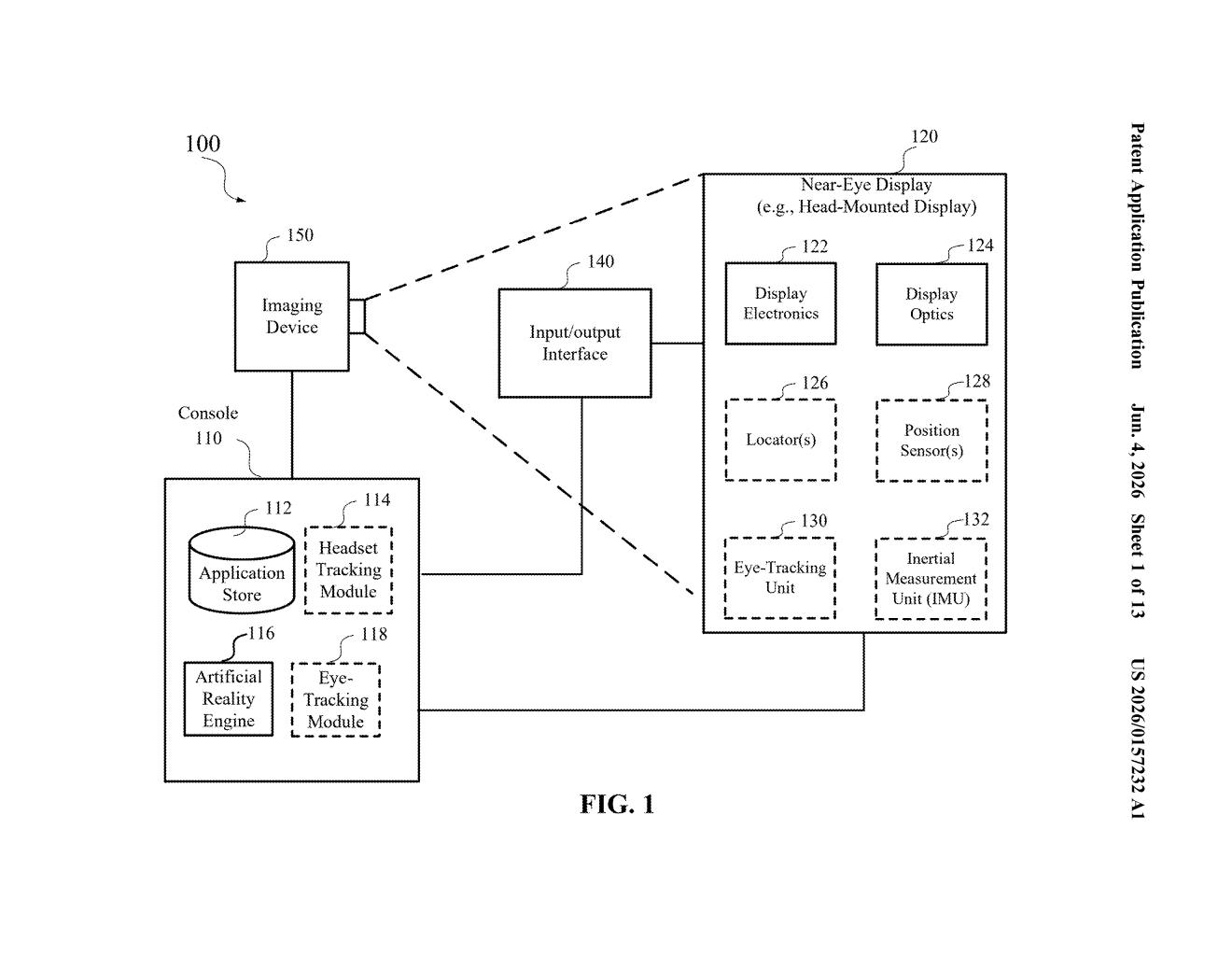
What Meta's two-zone display panel actually does
Imagine looking through a pair of AR glasses where the sharpest image is right in the center of your view — where your eyes naturally focus — while a slightly lower-resolution image fills in everything around the edges. That's basically the idea here. Meta's patent describes a single display panel split into two zones: one for crisp detail where it counts, and one for peripheral coverage where you don't need every pixel to be perfect.
The clever part is fitting both zones onto one panel instead of stacking two separate screens. The high-resolution zone sits on a specialized silicon layer bonded directly to the panel, while the wider, lower-resolution zone uses the main substrate. You get a bigger total picture without the headset growing any bulkier.
For anyone who's worn a VR or AR headset and felt like the world outside the sweet spot looks blurry or just... cut off — this kind of design is aimed squarely at that frustration.
How the silicon backplane creates a high-res center zone
The patent describes a near-eye display panel (the tiny screen that sits close to your eye in an AR or VR headset) built on a single substrate — think of it as one continuous base layer — divided into two adjacent regions.
- The first region hosts a standard active display area at a baseline resolution. This covers the wider, peripheral part of your field of view.
- The second region has a silicon backplane (a layer of driving circuitry fabricated from silicon) bonded directly onto it. On top of that backplane sits a second active display area running at a higher pixel density.
The silicon backplane matters because silicon-based pixel drivers can be packed much more tightly than drivers on a conventional glass or plastic substrate — that's how the second zone achieves its higher resolution without needing a completely separate display module.
By tiling these two zones on one panel, the total displayable area (and thus the field of view) expands beyond what a single uniform-resolution screen of the same physical size could achieve, while the high-resolution zone is positioned where visual acuity demands it most — typically the foveal center of gaze.
What this means for next-gen Meta AR glasses
Field of view is one of the biggest reasons current AR and VR headsets feel artificial. Most displays today offer a sharp image only in a narrow cone, and widening that cone usually means either a bigger, heavier optic or a screen that consumes significantly more power. Meta's tiled approach sidesteps that trade-off by accepting lower resolution only where your peripheral vision won't notice the difference anyway.
For you as a user, this could translate to headsets that feel more like natural vision — no obvious edges to the image — without the battery drain or bulk that full-resolution wide-angle screens would demand. Given Meta's public push into AR glasses with the Orion project, a compact dual-zone panel like this would be a meaningful step toward something actually wearable all day.
This is a solid, practical engineering patent aimed at a real and well-documented limitation of current near-eye displays. Meta isn't reinventing optics here — they're being pragmatic about where pixel density actually matters to the human eye, which is exactly the right framing for wearable AR. It's worth paying attention to because it aligns tightly with what Meta has been saying publicly about making AR glasses thinner and more power-efficient.
There are more where this came from
We read every patent application Big Tech publishes and send you the ones worth knowing. Plain English, free, every week.
Want this weekly breakdown for a company we don't cover? Patentlyze Pro →