
Microsoft Patents an AI That Focuses Only on the Parts of a Document That Matter
Most AI models read every word of a document whether it matters or not. Microsoft is patenting a system that teaches a model to zero in on the relevant sections, ignoring the rest more aggressively with each pass.
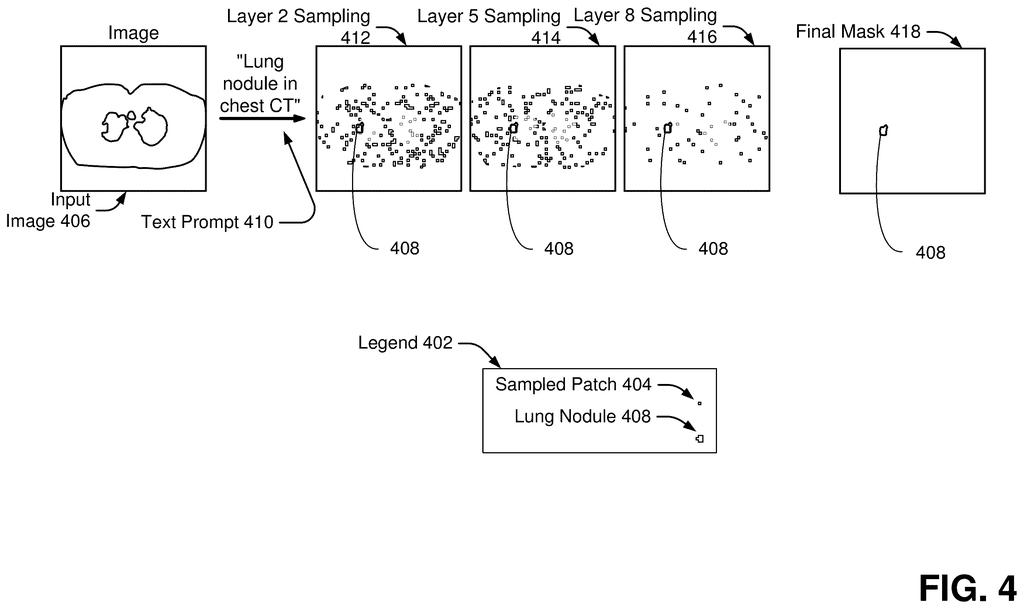
How Microsoft's iterative document scanning works
A radiologist's report runs dozens of pages. A medical AI scanning it for one specific finding still has to process the whole thing, burning through computing power on irrelevant sections. Microsoft's patent targets exactly that inefficiency.
The idea is to let the AI run multiple quick passes over a document rather than one exhaustive read. On the first pass, it assigns a rough score to each section based on how likely that section answers the question. On the next pass, it focuses more attention on high-scoring sections and less on low-scoring ones, updating the scores again. By the final pass, it has essentially learned where to look and can give a confident answer using a fraction of the processing it would otherwise need.
For you, this could mean an AI assistant that answers questions about long contracts, research papers, or medical files faster and at lower cost, without sacrificing accuracy.
using a machine learning model, determining respective confidence scores that respective portions of the data sequence match the prompt; determining sampling probabilities for the respective portions based at least on the confidence scores; sampling a subset of the portions of the data sequence based at least on the sampling probabilities …
Translation: The system calculates how well different parts of the text match your query and picks the most likely sections to read.
How confidence scores steer each sampling pass
The system takes a prompt (a question or search query) alongside a long data sequence (a document, scan, or dataset) and runs iterative attention processing across the two.
Here is how each iteration works:
- Confidence scoring: The model rates each portion of the document on how well it matches the prompt. Think of this as a rough relevance score assigned to every paragraph or chunk.
- Probability sampling: Those scores are converted into sampling probabilities. Higher-scoring sections get a better chance of being included in the next round of deep processing; lower-scoring sections may be skipped or sampled lightly.
- Attention processing: The model performs attention (the core mechanism that lets AI weigh relationships between pieces of text) only on the selected subset, not the whole document. The result feeds back into the confidence scores for the next iteration.
This feedback loop is the core invention. Instead of static, fixed attention across the entire input, the model continuously narrows focus. The patent calls this sparse attention, meaning attention that deliberately ignores large portions of the input to save compute.
After enough iterations, the model identifies the best-matching portion and returns it as the answer. The claim covers two or more iterations, leaving room for the system to dial up or down depending on document length and required accuracy.
This allows attention processing to focus computational resources on relevant portions of a data sequence while utilizing fewer computational resources on relatively less-relevant portions of the data sequence.
Translation: This method saves computing power by ignoring unimportant text and focusing only on what matters.
What this means for AI searching long medical records
Processing long documents is one of the most expensive problems in AI right now. Models that handle lengthy inputs, like full medical records, legal contracts, or multi-chapter research papers, require enormous amounts of compute per query. A system that can skip provably irrelevant sections with principled math behind the skipping, rather than arbitrary truncation, could meaningfully reduce costs and expand what AI can realistically handle.
Microsoft has been building AI tools across healthcare, productivity, and enterprise software, and a method like this fits naturally into any of those pipelines where documents are long and compute budgets matter. The new Big Tech patents filing stream around AI document understanding has grown sharply in 2025, and this one sits in the middle of that trend.
This is the 48th Microsoft filing in our Language AI coverage since May, adding to a set that includes one on user web profiles and one on building drug molecules.
The core tradeoff here is accuracy for efficiency. When you skip portions of a document based on early, imperfect confidence scores, you risk missing a relevant section that scored poorly in round one. The patent acknowledges this implicitly by requiring at least two iterations, the idea being that later passes correct early mistakes, but there is no guarantee the system converges on the right answer before the compute savings kick in.
That tradeoff is probably worth it for the use cases Microsoft seems to have in mind: long structured documents where relevant content is sparse and localized. A radiology report or a legal contract is mostly boilerplate; the signal really is concentrated. Where it gets shakier is on documents where relevance is distributed and subtle, like a dense academic paper where the key evidence might appear in a methods footnote.
The probability-sampling approach is theoretically cleaner than hard truncation (just cutting a document at a token limit), but it introduces a different failure mode: a model that confidently converges on the wrong section. How the system handles that, and whether downstream products surface any uncertainty signal to users, will matter more than the patent itself.
Get our take in your Top Stories
Liked this breakdown? Add Patentlyze as a preferred source on Google, and our plain-English take shows up more often in your Top Stories the next time Microsoft patent news breaks.
There are more where this came from
We read every patent application Big Tech publishes and send you the ones worth knowing. Plain English, free, every week.
The drawings
13 drawing sheets from US 2026/0253375 A1 · click any drawing to enlarge


Want this weekly breakdown for a company we don't cover? Patentlyze Pro →
Be the first to weigh in