
IBM Patents a System That Catches Two Types of AI Lies in Summaries
AI summarization tools have a well-documented problem: they make things up. IBM's new patent tries to catch those fabrications automatically, sorting them into two distinct categories before they can mislead anyone.
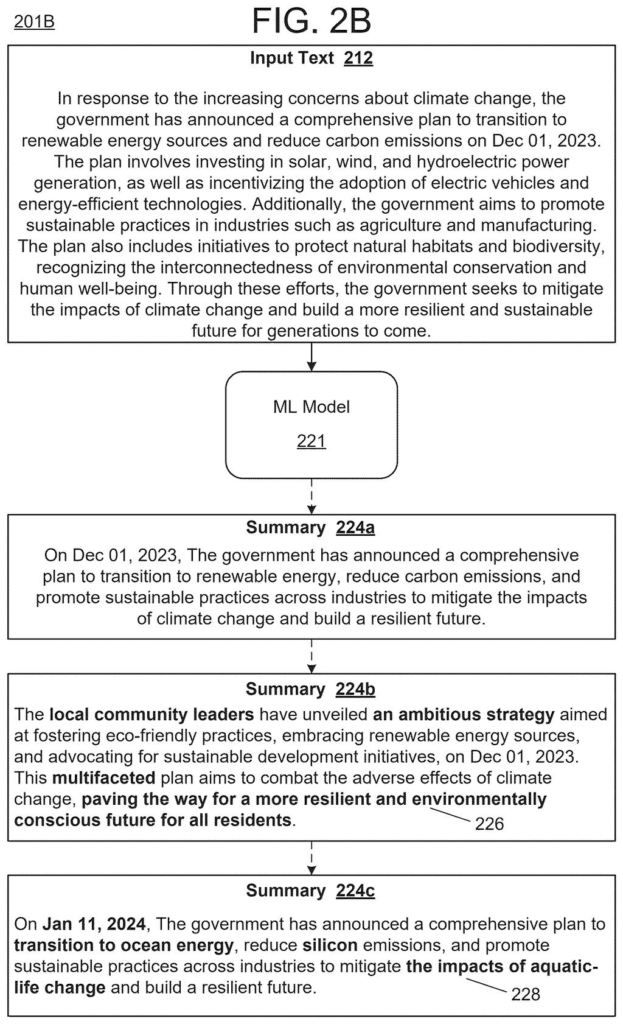
How IBM's hallucination checker reads AI summaries
A paralegal runs a 200-page contract through an AI tool and gets back a tidy one-paragraph summary. That summary lands on a executive's desk and shapes a major decision. The trouble is, the AI may have invented a clause that was never in the contract.
That specific failure mode is what IBM's patent is designed to stop. The system watches an AI model generate a summary, then compares what came out against what went in. It looks for two separate kinds of errors: places where the AI drifted from the original meaning, and places where it stated something as fact that simply wasn't in the source text at all.
When either type of error is found, the system flags it and shows it to the user in a plain visual interface, so you can see exactly where the AI went wrong before you act on what it told you.
… determining a contextual hallucination exists in the output based on a comparison of generative content included in the summary and input content included in the input text; determining a factual hallucination exists in the output based on a first group of token values included in the summary and a second group of token values included in the input text …
Translation: The system identifies two types of errors by comparing the summary against the original text and checking specific data points.
How the system splits factual from contextual errors
The patent describes a pipeline that sits alongside an existing AI summarization model rather than replacing it. The system intercepts both the original input text and the AI-generated summary, then runs two separate checks.
The first check looks for contextual hallucinations (cases where the summary changes the meaning or framing of the original, even if the individual words are defensible). This works by comparing the generative content in the summary against the source material to detect semantic drift, meaning the AI said something that is technically plausible but misrepresents what the source actually said.
The second check looks for factual hallucinations (cases where the summary contains information that has no grounding in the source text at all). This uses token values, which are the numeric codes AI models use to represent words and phrases. By comparing the token groups in the summary to those in the input, the system can identify content that was generated without any corresponding source text to back it up.
- Execute the AI model on source text to produce a summary
- Capture both input and output for comparison
- Run contextual comparison to detect meaning drift
- Run token-level comparison to detect invented facts
- Display both types of errors in a visual interface
… executing a machine learning (ML) model on an input text to generate an output that comprises a summary of the input text, capturing the input text and the output from the ML model, determining a contextual hallucination exists in the output based on a comparison of generative content included in the summary and input content included in the input text …
Translation: The software summarizes a document and then checks if the generated text accurately reflects the original source material.
What this means for businesses using AI to summarize documents
AI summarization is already in use across legal, financial, medical, and corporate settings, and the cost of a plausible-sounding error in those environments can be significant. What IBM is patenting here is less a research curiosity and more a quality-control layer: a way to give people a second opinion on what the AI told them without requiring them to re-read the entire source document themselves.
The two-category approach matters because the fixes are different. A contextual error might mean the AI model needs different instructions; a factual error might mean it needs a more reliable knowledge source. Separating them gives whoever is managing the system a clearer place to start, and IBM's AI reliability work sits squarely among the latest Big Tech patents trying to make enterprise AI outputs auditable rather than just impressive.
This is the 36th IBM filing we've tracked since May in our AI guardrails race watch, following one on keeping bad data out and one on AI self-checking its confidence.
This patent describes pure software logic that wraps around an existing AI summarization tool, checks its output for errors, and flags problems on screen. No new chips, no new hardware, no fundamental rebuilding of anything. The practical contribution is a two-category error system: one flag for when a summary drifts away from the meaning of the original text, and another for when the summary invents facts that were never there. Giving teams two distinct warnings instead of one vague alert makes it far easier to decide what to fix and how.
The remaining hurdle is accuracy. If the fact-checking step raises too many false alarms, people will stop paying attention to the warnings, which undoes the whole point. That is an engineering challenge, not a flaw in the idea itself, and it is the main distance left between this filing and something people would actually rely on.
Get our take in your Top Stories
Liked this breakdown? Add Patentlyze as a preferred source on Google, and our plain-English take shows up more often in your Top Stories the next time IBM patent news breaks.
There are more where this came from
We read every patent application Big Tech publishes and send you the ones worth knowing. Plain English, free, every week.
The drawings
14 drawing sheets from US 2026/0252798 A1 · click any drawing to enlarge


Want this weekly breakdown for a company we don't cover? Patentlyze Pro →
Be the first to weigh in