
New Google Patent Matches Search Results to Your Intended Format
When you type a search query, you often already know whether you want a video tutorial, a photo, or a written article. Google's new patent describes a system that tries to figure that out automatically, before you have to click any filter.
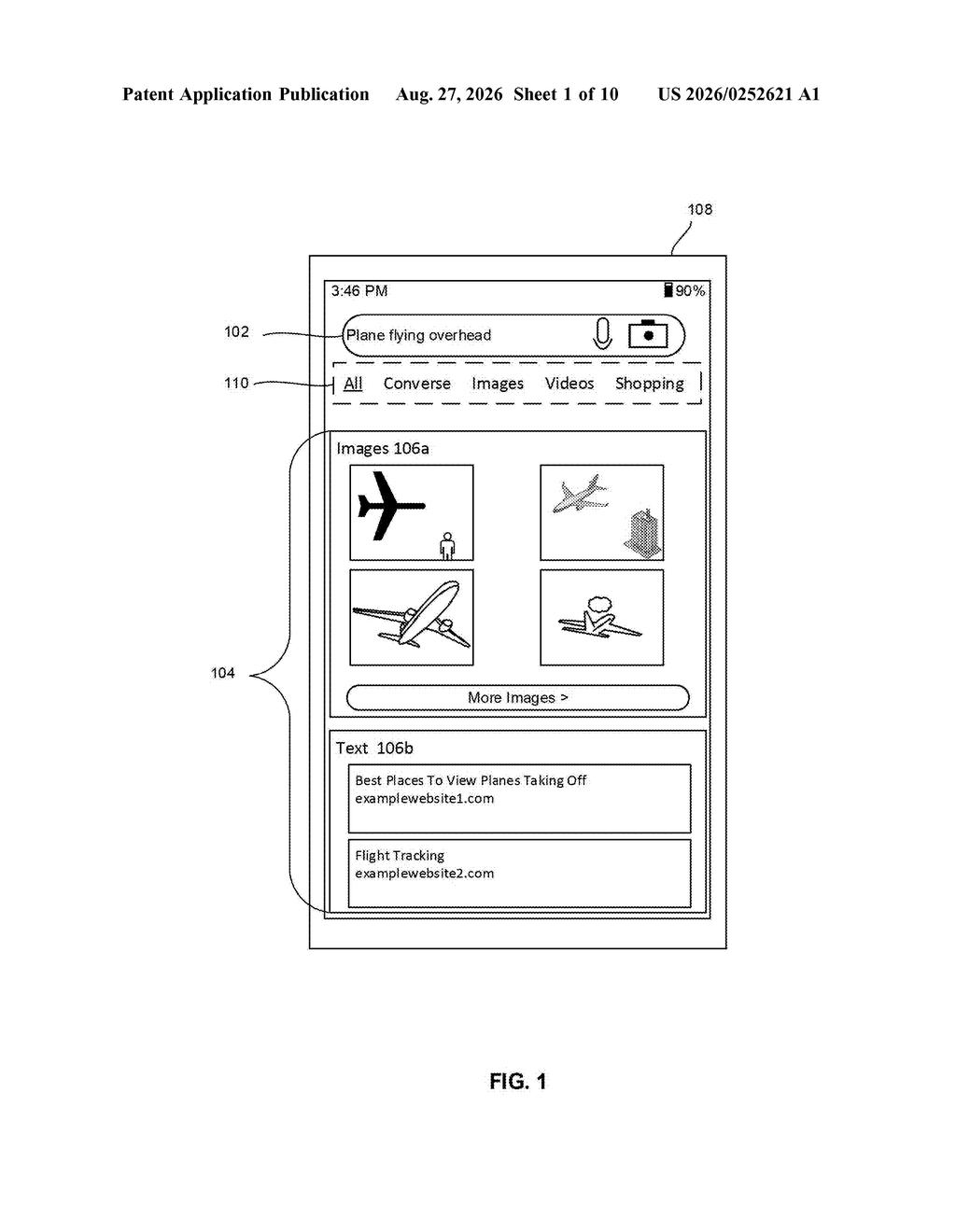
How Google's format-detection search system works
Ever typed something into Google and gotten a wall of articles when you really wanted a how-to video? That gap between what you type and what you actually need is what this patent is trying to close.
Google's filing describes a system that analyzes your search query and assigns it a score, called an intent index value, that reflects how likely it is you want a specific type of content, such as an image, a video, an audio clip, or plain text. The higher the score for a given format, the more the system steers your results toward that format.
In practice, that might mean a query like "how to tie a bowline knot" automatically surfaces video results at the top, while a query like "annual rainfall map of Brazil" pushes images forward. The system can use a simple math ratio or a full AI model to calculate the score, so it scales from lightweight to heavy-duty depending on what Google needs.
… determining, by the one or more processors, an intent index value, wherein the intent index value provides an indication that the search query is for content in a first format; …
Translation: The system calculates a score to figure out what kind of media format you actually want to see.
How the intent index score picks a content format
The patent describes a four-step pipeline that runs every time a search query comes in.
- Receive the query: A search term arrives at Google's servers.
- Score the intent: The system calculates an intent index value, a number that represents how strongly the query signals a preference for a particular content format (image, video, text, audio, or a mix). This score can be derived from a ratio (for example, how often similar past queries led users to click video results) or from an AI model that reads the language of the query itself.
- Identify matching content: Using that score, the system filters or re-ranks the pool of possible results to favor content in the format the score predicts you want.
- Deliver in the matched format: The results you see are presented in the format that corresponds to the predicted intent, not just whatever happens to rank highest by relevance alone.
The claim language is deliberately format-agnostic. It covers a "first format" (what the query implies you want) and a "second format" (what gets returned), leaving room for the two to be the same format or a mapped equivalent. The AI model route is called out specifically, which keeps the patent relevant as scoring methods evolve.
The format may be, for example, images, videos, text, audio, or a combination of these formats.
Translation: The search results can automatically shift between pictures, videos, words, sounds, or mixed media.
What this means for how Google shapes your results
For everyday users, this kind of system could reduce the friction of having to manually switch to the Images or Videos tab after a search comes back wrong. If it works well, the results page would feel more like it read your mind, serving a clip when you needed to see a process in motion and a labeled diagram when you needed to study something static.
The broader significance is about how Google controls what kind of content rises to the top of any given search, which has real consequences for publishers, video creators, and advertisers whose traffic depends on format placement. A system like this is part of a long string of interesting tech patents in the search and ad-tech space that determine whose content gets seen and in what form.
This is the 74th Language AI filing from Google we've tracked since May, adding to work like one on fixing accounts and one on video to text.
Claim 1 covers any method that takes a search query, assigns it a score reflecting how likely the user wants a specific format like video or images, and then returns results in that format. The claim does not specify which algorithm produces the score, what formats qualify, or how high the score needs to be before the system acts on it. That openness is the whole point.
Any search system that infers what kind of content a user wants and adjusts results accordingly falls within the claim's reach, which describes something searchers now take for granted: type "how to tie a knot" and get videos, type "Eiffel Tower" and get images. A claim tied to a specific model or calculation would be easier to work around. This one wraps protection around the general behavior itself, which makes it a serious legal position if enforced.
Get our take in your Top Stories
Liked this breakdown? Add Patentlyze as a preferred source on Google, and our plain-English take shows up more often in your Top Stories the next time Google patent news breaks.
There are more where this came from
We read every patent application Big Tech publishes and send you the ones worth knowing. Plain English, free, every week.
The drawings
10 drawing sheets from US 2026/0252621 A1 · click any drawing to enlarge


Want this weekly breakdown for a company we don't cover? Patentlyze Pro →
Be the first to weigh in