
Microsoft Patents an Image Generator That Searches the Web Before It Draws
Instead of generating an image from scratch, Microsoft's patented system first searches the web for real examples of what you asked for, then uses those examples as a blueprint to assemble the final picture from a library of pre-approved parts.
How Microsoft's search-first image builder actually works
Imagine you ask a design tool to create an image of a modern office lobby. Most AI image generators would just invent one on the spot. Microsoft's approach, described in this patent, is different: the system first checks whether it already has a ready-made image that matches what you asked for.
If it doesn't find one, it runs a web search for real examples of office lobbies. It picks one of those images and asks an AI to study it carefully, noting exactly what's in the picture, where each item sits, and how big each thing is relative to everything else.
Then, instead of drawing anything freehand, the system uses that layout as a guide and assembles your image by pulling matching pieces from a curated library of pre-made graphics. Think of it like a well-organized clip-art system that uses a real photograph as its assembly instructions.
How the system maps web images into asset-library parts
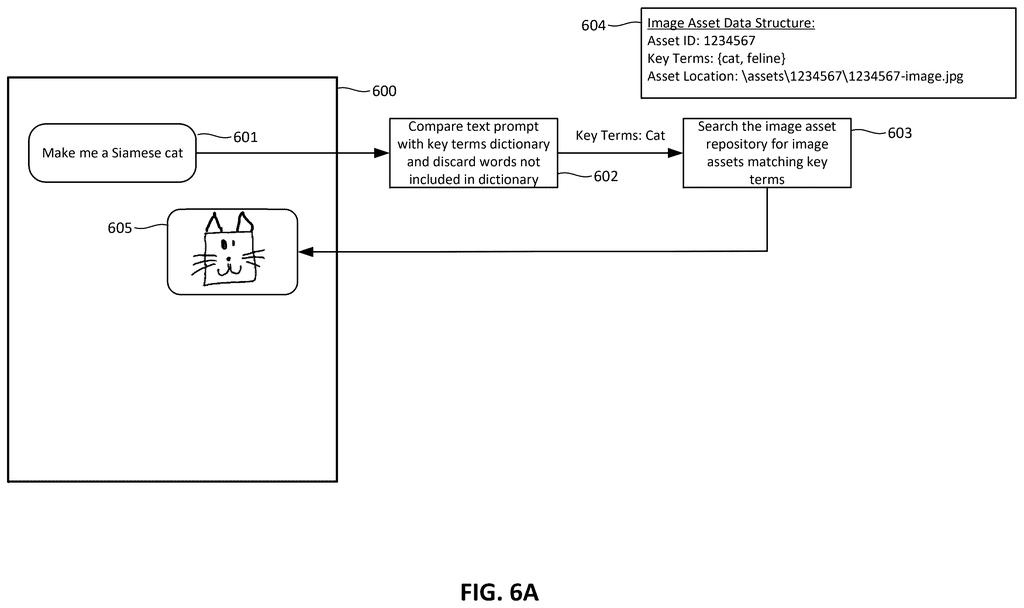
The system operates as a multi-stage pipeline inside an image generation platform. When a user submits a text prompt, the system first queries an internal image asset repository (a structured library of pre-made graphic elements) to see if it already holds content that satisfies the request.
If the repository comes up short, the system runs an external search against one or more image sources to pull in real-world example images of the requested subject matter. It selects one or more candidate images from those results.
The candidate image is then handed to a language model (an AI that understands both text and images) along with a specifically constructed prompt that instructs the model to:
- Identify the subject matter and its individual elements
- Record the positional information for each element (where things sit in the frame)
- Record the scale information for each element (how large each thing is relative to others)
That structured description acts as a layout blueprint. The system maps each described element back to matching assets in the internal repository, then assembles the final image using those assets arranged according to the position and scale data extracted from the real-world example.
What this means for AI image tools in business software
For enterprise software like Microsoft 365 or design tools aimed at business users, this approach offers something that open-ended AI image generation doesn't: predictability and brand control. By assembling images from a curated library rather than generating pixels freely, companies can ensure the output stays on-brand, avoids unexpected content, and uses assets they already own or license.
It also sidesteps one of the thorniest problems in commercial AI image tools: copyright exposure. If the final image is built entirely from pre-cleared library assets, the legal picture is much cleaner than one produced by a model trained on scraped web content. That's a real selling point for corporate customers who need to publish images at scale.
This is a genuinely practical idea aimed squarely at enterprise buyers who need AI image generation without the legal and brand-consistency headaches. It's not a flashy consumer feature, but the pipeline of 'search first, extract layout, assemble from approved assets' is a sensible architecture for tools like Microsoft Designer or SharePoint. The interesting question is how good the asset-matching step actually is in practice.
There are more where this came from
We read every patent application Big Tech publishes and send you the ones worth knowing. Plain English, free, every week.
The drawings
15 drawing sheets from US 2026/0220828 A1 · click any drawing to enlarge


Want this weekly breakdown for a company we don't cover? Patentlyze Pro →
Be the first to weigh in