
Microsoft's New Patent Wants Its AI to Build Expertise, Not Just Search for Answers
Most AI assistants treat every question the same way — they grab relevant documents and generate an answer. Microsoft's new patent describes a system that builds accumulated expertise over time, so its AI starts behaving less like a search engine and more like a seasoned specialist.
What Microsoft's 'semantic persona' RAG system actually does
Imagine you hire a consultant who reads thousands of documents in your industry. After a while, they don't just look things up — they've developed intuitions: patterns they've noticed, connections they've internalized, lessons they keep applying. Today's AI assistants mostly skip that accumulation step. They just search a knowledge base and answer.
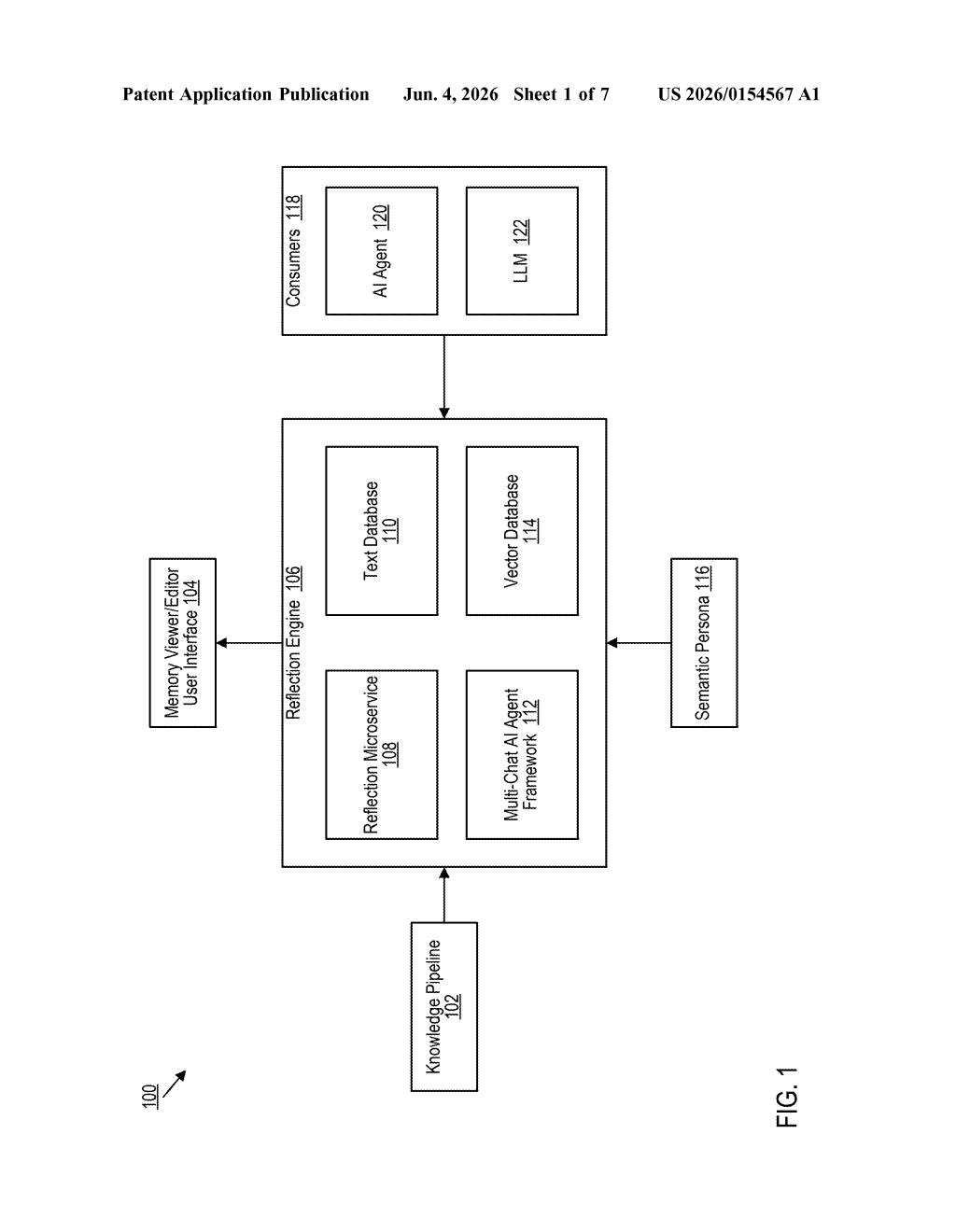
Microsoft's patent describes a system that tries to change that. It introduces something called a semantic persona — essentially a role or expertise profile that shapes how the AI processes information. A "reflection engine" reads incoming content through that lens and writes down what it learns, creating documented learnings that build up over time.
Those learnings get linked to matching entries in the AI's knowledge base, so when you ask a question, the AI pulls both the raw documents and the accumulated expert insights associated with them. The idea is that your AI assistant gets more useful the more it's been exposed to your domain — not just bigger, but genuinely more experienced.
How the reflection engine builds and maps domain knowledge
The system has three main components working together:
- Semantic persona: A defined expertise profile that tells the reflection engine how to read incoming content — what to pay attention to, what patterns to flag, what counts as a meaningful insight in a given domain.
- Reflection engine: An AI component that ingests content (documents, data feeds, knowledge sources) and — guided by the semantic persona — produces documented learnings: structured, reusable insights extracted from that material.
- Mapping layer: A generated index that links each documented learning to the specific knowledge-base entries it relates to, so that when a retrieval-augmented generation (RAG) query arrives, the large language model (LLM) can pull both the raw knowledge-base content and the associated expert learnings in a single pass.
In a standard RAG (retrieval-augmented generation) setup — where an LLM answers questions by first fetching relevant documents — the model has no memory of what it has "learned" from previous ingestion cycles. Each query starts fresh. This patent layers a persistent, persona-shaped knowledge structure on top of that baseline, so accumulated context travels with the retrieved content.
The result is that the LLM's answers can reflect not just what the documents say, but what a domain-aware system has concluded about them over time — closer to how a human expert would synthesize a body of work.
What this means for enterprise AI assistants
Enterprise AI assistants — think internal copilots for legal, finance, engineering, or healthcare teams — live or die by how well they understand domain-specific nuance. A generic RAG system pulling documents about securities law treats every filing the same way; a system that has been "reflecting" on that content through a legal persona might catch that a particular clause pattern consistently signals risk. That difference is exactly what this patent is targeting.
For Microsoft, this fits squarely into the Copilot for enterprise story. If the system works as described, it means a Copilot deployment that's been running inside a company for six months should be meaningfully better at that company's specific problems than one freshly deployed — because the documented learnings accrue. That's a competitive moat Microsoft would very much like to build.
This is a genuinely interesting architectural bet. The idea of giving a RAG system a "persona" that shapes how it learns — rather than just how it retrieves — is a meaningful step toward AI that compounds expertise rather than just scales it. Whether Microsoft ships something recognizable from this patent is an open question, but the problem it's solving (generic RAG is too stateless) is real and widely felt.
There are more where this came from
We read every patent application Big Tech publishes and send you the ones worth knowing. Plain English, free, every week.
Want this weekly breakdown for a company we don't cover? Patentlyze Pro →