
Microsoft Patent Reveals AI That Predicts Which Systems Cyberattacks Will Hit
Most security tools react after something goes wrong. Microsoft's new patent is about figuring out which machine on your network is most likely to get hit before the attack even starts.
How Microsoft spots your network's weakest links before attackers do
Every time a hacker gets inside a corporate network, they don't stop at the first machine they reach. They move sideways, hopping from one computer to another until they find something valuable. The question most security teams can't answer in real time is: which machine will they reach next?
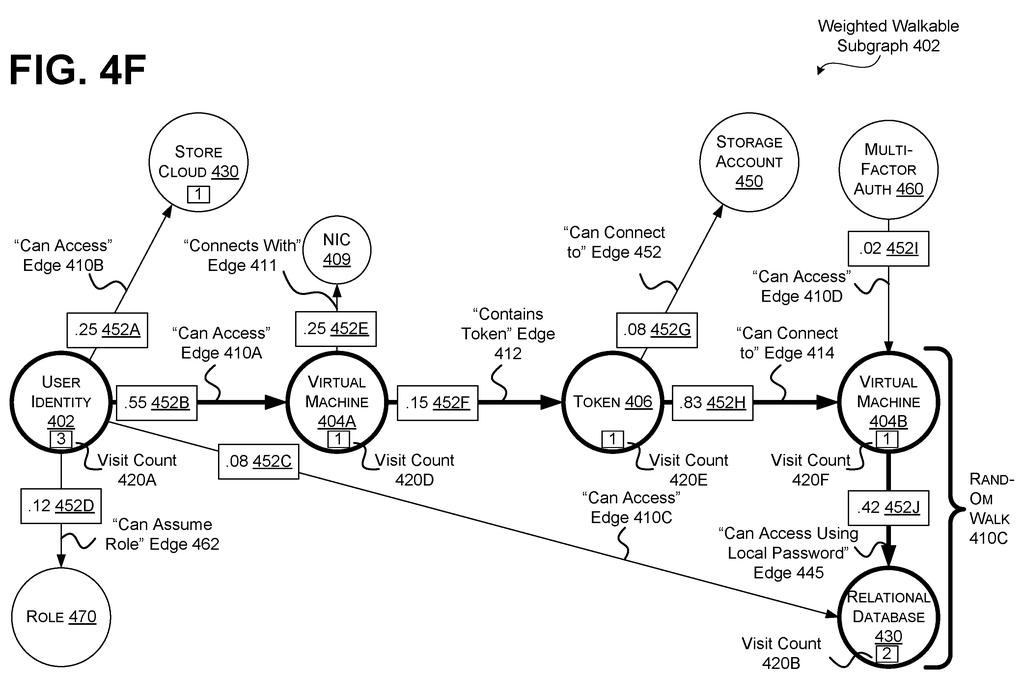
Microsoft's patent describes a system that draws a map of every computer, server, and device in a network, then simulates thousands of random paths through that map, the way water finds its way downhill. The machines that keep showing up as stopping points in those simulated paths are the ones most likely to be targeted in a real attack.
Once the system identifies those high-risk nodes, it can automatically tighten security around them, send priority alerts to IT staff, or drop in a decoy system designed to trap and expose attackers. The idea is to move from reacting to breaches to anticipating them.
How random walks through a resource graph rank attack risk
The patent describes a technique for mapping an organization's computing infrastructure as a resource graph: a mathematical structure where each machine, account, or service is a node, and every connection between them (a network link, a shared credential, a trust relationship) is an edge.
Once the graph is built, the system runs random walks through it. A random walk is exactly what it sounds like: a simulated traveler starts at one node and moves to a connected node at random, then repeats that move hundreds or thousands of times. Different walk algorithms can be tuned to model different attacker behaviors, such as preferring highly connected nodes or following likely credential paths.
The key output is a visit count for each node: how often the simulated traveler landed there across all the walks. Nodes with high visit counts are statistically likely to be on many possible attack routes, which makes them prime targets. When a node's count exceeds a set threshold, the system flags it.
The response options built into the patent include:
- Increased access controls or monitoring on that specific machine
- Deploying a honeypot (a fake target designed to lure and identify attackers) or a honeytoken (fake credentials or files that trigger an alert when touched)
- Escalating or re-prioritizing security alerts for the affected resource
What this means for enterprise security and breach prevention
Corporate data breaches almost always involve attackers moving through a network over days or weeks before anyone notices. The damage, regulatory fines, and recovery costs from a single major breach routinely run into the tens of millions of dollars. A system that can statistically identify which machines sit at the center of likely attack paths gives security teams something rare: a concrete to-do list before anything breaks.
Microsoft's ongoing push into AI-driven security tools makes this filing fit a clear pattern. If the approach works in practice, it shifts the security posture from "alert me when something breaks" to "tell me what to protect right now." For large organizations running hundreds or thousands of interconnected systems, that kind of prioritization can be the difference between catching an intrusion early and learning about it from a news headline.
Microsoft's 375th filing in our Microsoft coverage since May adds to a run that includes permanent file nicknames and AI self-correcting its own prompts.
When a company gets hacked, the attacker rarely stops at the first door they open. They move from one internal system to the next, sometimes for months, until they reach something valuable like payroll data or customer records. Those slow, spreading breaches are responsible for the most expensive incidents on record.
Microsoft's approach treats the entire network like a map, simulating thousands of paths an attacker might plausibly take and counting which systems keep showing up along the way. The ones that appear most often become the priority for protection, a process that runs at a scale no human team could manage manually.
The method is only as reliable as the map it starts with. Any system or connection left out of the inventory is invisible to this analysis, and experienced attackers often find those gaps before defenders do.
There are more where this came from
We read every patent application Big Tech publishes and send you the ones worth knowing. Plain English, free, every week.
The drawings
19 drawing sheets from US 2026/0259992 A1 · click any drawing to enlarge


Want this weekly breakdown for a company we don't cover? Patentlyze Pro →