
New Patent Tracks Exact Server Cost of Every Software Request
Every time a developer's app pings a Microsoft cloud service, that request burns CPU cycles and memory. Microsoft is patenting a system that watches exactly how much each individual request costs, and automatically does something about the expensive ones.
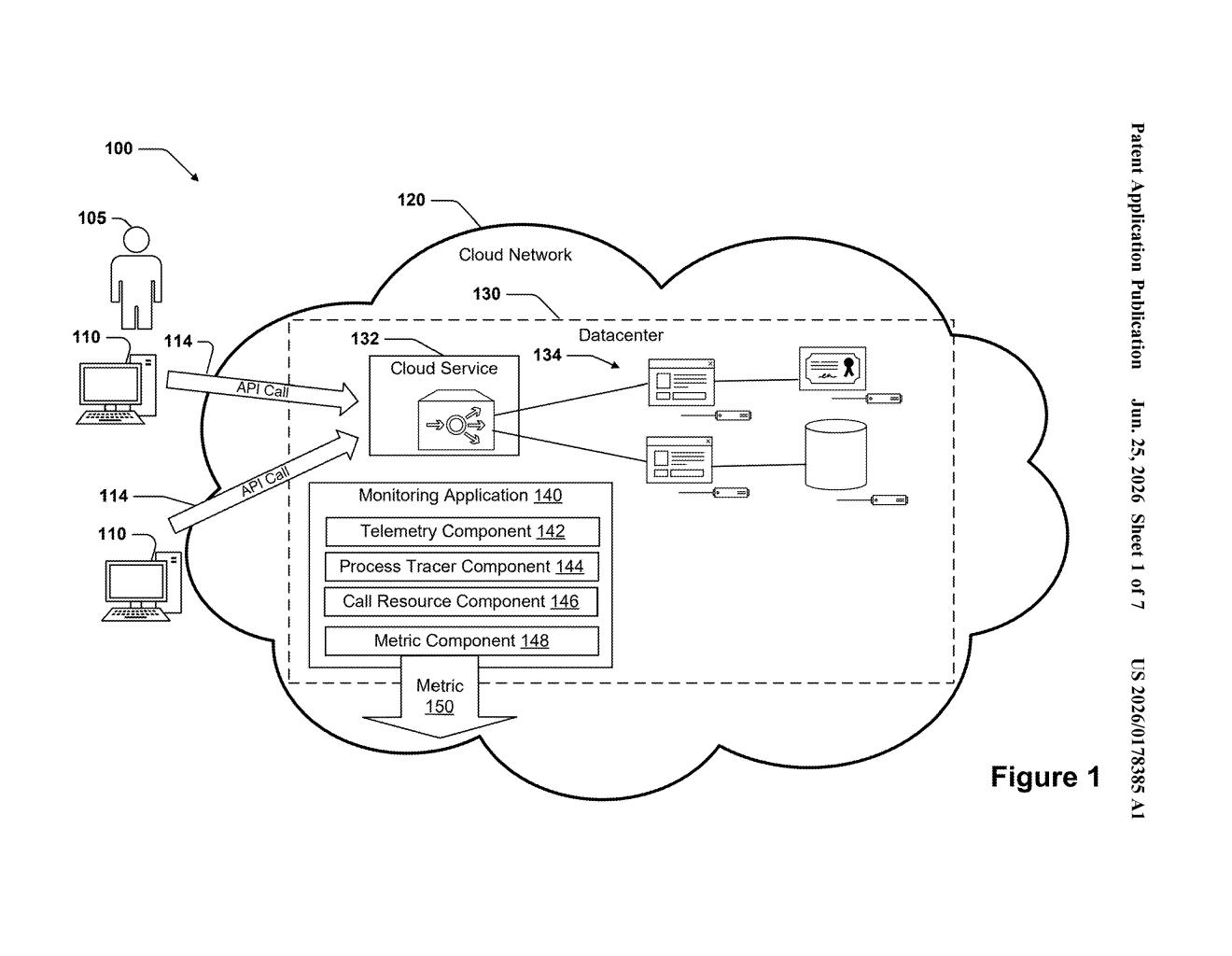
What Microsoft's per-call resource meter actually does
Imagine a restaurant kitchen where orders come in constantly, but nobody tracks which dish takes the longest or uses the most gas. You'd have no idea why your energy bill is so high. That's roughly the problem Microsoft is solving here, but for cloud computing.
When apps send requests to a cloud service (think of a request as asking the server to look something up or do a calculation), each one uses a slice of the computer's power. Today, most monitoring tools tell you the total resource bill, not which specific request ran up the tab. Microsoft's patent describes a tool that watches every individual request, notes exactly when it started and stopped, figures out which background process on the server handled it, and then calculates how much CPU and memory that one request actually consumed.
Once the system knows which requests are the most expensive, it can automatically trigger actions to cut waste, like throttling a runaway caller or flagging it for engineers to fix.
How the monitor ties API calls to server process traces
The system works in two parallel streams that it later stitches together.
Stream one: API call telemetry. As requests arrive at a cloud service, the monitoring tool records a log (called service telemetry) for each one. This log captures the start time, stop time, which server handled the call, and a process identifier (PID), a unique number the operating system assigns to the specific running program that did the work. Think of a PID like a ticket number at a deli counter.
Stream two: server process traces. Simultaneously, the tool captures a continuous trace of everything happening on the server, CPU usage, memory allocation, and other metrics, tagged to each PID. This is similar to how a fitness tracker records your heart rate over time, moment by moment.
The merge step is where the insight happens. The system takes the time window and PID from each API call and cross-references it against the process trace. That lets it calculate exactly how many resources were consumed during that specific call's lifetime on that specific server.
Finally, the system can initiate automated actions, such as throttling, alerting, or scaling, based on the per-call consumption metrics it has built up.
What this means for cloud cost control at scale
Cloud services like Azure charge customers (and incur internal costs) based on compute consumption. Right now, engineers trying to find a wasteful caller have to work backwards from blunt averages. A tool that pins resource cost to individual API calls makes it far easier to catch the one misbehaving integration that is inflating a bill or degrading performance for everyone else.
For you as a developer or IT buyer, this kind of visibility could eventually surface in Azure monitoring dashboards, letting teams spot and fix expensive code before it becomes a budget problem rather than after. It also gives Microsoft's own infrastructure teams a tighter feedback loop for optimizing the cloud services millions of businesses depend on.
This is unsexy but genuinely useful infrastructure work. The core problem, that existing cloud monitoring tools give you aggregate costs but not per-request costs, is real and widely complained about. Whether this specific patent leads to a shipping feature or just adds to Microsoft's defensive portfolio, the underlying idea is one that Azure customers would actually want.
There are more where this came from
We read every patent application Big Tech publishes and send you the ones worth knowing. Plain English, free, every week.
Want this weekly breakdown for a company we don't cover? Patentlyze Pro →