
Microsoft Patents Automatic Runtime Hardening via Static API Call Mapping
What if your build pipeline could automatically figure out exactly which system calls your app is allowed to make — and then enforce that at runtime, no extra developer work required? That's what Microsoft is filing patents around.
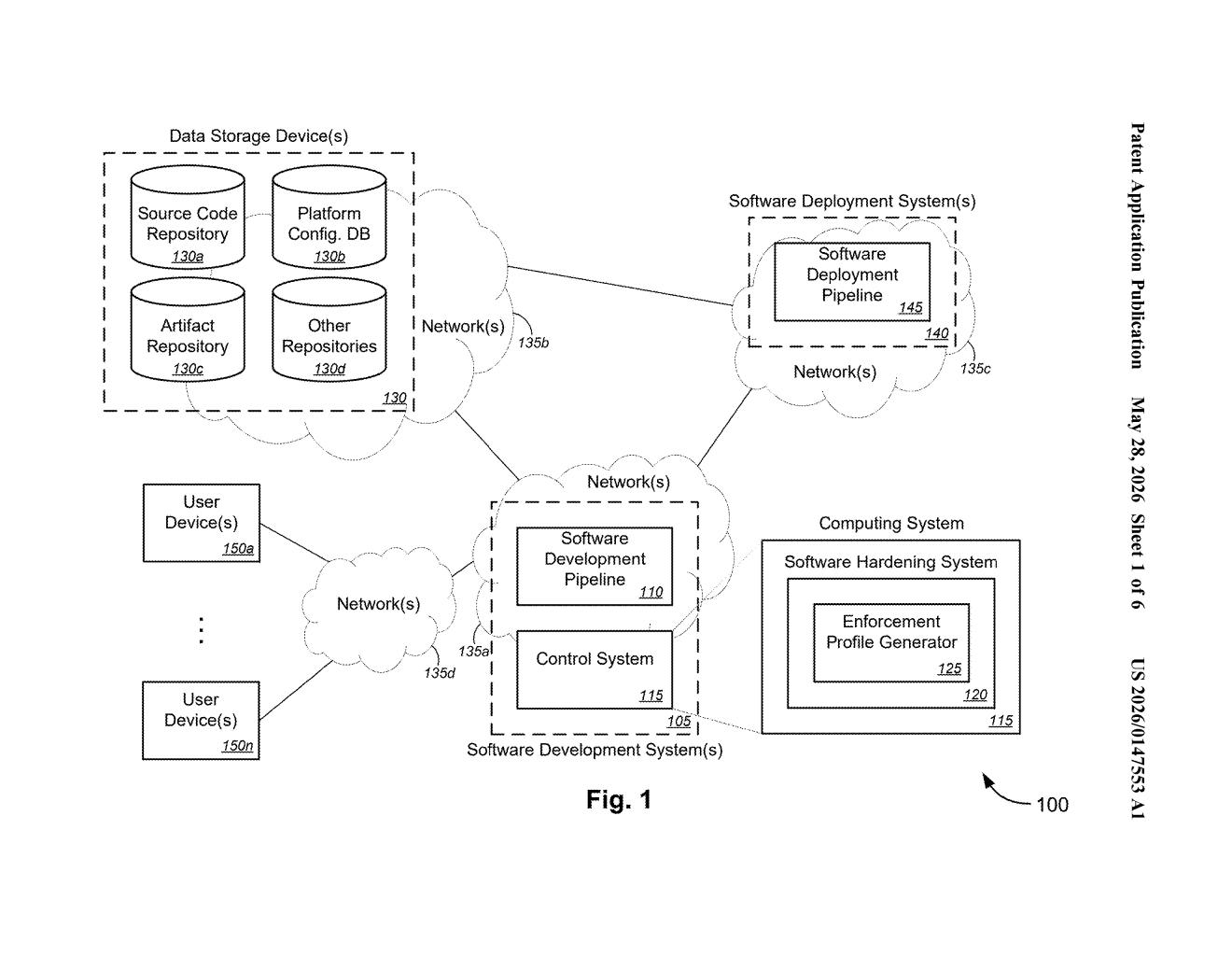
What Microsoft's auto-hardening system actually does
Imagine you hire a contractor to renovate your kitchen. Instead of giving them a master key to your whole house, you hand them a key that only opens the kitchen door. That's the idea behind runtime hardening — limiting what a program can do on a system so that even if it gets hijacked, the damage stays contained.
Right now, applying those restrictions is largely manual. Developers have to figure out which system calls their app needs, write a policy, and keep it updated as the code changes. Most teams skip this entirely because it's tedious.
Microsoft's patent describes a system that automates all of that. It analyzes your compiled app before it ever runs, maps out exactly which operating system functions it uses, and generates a custom lockdown profile automatically — all inside the normal build pipeline. When the app ships, that profile travels with it.
How static analysis builds a per-app syscall allowlist
The system works at the artifact level — meaning it analyzes the compiled binary or intermediate machine code, not just the source. This matters because source-level analysis can miss calls introduced by libraries, compilers, or code generators.
The core process goes roughly like this:
- Static analysis — the tool inspects the compiled artifact without actually running it, cataloging every system API call (think
read(),socket(),execve()) it finds referenced in the machine code. - API usage mapping — those calls are turned into structured data describing exactly what OS-level operations the program legitimately needs.
- Profile generation — combined with platform configuration data (e.g., which OS, which security subsystem), the system outputs a platform-specific enforcement profile — essentially an allowlist.
When deployed, the enforcement profile plugs into the OS's secure mode hardening feature — on Linux this would be something like seccomp (which filters syscalls at the kernel level); on Windows it maps to analogous sandboxing mechanisms. Any system call not on the allowlist gets blocked automatically.
Critically, this all happens inside the software development pipeline, so the profile is generated fresh every build and stays in sync with code changes.
What this means for DevSecOps and supply-chain security
Supply-chain attacks like SolarWinds and the XZ Utils backdoor work partly because compromised software can make arbitrary system calls — it has the same OS access as legitimate code. A tight syscall allowlist would have sharply limited what those payloads could do, even after execution.
For DevSecOps teams, the bigger win is automation. Manually maintaining seccomp profiles or AppArmor policies is one of those security best practices that almost nobody actually does at scale. If Microsoft can bake this into a build pipeline step — generating and updating the profile on every compile — it removes the human friction that keeps most teams from adopting syscall filtering at all. That's a genuinely useful shift, and it fits neatly into the kind of tooling Microsoft is building out across Azure DevOps and GitHub Actions.
This is unglamorous plumbing work, but it's exactly the kind of security automation that the industry needs more of. Syscall filtering is a proven defense-in-depth technique that gets skipped constantly because it's painful to maintain. Automating profile generation at build time is the right architectural move, and Microsoft is well-positioned to push it into developer workflows through GitHub and Azure.
There are more where this came from
We read every patent application Big Tech publishes and send you the ones worth knowing. Plain English, free, every week.
Want this weekly breakdown for a company we don't cover? Patentlyze Pro →