
Microsoft Patents a Security Scoring System That Learns From Other Companies' Breaches
Every security alert looks different depending on who you are. Microsoft has filed a patent for a risk-scoring system that figures out how dangerous a threat is to your company by looking at how the same threat played out at thousands of other companies first.
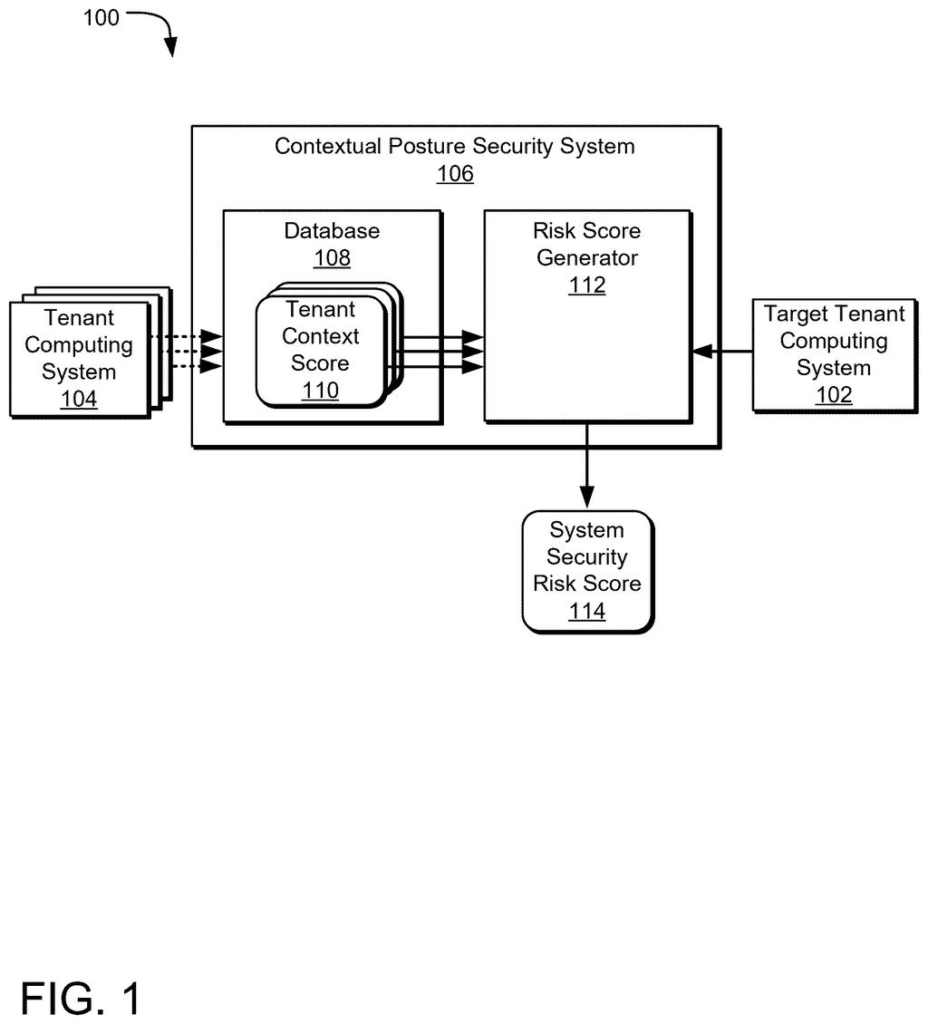
How Microsoft's risk score uses your neighbors' security history
Every time a threat pops up inside a company's cloud software, a security team has to decide: is this a five-alarm fire or a minor nuisance? That judgment call is hard, because the same flaw can be devastating in one company and almost harmless in another.
Microsoft's patent describes a system that starts with a basic danger score for the specific piece of software where a threat appeared. Then it goes further: it pulls historical data from many other companies that faced the same type of threat, and uses those real-world outcomes to estimate how risky it is for your company in particular. If similar companies got hit hard by this kind of issue, your score goes up. If it tends to be low-impact for organizations like yours, the score comes down.
The result is a risk number that reflects your actual situation, not just a generic rating pasted on every company equally. For the IT or security team watching a dashboard, this could mean fewer false emergencies and a clearer picture of what actually needs attention today.
… retrieving tenant context scores corresponding to other security issue instances of the security issue type historically arising in computing components of a plurality of other tenant computing systems …
Translation: It pulls past security data from other companies to see how similar breaches affected them.
How the imputed context score adjusts your component's raw risk
The system works in two distinct layers, and the combination is what makes it different from a basic vulnerability scanner.
Layer one: the component score. When a security issue appears inside a specific piece of a company's computing setup (say, a virtual machine, a database, or a storage account), the system assigns a component security issue score. This reflects how risky that particular flaw is based on the component itself, essentially a localized danger rating.
Layer two: the imputed tenant context score. "Tenant" here means a single customer of a cloud platform (think of each business renting space in a shared cloud building). The system retrieves historical records of the same type of security issue occurring across many other tenants, along with the risk levels those other companies actually experienced. It then calculates an imputed tenant context score, meaning it infers what the likely risk level is for the current company, based on the crowd of similar cases. "Imputed" just means estimated from external evidence rather than measured directly.
The final score combines these two layers: the raw component score is modified up or down using the inferred context score, producing a system security risk score that reflects both the technical flaw and the likely organizational impact.
The patent describes this as a cloud-scale operation, suggesting it is designed to work across the large number of business customers that use Microsoft's Azure cloud platform.
… calculates the system security risk score for the tenant computing system for the security issue instance based on modification of the component security issue score using the imputed tenant context score …
Translation: It adjusts the target company's risk score using lessons learned from those other companies.
What this means for IT teams managing cloud security alerts
For anyone managing a company's IT security, alert fatigue is a real problem. A system that flags everything at the same severity level quickly trains people to ignore alerts, which is how small issues turn into large ones. A scoring system that calibrates risk based on real-world outcomes from comparable organizations could help security teams prioritize their time more accurately.
The practical payoff is that your team might stop chasing low-risk alerts that happen to look scary on paper, and start seeing a clearer signal when something genuinely warrants urgent action. Microsoft's interest in cloud security scoring shows up across several recent filings, and this patent fits that pattern: it is less about detecting new threats and more about telling you which ones should actually keep you up at night.
Microsoft's 480th filing in our Microsoft coverage since May follows applications like one catching private data leaks and one linking spreadsheet columns.
The security analyst triaging alerts at 2 a.m. gets a different experience with this system: instead of every flaw carrying the same generic danger rating, the score now reflects what actually happened at thousands of similar organizations when that same problem appeared. A flaw that looks catastrophic on paper but has caused zero real incidents elsewhere moves down the list.
The honest limitation is that this calibration is only as good as the comparison pool. If the system misjudges which other organizations are truly similar to yours, the adjusted score could point you confidently in the wrong direction, which is worse than a generic score that at least signals its own uncertainty.
There are more where this came from
We read every patent application Big Tech publishes and send you the ones worth knowing. Plain English, free, every week.
The drawings
5 drawing sheets from US 2026/0300495 A1 · click any drawing to enlarge


Want this weekly breakdown for a company we don't cover? Patentlyze Pro →
Be the first to weigh in