
Microsoft Patents a Background Testing System for Its AI Ranking Models
Every time Microsoft's AI recommends a news article, a search result, or a product, it is making a scored guess. This patent describes a way to test whether a newer, better-scoring model is actually an improvement without exposing real users to it first.
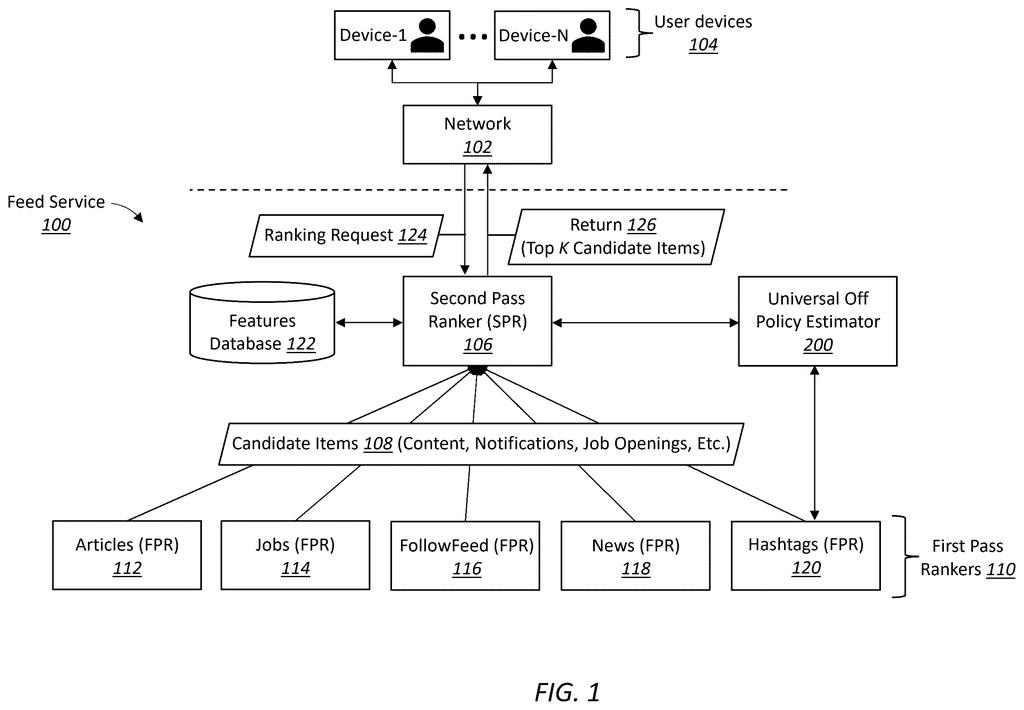
What Microsoft's AI ranking test system actually does
A recommendation algorithm stares at millions of pieces of content all day scoring each one and deciding what you see first. When Microsoft engineers want to swap in a newer, better version of that algorithm, they face a real problem: how do you know the new one is actually better before it goes live?
This patent describes a framework that lets Microsoft run a new ranking model in the background, comparing its scores against the old one using historical data, without putting real users in front of an untested system. The key trick is a scoring step called calibration: instead of comparing raw numbers from two different models (which can be wildly different in scale and meaning), the system sorts scores into evenly populated buckets and assigns consistent probability values to each bucket.
The result is that scores from completely different models can be compared on the same scale. Once the comparison shows the new model is an improvement, it gets gradually rolled out. You would never notice this process, but it is what prevents a bad update from degrading the search results or content feeds you rely on.
quantizing the uncalibrated scores into two or more discrete bins, each bin of the two or more discrete bins mapped to a discrete range of uncalibrated scores for the candidate items, the discrete bins having score ranges selected such that a difference between a number of uncalibrated scores assigned to each discrete bin is below a predetermined threshold …
Translation: The system sorts raw AI scores into balanced categories so that each group holds roughly the same amount of items.
How the score-bucketing and calibration process works
The patent covers what engineers call off-policy evaluation (OPE), a technique for measuring how well a new decision-making model would have performed on past real-world interactions, without actually deploying it. Think of it like a sports team watching game tape to predict how a new play strategy would have worked in last season's games.
The specific challenge this patent addresses is score alignment: two different AI models might both assign a score to a piece of content, but their raw numbers are not comparable. One model might score things from 0.001 to 0.999, while another runs from -5 to +5. Comparing them directly would be meaningless.
To fix this, the system quantizes (sorts) each model's raw scores into discrete bins. Crucially, the bins are sized so that roughly the same number of scores fall into each one, even if the score ranges are unequal. This is called asymmetric binning, and it prevents one bin from being swamped with data while another sits nearly empty. Each bin is then assigned a probability value representing how often items in that bin actually got clicked, purchased, or engaged with.
Once both models' scores are expressed as these calibrated probabilities:
- They can be compared on a common scale regardless of the original model architecture.
- Off-policy estimates can predict which model would perform better in production.
- The winning model can be ramped (gradually rolled out to more users) with confidence.
… an off-policy evaluation (OPE) framework for parameter-free, model-free score alignment across content ranking architectures.
Translation: This technology lets engineers test new AI ranking models safely in the background without needing manual adjustments.
What this means for the feeds and results you see daily
For anyone who uses Microsoft's search, news feeds, or AI-assisted recommendations, this kind of system is what keeps quiet disasters from happening. Without careful offline testing, a bad model update could demote good results and promote worse ones for millions of people before anyone notices the problem.
Microsoft's run of AI evaluation and ranking filings suggests the company is investing heavily in the infrastructure around AI, not just the models themselves. This patent is more about the safety net than the trapeze act. The practical payoff for you is incremental: results that are slightly more relevant, slightly fewer bizarre recommendations, and fewer situations where a platform suddenly feels off after an invisible update.
Microsoft's 68th filing in the Language AI work we've tracked since May adds to a run that includes a no-code process automation patent and efficient AI math across processors.
The thing to appreciate here is what this patent is protecting against: a silent downgrade. AI ranking models are updated constantly, and the failure mode is not a crash you would notice. It is a subtle shift where your search results feel a little worse, your news feed fills with things you do not care about, or a product recommendation misses the mark for weeks before anyone traces it back to a model change.
The calibration approach is clever in a specific way. By forcing scores into equally populated buckets rather than equally sized ranges, it avoids a common trap where a few extreme scores distort the whole comparison. That is a real engineering problem with a real solution.
This is foundational infrastructure work: not something users will ever see or feel directly, but the kind of plumbing that determines whether Microsoft's AI products get better over time or drift. For the average person, the payoff is simply that the things recommended to you are more likely to be worth your time.
There are more where this came from
We read every patent application Big Tech publishes and send you the ones worth knowing. Plain English, free, every week.
The drawings
7 drawing sheets from US 2026/0300805 A1 · click any drawing to enlarge


Want this weekly breakdown for a company we don't cover? Patentlyze Pro →
Be the first to weigh in