
Microsoft Patents a System That Maps How Office Teams Stop Talking After a Reorg
Every time a company reorganizes, informal communication channels break down. Microsoft is patenting a tool that can actually measure that breakdown in real time and flag which teams have become isolated.
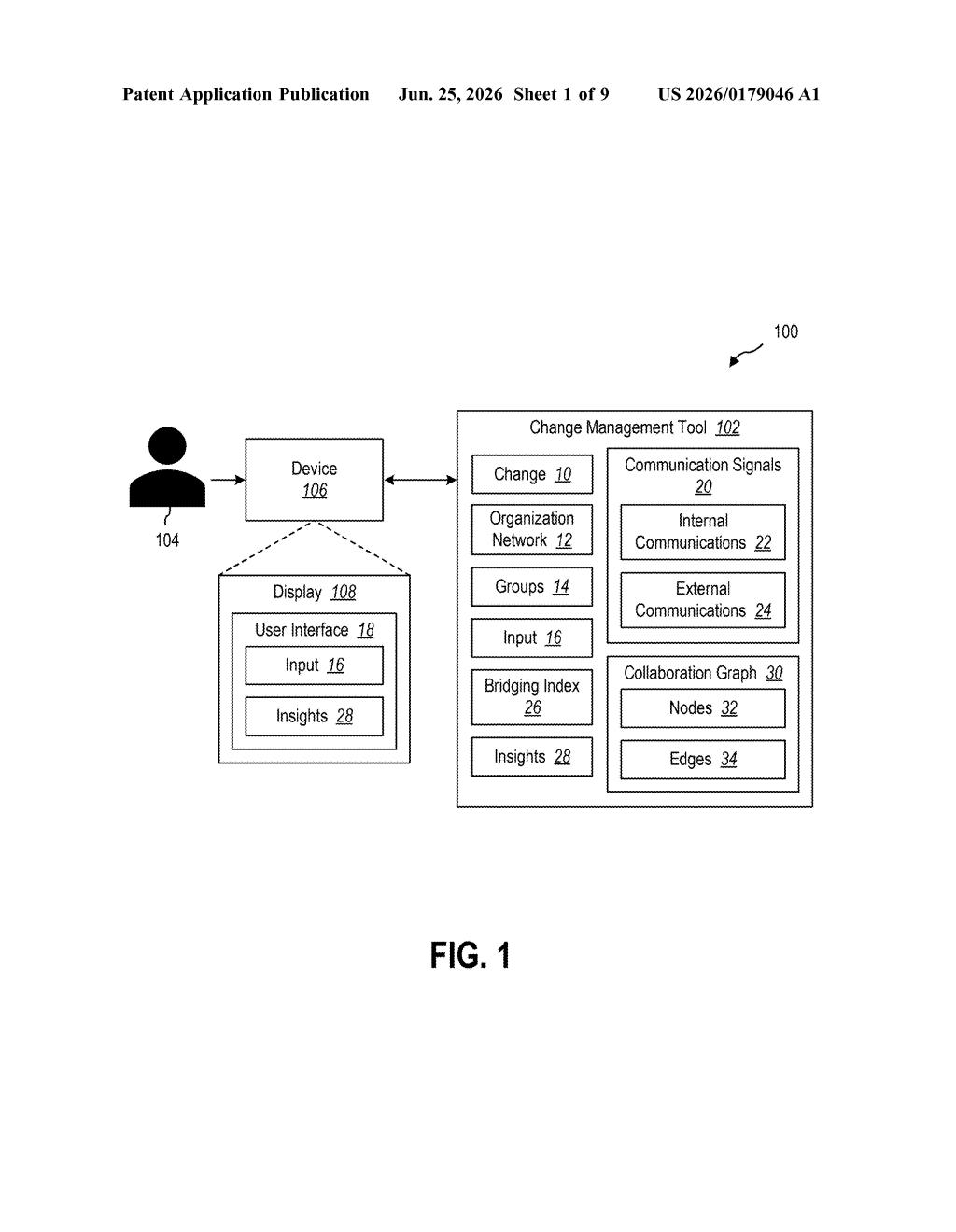
What Microsoft's team-communication tracker actually does
Imagine your company just merged two departments. On paper, everyone's connected. In practice, the people who used to share quick Slack messages stopped talking, and nobody noticed until a project fell apart three months later.
Microsoft's patent describes a system that watches how information moves between teams inside a company's collaboration tools (think Teams or Outlook). When an org change happens, like a reorg, a team split, or a new hire, the system recalculates a score for each group that reflects how much that team communicates outside its own walls. A team that goes quiet and stops reaching across departments gets a low score.
Managers can then pull up an interactive map of their organization, click on any team, and see whether that group became more or less connected after the change. The system can even automatically adjust who gets access to what, based on how communication patterns have shifted.
How the bridging index scores each team's outside connections
The patent describes a method built around something called a bridging index, a numeric score assigned to each team or group that measures how much of its communication flows outward to other groups versus staying internal. A high bridging index means a team is a connector. A low or dropping index after a reorg signals that team is becoming siloed.
The system works by analyzing communication signals (emails, meeting invites, messages) from a collaboration graph, which is a map of who talks to whom across the organization. When any structural change occurs, the system re-runs its algorithm across the whole graph and recalculates bridging scores for every group.
The output is presented as an interactive graph view inside a user interface. A manager or HR analyst can:
- See which teams' bridging scores dropped after a change
- Click into a specific group to inspect its communication intensity
- Trigger an automated action that modifies access permissions for people in that group, presumably to restore or restructure their connections to the broader org
The permission-modification piece is notable. It means the system is not just a dashboard; it can act on what it finds.
What this means for Microsoft 365 and Viva Insights
Microsoft already sells Viva Insights, a product that surfaces workplace productivity and collaboration data for managers and employees. This patent fits neatly into that roadmap. The bridging index concept is a specific, measurable way to turn abstract org-chart changes into concrete data about whether people are actually still connected after a shuffle.
For you as an employee, this is a reminder that your communication patterns inside Microsoft 365 tools can be analyzed at a team level. For people who manage organizations through change, the access-permission automation angle is the sharpest edge here: it suggests a future where the system doesn't just report on broken connections but tries to fix them automatically.
This is a genuinely useful application of organizational network analysis, a field that has been studied in academia for decades but rarely ships as a product feature this concrete. The bridging index is a tractable metric, and tying it to automated access-permission changes is a real product bet, not just a visualization exercise. Whether employees will be comfortable knowing their communication patterns trigger automated changes to their permissions is a different conversation entirely.
There are more where this came from
We read every patent application Big Tech publishes and send you the ones worth knowing. Plain English, free, every week.
Want this weekly breakdown for a company we don't cover? Patentlyze Pro →