
Microsoft Patents a System for Vetting the Documents That Feed Your AI
When you feed an AI a document to answer questions from, how do you know that document hasn't been tampered with? Microsoft is filing patents to solve exactly that problem.
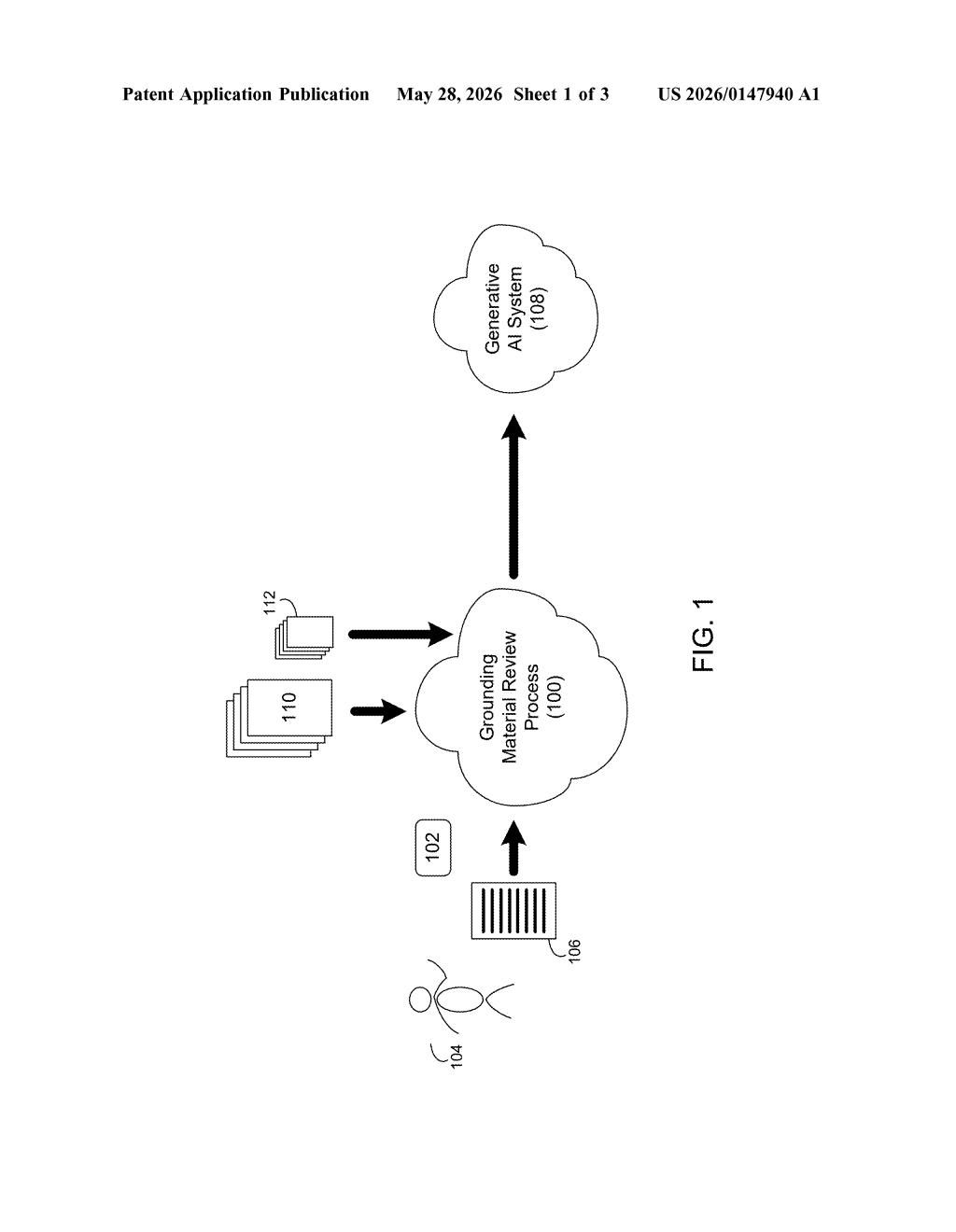
What Microsoft's grounding material review actually does
Imagine you're using an AI assistant at work, and you point it at a policy document to help answer HR questions. That sounds great — until someone quietly edits that document to contain wrong or malicious information, and the AI starts confidently repeating it.
This is the 'grounding material' problem. Grounding material is any document, database, or data source you give an AI to base its answers on. The more you trust that source, the more dangerous it is if it's been compromised.
Microsoft's patent describes a system that checks your grounding documents before the AI uses them. It compares your document against a trusted reference source over the network, flags any portions that fail integrity checks, and then lets you — the user — replace those flagged sections with corrected content before the AI ever sees it. Think of it as a spell-checker, but for factual trustworthiness.
How the integrity check flags and replaces bad content
The patent describes a pipeline with four key steps:
- Receive a grounding request — a user submits a document or data source they want a generative AI system to use as context for its responses.
- Connect to trusted-source material — the system establishes a network connection to an authoritative reference (think an official database, a verified document store, or a canonical version of the content).
- Integrity processing — the system compares the submitted grounding material against the trusted source, identifying any portions that fail one or more integrity requirements (rules about accuracy, provenance, or consistency).
- User-driven revision — rather than silently rejecting the document, the system surfaces the flagged sections to the user, who can then supply corrected replacements. The revised material is what actually gets passed to the AI.
The user-in-the-loop revision step is notable. Instead of a black-box block or silent substitution, the patent explicitly routes control back to the person who submitted the material. That design choice makes this feel oriented toward enterprise or compliance use cases where auditability matters — someone has to sign off on what the AI is grounding itself on.
Why poisoned grounding data is a real enterprise AI problem
Retrieval-augmented generation (RAG) — the technique of feeding AI systems external documents to improve accuracy — is now standard practice in enterprise AI deployments. Copilot for Microsoft 365, for example, grounds answers in your company's own files. But that's only as safe as those files are trustworthy. A tampered SharePoint doc, an out-of-date policy PDF, or an injected adversarial paragraph could steer AI outputs in harmful directions without any obvious warning sign.
This patent suggests Microsoft is thinking seriously about the integrity layer that sits between your documents and your AI. For regulated industries — healthcare, finance, legal — that layer could be the difference between a useful AI tool and a liability. If this capability surfaces in Copilot or Azure AI, it's the kind of unsexy infrastructure feature that enterprise buyers will actually pay for.
This isn't flashy AI research — it's defensive plumbing for enterprise RAG pipelines, and that's exactly why it's worth paying attention to. Grounding-data poisoning is an underappreciated attack surface, and Microsoft filing a patent around structured integrity review signals they're treating it as a first-class product concern, not an afterthought.
There are more where this came from
We read every patent application Big Tech publishes and send you the ones worth knowing. Plain English, free, every week.
Want this weekly breakdown for a company we don't cover? Patentlyze Pro →