
Samsung Patents a Display That Switches Screen Regions Between Mirror and Image Mode
Samsung is patenting a way to let users draw a box on their screen and have it behave like a mirror — or switch it back to a normal display — based on where you are, what you're doing, and how bright the room is.
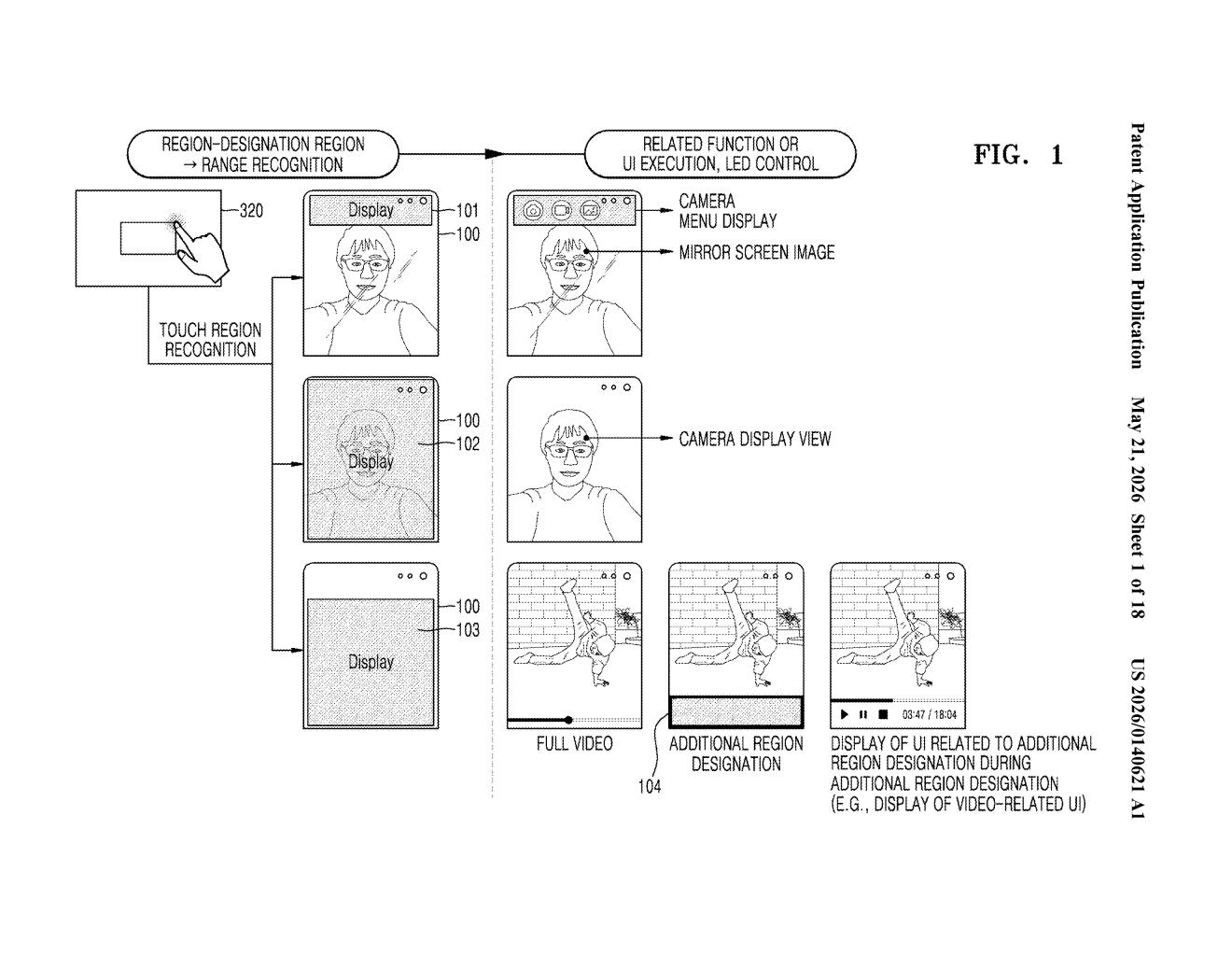
What Samsung's mirror-mode display regions actually do
Imagine you're doing your makeup using your phone screen as a mirror, but you also want to keep a corner of the display showing a video or the time. Right now, you'd have to switch modes entirely — it's all mirror or all display. Samsung's patent describes a way to do both at once.
With this system, you could draw a region on your screen and designate it as a mirror, while the rest of the display keeps showing your normal UI. The device then decides how to handle that region based on context: where on screen you drew it, how large it is, whether the display is already in a special mode, and what the surrounding environment looks like (think: lighting conditions).
The idea is that your device stops treating the whole screen as a single surface with one job. Instead, different zones can do different things simultaneously — part mirror, part screen — and the phone is aware enough of your situation to make that transition feel natural.
How Samsung's processor decides mirror vs. display mode
The patent describes an electronic device with a processor that watches for a user input designating a specific region on the display. Once that region is identified, the processor evaluates a set of contextual signals to decide whether that region should operate in mirror mode (reflecting the user's face or surroundings like a physical mirror) or display mode (showing app content, video, or UI elements).
The decision logic considers four key inputs:
- Location of the region — where on the screen you drew the selection (e.g., top-center vs. bottom-corner)
- Size of the region — a small box might default differently than a full-screen selection
- Operation mode of the display — whether the device is already in a camera, video, or ambient mode
- Surrounding environment — likely ambient light levels or contextual cues from sensors
The patent also references a camera menu and LED control in its figures, suggesting the mirror mode may tie into the front-facing camera feed rather than a purely reflective surface — essentially using the camera to simulate a mirror in real time. An additional region designation flow is called out, meaning users could define multiple zones with different modes active simultaneously.
This is fundamentally a context-aware display partitioning system, letting one physical screen surface serve multiple functional roles at the same time.
What this means for foldables and ambient-aware screens
For Samsung, which sells foldables like the Galaxy Z Fold and Z Flip, this kind of per-region display intelligence is a natural fit. The Z Flip's cover screen already flirts with mirror-like use cases, and a foldable's inner display has obvious appeal for splitting mirror and content zones side by side. This patent suggests Samsung is working on making that split feel automatic and context-driven rather than requiring manual mode switching.
More broadly, as ambient and always-on displays become standard, the line between a screen and a mirror is blurring — smart mirrors, in-store displays, and AR-adjacent devices all benefit from a surface that can toggle between reflecting and displaying. If Samsung builds this logic into its display stack, you get a phone that quietly adapts to your grooming routine, video call, or storefront kiosk without you having to dig through settings.
This is a genuinely useful UX idea buried inside fairly dry patent language. The concept of context-aware mirror/display partitioning is more interesting than it sounds — especially for Samsung's foldable lineup where cover screens and inner displays already create natural zones. It's not a paradigm shift, but it's the kind of thoughtful display behavior that would actually improve daily use.
Get our take in your Top Stories
Liked this breakdown? Add Patentlyze as a preferred source on Google, and our plain-English take shows up more often in your Top Stories the next time Samsung patent news breaks.
There are more where this came from
We read every patent application Big Tech publishes and send you the ones worth knowing. Plain English, free, every week.
Want this weekly breakdown for a company we don't cover? Patentlyze Pro →