
Qualcomm's New Patent Wants to Replace Wireless Rule Books with ML
Every wireless transmission involves dozens of configuration decisions — modulation scheme, power level, antenna mode — that today are handled by rigid rules. Qualcomm wants a machine learning model to make those calls on the fly instead.
What Qualcomm's ML transmission picker actually does
Imagine your phone switching between Wi-Fi and cellular feels seamless, but inside your modem, hundreds of tiny decisions are happening constantly: how to encode the signal, how much power to use, which antennas to activate. Today, most of those decisions follow pre-written rule books that can't adapt well to unusual conditions.
Qualcomm's patent describes handing those decisions to a machine learning model. The system looks at what's happening right now — your current wireless environment — and picks the best transmission configuration automatically, rather than following a fixed script.
The idea is that an ML model, trained on many real-world scenarios, can find better configurations faster than static rules, especially in tricky situations like dense crowds, moving vehicles, or weak signal areas. You probably wouldn't notice it working — but your connection quality and battery life could quietly improve.
How the ML model reads the scene and picks a config
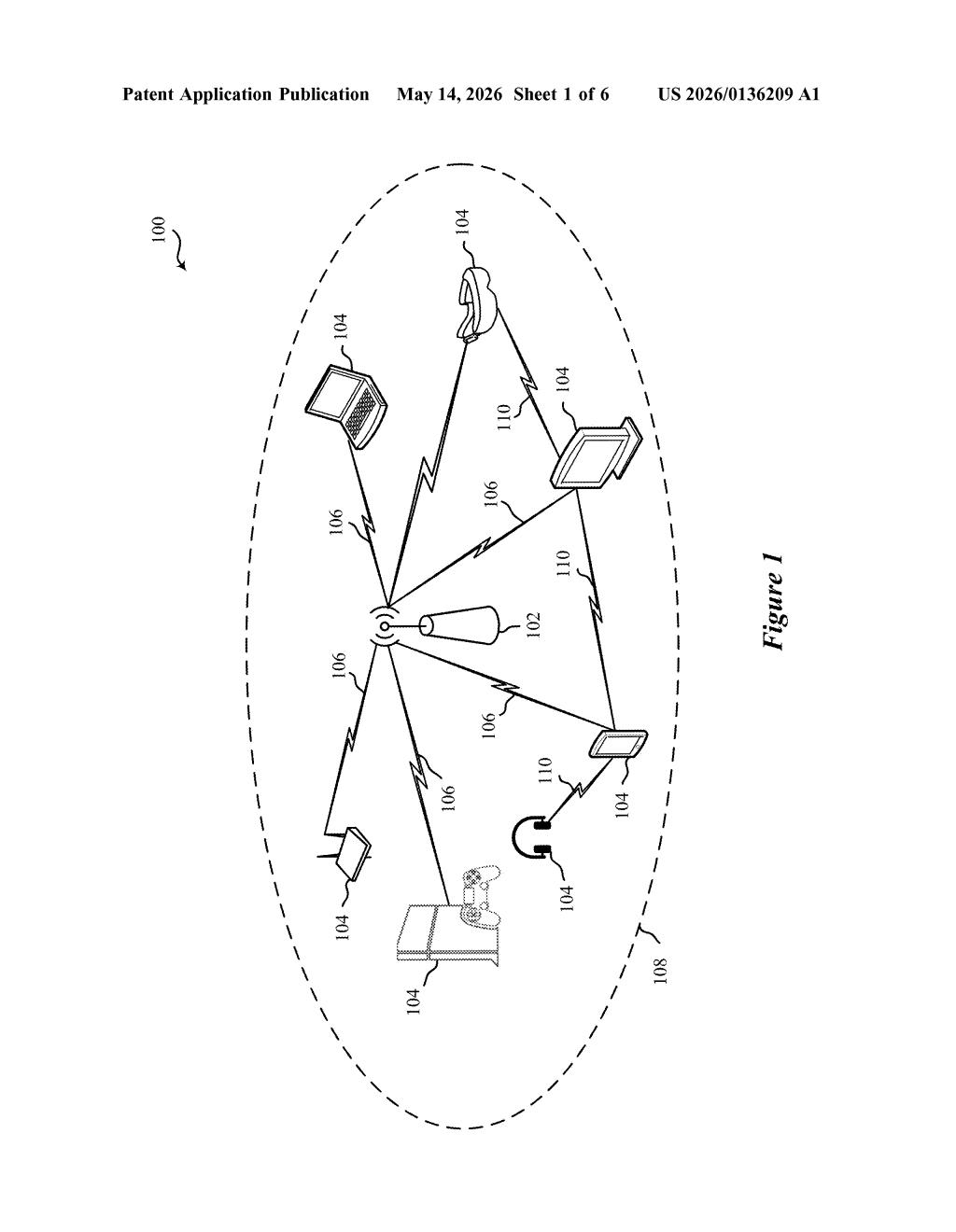
The patent describes a wireless node (which could be a phone, a base station, or any connected device) that runs an ML model as part of its transmission pipeline. Here's how the three-step loop works:
- Obtain scenario information — the node gathers data about the current transmission environment: signal quality, interference levels, channel conditions, and potentially network load.
- Feed it to an ML model — that context is passed as input to a trained model, which outputs a recommended transmission configuration (think: which modulation and coding scheme to use, beam direction, power settings).
- Process the transmission — the actual data is then sent or received using the configuration the model selected.
The claim is intentionally broad — it covers any ML model architecture doing this job at any type of wireless node. Qualcomm isn't specifying whether this is a neural network, a decision tree, or a reinforcement learning agent. That abstraction is typical of foundational IP filings: they're staking out the concept, not a specific implementation.
The practical target is almost certainly 5G NR (New Radio) and next-gen modem silicon, where channel conditions change faster than rule-based systems can adapt.
What this means for 5G modems and connected devices
Qualcomm supplies modem chips to most of the world's flagship smartphones — Apple's iPhones, Samsung's Galaxy devices, and many others — so any technology that lands in Qualcomm silicon eventually reaches billions of devices. If this ML-based configuration approach makes it into a future Snapdragon modem, your phone could be making smarter radio decisions without any software update you'd ever see.
More broadly, this fits into a wider industry push to bring AI deeper into the wireless stack. Standards bodies like 3GPP are already debating AI/ML-native air interface designs for 6G. Qualcomm filing this now puts them in a strong IP position as those standards solidify.
This is a broad, foundational patent claim — the kind companies file to establish IP territory rather than describe a finished product. The three-step method (observe, infer, transmit) is conceptually simple, which makes it both easy to understand and easy to design around. Still, given Qualcomm's central role in modem silicon and their active participation in 3GPP AI/ML working groups, this isn't a throwaway filing — it's a staking-out move ahead of 6G standardization.
Get our take in your Top Stories
Liked this breakdown? Add Patentlyze as a preferred source on Google, and our plain-English take shows up more often in your Top Stories the next time Qualcomm patent news breaks.
There are more where this came from
We read every patent application Big Tech publishes and send you the ones worth knowing. Plain English, free, every week.
Want this weekly breakdown for a company we don't cover? Patentlyze Pro →