
Samsung Patents a Mid-Drag App-Switching Gesture for Touchscreens
Imagine dragging a photo with one finger and using another finger to navigate to the exact app you want to drop it into — without ever lifting the first. That's precisely what Samsung is patenting here.
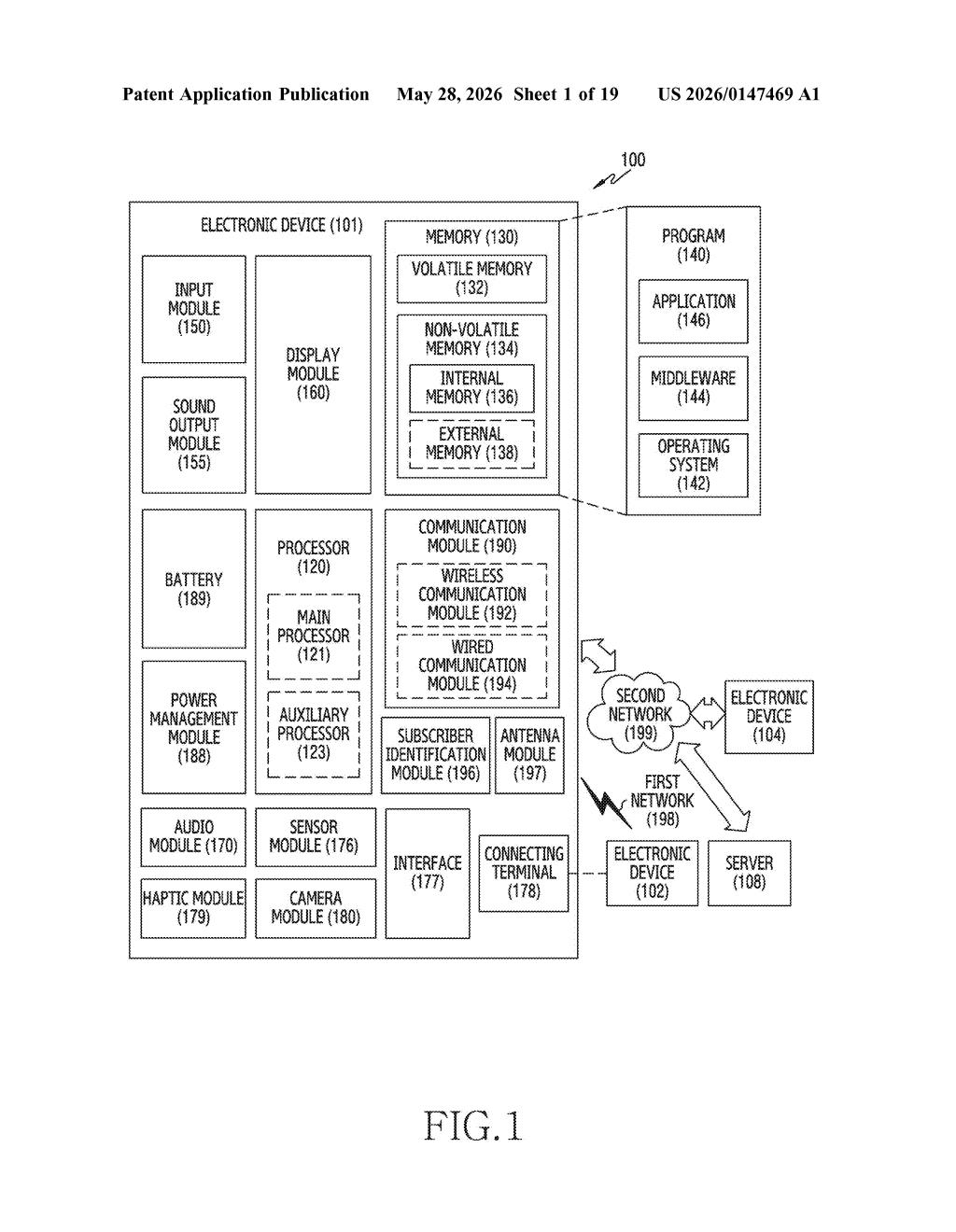
What Samsung's mid-drag app navigation actually does
Picture this: you're holding a photo in a drag gesture on your Galaxy tablet, but you realize the app you want to drop it into isn't open yet. Normally you'd have to cancel, find the app, open it, and start over. Samsung's patent describes a way to skip all of that.
While your first finger is still holding the drag, a second input — from another finger — can tap around the screen, switch apps, and even open a third app entirely. Once the destination app appears, you complete the drop as if nothing unusual happened.
This kind of simultaneous multi-finger multitasking turns what is usually a linear, one-step-at-a-time process into something much more fluid. It's especially useful on larger screens like foldables or tablets, where managing multiple apps at once is already a common habit.
How Samsung tracks two simultaneous touch inputs across apps
The patent describes an electronic device that can hold a drag gesture in suspension while simultaneously processing a completely separate touch input on a different object or app.
Here's the sequence the claim lays out:
- App A is open; the user starts dragging an object (the "first user input").
- While that drag is still live, a second application becomes visible — and the user taps something in it (the "second user input").
- Based on that second tap, a third application opens or comes to the foreground.
- The user then drops the original dragged object into the third application — completing the drag-and-drop that started in App A.
The key technical challenge here is that the device must track the first touch path as a continuous gesture while independently resolving a second touch as a navigation or interaction event — not as a cancellation of the first. Most current touchscreen frameworks treat a second finger during a drag as a pinch-to-zoom or scroll, not a discrete app-switching input.
The patent effectively requires the OS-level input pipeline to treat the two inputs as belonging to separate interaction contexts — one suspended in a drag state, the other free to navigate the UI.
What this means for Galaxy foldable and tablet multitasking
For Galaxy foldables and large-screen Android tablets, drag-and-drop across apps is already a flagship feature Samsung promotes heavily. But the current implementation requires all destination apps to already be visible on screen. This patent removes that constraint, letting you navigate to any app mid-drag, which is a meaningful usability upgrade for power users juggling files, images, or text snippets.
More broadly, this signals Samsung doubling down on multi-touch multitasking as a differentiator — territory where iPadOS and Android have both been improving but neither has fully nailed. If this ships, it would make Galaxy's drag-and-drop arguably the most flexible implementation on any mobile OS.
This is a genuinely useful UX improvement, not a speculative future-tech filing. The scenario it solves — needing to open a destination app mid-drag — is a real frustration for anyone who regularly uses drag-and-drop on a tablet or foldable. Samsung has the hardware (Galaxy Tab S, Galaxy Z Fold line) where this would immediately make sense, and the patent is concrete enough that it reads like a spec sheet for something already in development.
There are more where this came from
We read every patent application Big Tech publishes and send you the ones worth knowing. Plain English, free, every week.
Want this weekly breakdown for a company we don't cover? Patentlyze Pro →