
Nvidia Patents an AI That Rewrites a Game's Visual Settings From Plain Text
Tweaking a game's contrast or color today usually means hunting through menus full of sliders you don't fully understand. Nvidia is patenting a system that lets you describe what you want in plain words, and has AI rewrite the underlying display code to match.
What Nvidia's AI display-tuning system actually does
Getting a game to look exactly the way you want it is surprisingly annoying. Most games bury brightness, saturation, and color settings behind technical sliders, and even if you find them, moving one often breaks something else. Nvidia wants to replace all of that with a simple text or voice request.
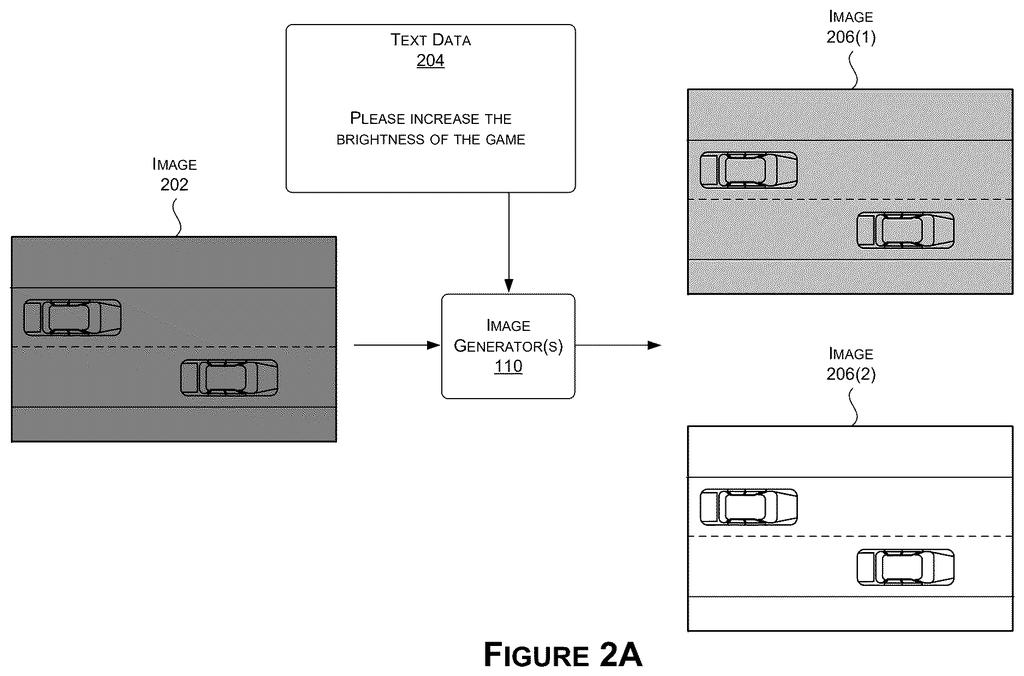
Here's how the patented system works: you type or say something like "make the colors warmer and boost the contrast a bit," and two layers of AI go to work. The first figures out what visual changes you actually mean. The second translates those changes into the low-level code that tells your graphics card how to draw each frame. You then pick from a handful of sample images showing what the result would look like before anything is applied permanently.
Once you choose a look you like, the system locks in that style for every frame the game renders going forward. No sliders, no manual adjustments, no guessing.
… determining, based at least on one or more second machine learning models processing second input data representative of the one or more parameters, shader code associated with updating the one or more visual characteristics …
Translation: The AI translates your text request into the specific computer code that changes how the game looks.
How the AI turns a text request into live shader code
The patent describes a two-model pipeline. The first machine learning model takes your input, whether text or speech, and maps it onto specific visual parameters: contrast, brightness, saturation, luminance, color balance, texture, and similar properties. This model is essentially acting as an interpreter between what you said and what the display system can act on.
The second model takes those parameters and generates shader code (small programs that run on the GPU to control how pixels are colored and lit) that encodes the requested changes. Rather than a human engineer writing shader scripts by hand, the AI produces them on the fly in response to a user's natural-language request.
Before anything is finalized, the system renders a set of sample images showing what the application would look like with the proposed changes applied. The user picks their preferred result, and that selection feeds back into the system.
From that point, the winning shader code is applied to all subsequent frames rendered by the application, meaning the visual style carries through consistently without the user having to re-adjust anything. The patent specifically calls out use in streaming contexts, where the processing could happen server-side and the styled frames are then transmitted to the viewer.
Systems and methods are disclosed that allow for users to update visual characteristics of applications—such as the contrast, saturation, brightness, luminance, color, texture, and/or the like—in real-time using one or more machine learning models.
Translation: Users can change game settings like brightness or color in real time by simply describing what they want.
What this means for game streaming and visual control
For anyone who streams games, watches game-based content, or plays on a cloud gaming service, the appeal is straightforward: getting a picture that actually looks right has always required either tolerance for default settings or patience with technical menus. A system that lets you describe your preferred look in plain language and then keeps it consistent across every frame is a real quality-of-life improvement, particularly when you have no access to local graphics settings because the game is running on a remote server.
The deeper angle here is that Nvidia is positioning AI as a layer that sits between users and GPU-level rendering, handling the technical translation work automatically. That fits a broader pattern of AI being pushed down into graphics infrastructure, and it's the kind of shift covered regularly among new tech patents in the GPU and game-streaming space as companies race to make cloud rendering feel as personal as a local rig.
Visual customization in streaming and cloud gaming is tightly limited today because you often can't touch local GPU settings when the game runs remotely, and that is the gap this filing goes after. Nvidia's two-model approach, one model to interpret intent and one to generate shader code, is a proportionate answer to it. The sample-image confirmation step is a smart design choice too, because it gives users a concrete preview before code is committed, which addresses the trust problem any AI-driven settings system faces.
Get our take in your Top Stories
Liked this breakdown? Add Patentlyze as a preferred source on Google, and our plain-English take shows up more often in your Top Stories the next time Nvidia patent news breaks.
There are more where this came from
We read every patent application Big Tech publishes and send you the ones worth knowing. Plain English, free, every week.
The drawings
18 drawing sheets from US 2026/0237182 A1 · click any drawing to enlarge


Want this weekly breakdown for a company we don't cover? Patentlyze Pro →
Be the first to weigh in