
Nvidia Patents a Location-Aware System for Reading Traffic Signs
A stop sign in Tokyo looks nothing like one in Texas. Nvidia's latest patent tackles that exact problem — teaching an AI to use geography as a hint when figuring out what a road sign means.
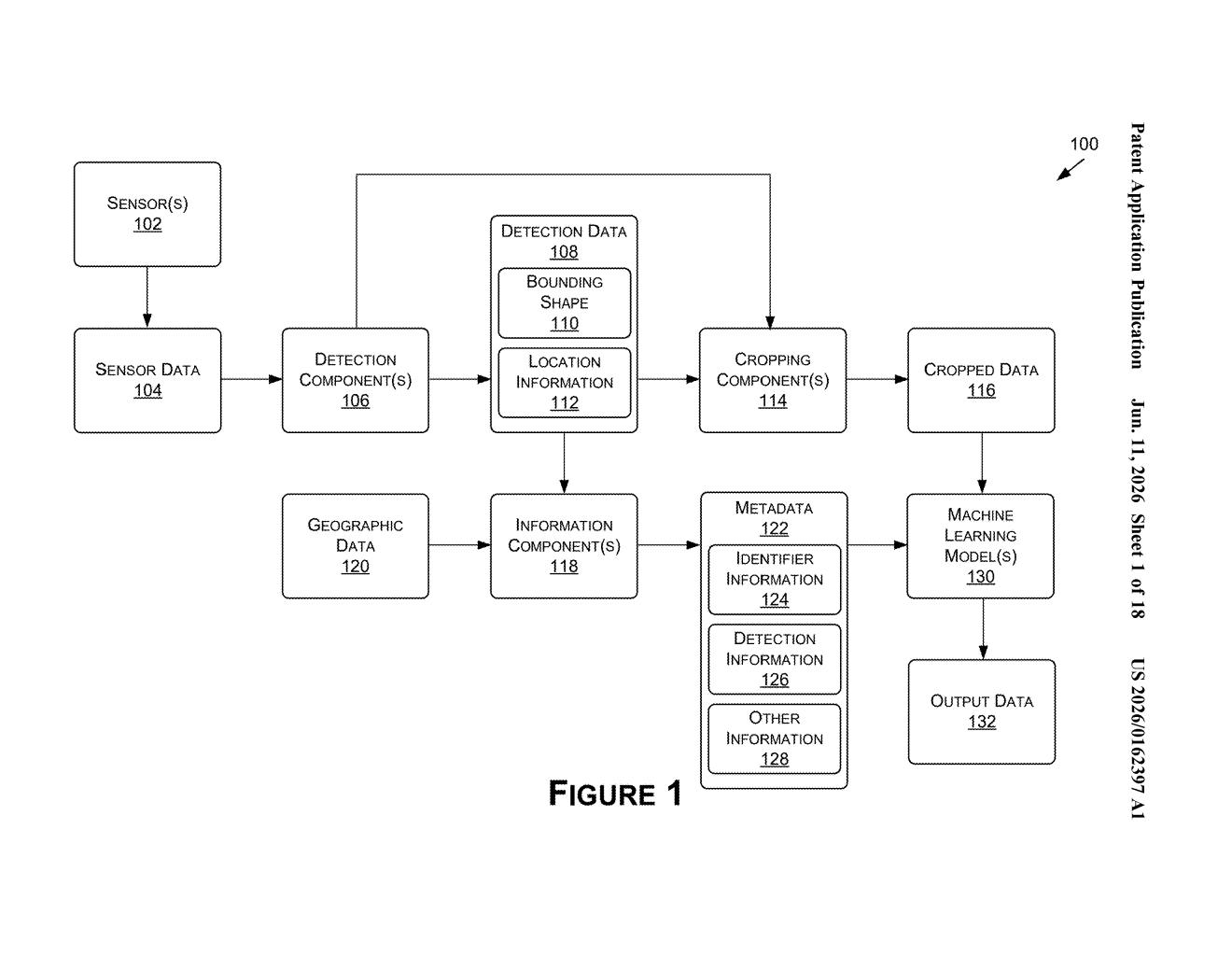
How Nvidia's traffic-sign AI uses location as a clue
Imagine you're driving through a country you've never visited and you spot a triangular red sign with an unfamiliar symbol. You'd probably use context — where you are — to guess what it means. Nvidia wants self-driving car systems to do the same thing.
This patent describes an AI that doesn't just look at a photo of a traffic sign in isolation. It also knows where the car is located — down to the geographic region — and feeds that location information into the same AI model that's analyzing the image. The idea is that a speed-limit sign in Germany follows different design rules than one in Japan or the United States, and knowing the country narrows down the possibilities dramatically.
The result is an object-classification system that's much harder to confuse. Instead of your car's brain making a pure visual guess, it's making an educated guess informed by real-world context — the same way you would.
How the model fuses cropped images with geographic metadata
The system works in a few coordinated steps:
- Crop the sign: When a camera detects a potential traffic sign in its field of view, the system draws a bounding box around it and cuts out just that portion of the image.
- Pull location metadata: The system then assembles metadata — structured data about the scene — including a geographic identifier (think country, region, or map zone) and details about the bounding box itself, like its dimensions and aspect ratio.
- Feed both into the AI: A machine learning model receives both the cropped image and the metadata as input simultaneously, rather than analyzing the image alone.
- Act on the result: Once the model returns a classification — "this is a 30 km/h speed limit sign" — the vehicle or machine uses that label to decide what to do next.
The key insight is that geographic context acts as a prior (a statistical head-start) for the classifier. Road-sign vocabularies are largely country- or region-specific, so knowing the location dramatically shrinks the list of signs the model needs to consider. Bounding-box shape data helps too — a tall narrow crop versus a wide flat one already tells the model something about sign shape before pixel analysis even begins.
What this means for autonomous vehicles crossing borders
For autonomous vehicles, misreading a traffic sign isn't an inconvenience — it's a safety issue. Current vision-only classifiers can struggle when signs are partially obscured, poorly lit, or simply unfamiliar because the car has crossed into a new region. Adding geographic metadata as a second input channel gives the model a meaningful cross-check that costs almost nothing computationally.
This also has practical implications for global deployment of self-driving systems. Rather than training separate models for every country's road-sign vocabulary, a single model informed by location data could handle a much wider range of environments. For Nvidia, whose DRIVE platform underpins many automakers' autonomous systems worldwide, that kind of geographic flexibility is a genuine engineering priority.
This is a tidy, practical idea rather than a flashy one. The insight — that geography is cheap metadata that dramatically constrains what a sign could possibly be — is the kind of engineering common sense that quietly improves real-world reliability. It's worth caring about precisely because it's unglamorous: this is the sort of detail that separates a demo that works on California highways from a system that actually works everywhere.
There are more where this came from
We read every patent application Big Tech publishes and send you the ones worth knowing. Plain English, free, every week.
Want this weekly breakdown for a company we don't cover? Patentlyze Pro →