
Nvidia Patents a Faster Multistage Motion Search for Video Encoding
Video encoders spend a surprising amount of time just figuring out how pixels moved between frames — and Nvidia thinks it has a leaner way to do that job without the usual computational baggage.
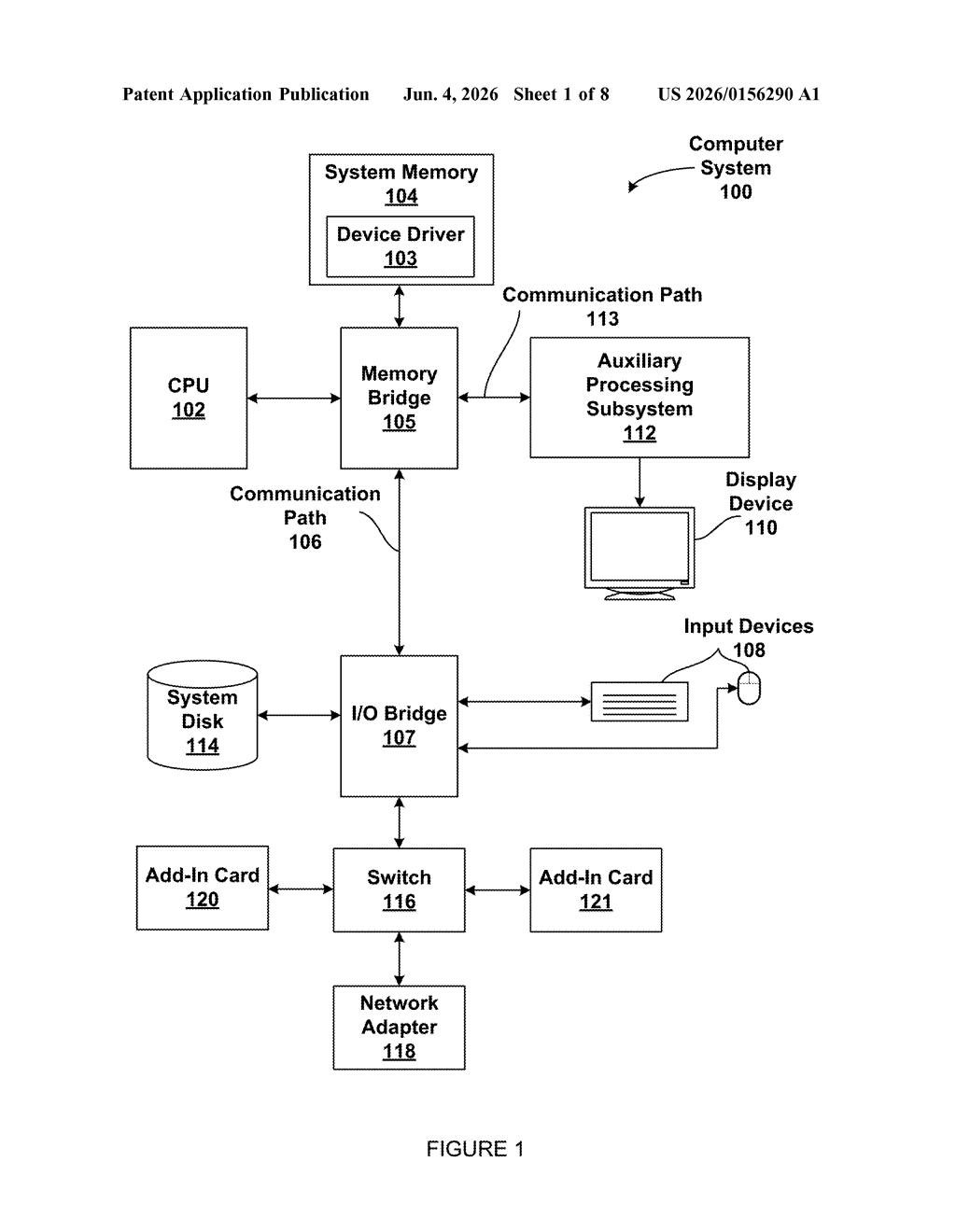
What Nvidia's multistage motion search actually does
When a video encoder compresses footage, one of its most expensive tasks is motion estimation — figuring out where each block of pixels went from one frame to the next. Get that right, and you can describe the new frame cheaply by just saying "this block moved left by 4 pixels." Get it wrong, and file sizes balloon.
Traditional methods for doing this accurately, called pyramidal approaches, build multiple scaled-down versions of each frame and search across all of them. That works well but costs a lot of processing time. Nvidia's patent describes a different approach: start with many quick, small-range searches across your frame, pick the single best result as your anchor, then zoom out in subsequent stages to refine from there.
The result is a search that gets smarter at each stage without having to rebuild the whole frame at different resolutions. You can also set it to stop early if the answer is already good enough — a useful trick when you're encoding video in real time and every millisecond counts.
How the staged search narrows down the best motion vector
The patent describes a multistage full-pixel search algorithm for video encoding. Here's how the stages break down:
- Stage 1 — Wide parallel sweep: The encoder divides the current frame into pixel groups (like macroblocks) and runs many small, independent motion searches simultaneously — each covering only a limited area. This produces a large set of candidate motion vectors (arrows describing how a pixel block moved).
- FBM selection: From all those candidates, the encoder picks a single Full-pixel Best Motion (FBM) vector — the one with the lowest cost (a measure of how poorly the prediction matches the actual pixels).
- Stage 2+ — Expanding refinement: Each subsequent stage uses the FBM from the prior stage as its starting point and searches a larger area around it. Because you're starting from an already-good estimate, you need fewer candidates to improve it.
- Early exit: The search can stop after a fixed number of stages, or terminate early if the cost value drops below a set threshold — handy for real-time or power-constrained encoding.
The key distinction from pyramidal motion estimation (the traditional approach) is that pyramidal methods require building downsampled versions of the frame — a setup cost that this design deliberately avoids. Instead, the search range itself grows across stages rather than the resolution shrinking.
What this means for GPU-accelerated video encoding
Nvidia's GPU hardware already powers a lot of video encoding — from NVENC on GeForce and data-center cards to cloud transcoding pipelines. A motion estimation algorithm that gets more accurate results with lower overhead translates directly into either better quality at the same bitrate or faster throughput on the same silicon.
For you, the downstream effect might show up in streaming quality, game capture, or AI-generated video pipelines. The early-exit optimization is especially relevant for live encoding scenarios — broadcast, cloud gaming, video conferencing — where you can't afford to spend unlimited time on any single frame.
This is solidly useful engineering rather than a conceptual leap — Nvidia is refining a core workhorse algorithm that runs inside every GPU encoder it ships. The early-exit threshold and the expanding-range design are the interesting wrinkles here; they suggest this is built with real-time and latency-sensitive workloads squarely in mind, not just offline transcoding. Worth watching if you follow NVENC performance across generations.
There are more where this came from
We read every patent application Big Tech publishes and send you the ones worth knowing. Plain English, free, every week.
Want this weekly breakdown for a company we don't cover? Patentlyze Pro →