
Nvidia Patents Neural Network System That Simulates Data Center Cooling Hardware
Running a data center is essentially a giant thermal management problem — and Nvidia wants to replace physical trial-and-error with neural networks that simulate the whole cooling system before anything gets built or changed.
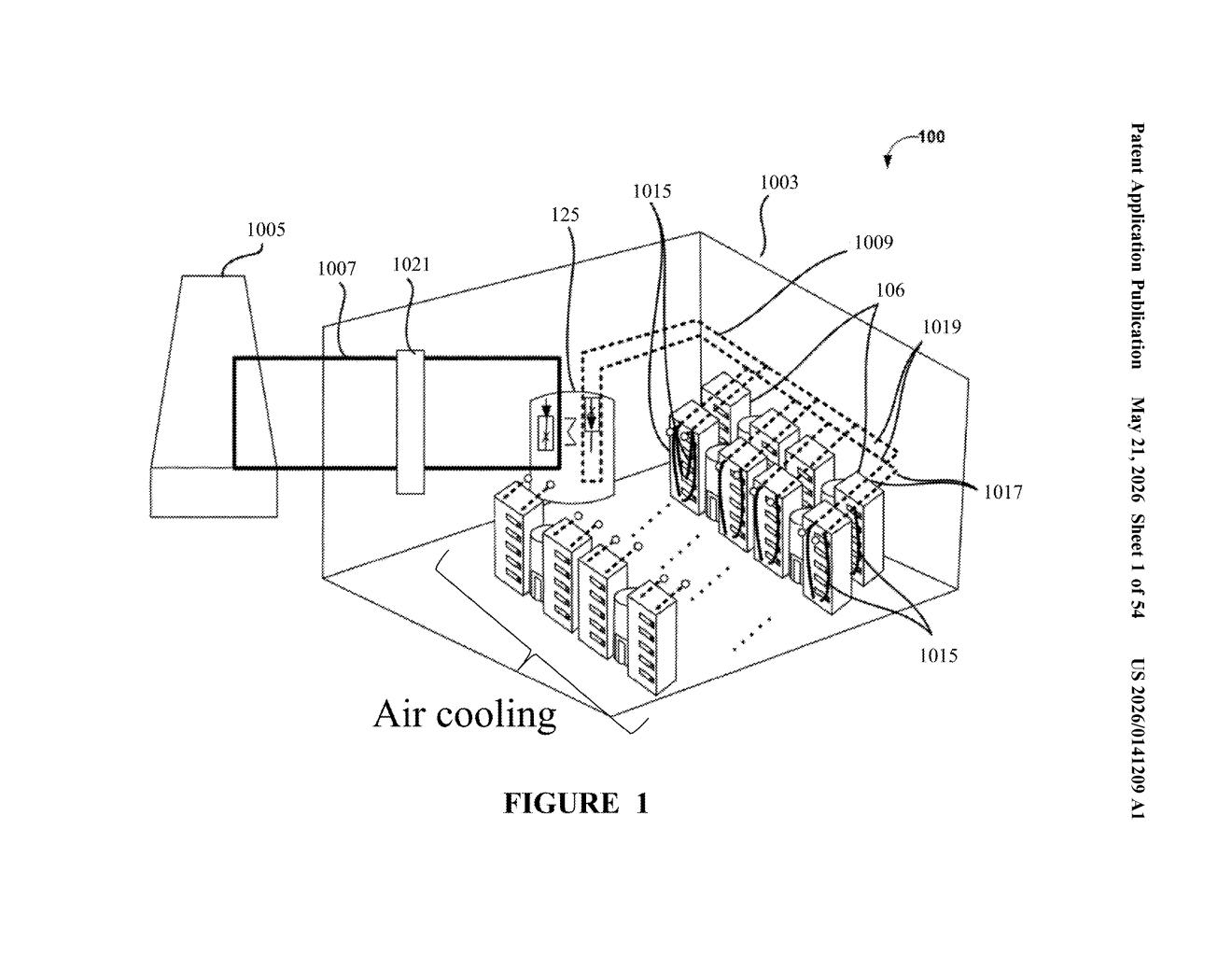
What Nvidia's cooling simulation neural network actually does
Imagine you're designing a new data center and you want to know if your cooling setup can handle the heat load without melting anything. Traditionally, you'd either build it and find out, or run slow, complex physics simulations. Nvidia's patent proposes something different: train neural networks on real data center hardware behavior, then use those networks as fast, flexible stand-ins for the actual equipment.
The idea is that each type of hardware — a rack of GPUs, a cooling unit, a fan array — gets its own neural network trained to mimic how it behaves thermally. Those individual models are then stitched together so they can jointly simulate an entire cooling system at once.
For you as a data center operator or designer, this could mean running thousands of "what if" scenarios in the time it would take to run just one traditional simulation. Change the rack density, swap in a different cooling unit, or model a summer heatwave — and get a fast, reasonably accurate answer without touching physical hardware.
How Nvidia trains and integrates the hardware simulators
The patent describes a processor-based system that coordinates one or more neural networks, each trained to simulate a specific type of data center hardware. Think of it like a team of specialists: one network learns how a particular cooling unit behaves, another learns GPU thermal output, and so on.
Once trained individually, these networks are integrated to jointly simulate a full data center cooling system. The key word is "jointly" — they're not run in isolation but coupled together so that the output of one (say, heat generated by a compute node) feeds into the input of another (the cooling unit response).
- Per-hardware training: Each neural network is trained on the behavior of a specific hardware type, capturing its unique thermal and operational characteristics.
- System integration: The individually trained models are composed into a unified simulation of the complete cooling system.
- Inference-time speed: Neural networks are far faster to query than traditional computational fluid dynamics (CFD) solvers, which model airflow and heat transfer using physics equations that can take hours to run.
The patent is broad in scope — it doesn't specify the exact network architecture or training data source, which suggests Nvidia is staking out conceptual territory around the general approach rather than a narrow implementation.
What this means for AI data center efficiency and design
Nvidia is one of the biggest beneficiaries — and drivers — of the current data center buildout. Its GPUs generate enormous amounts of heat, and cooling is increasingly the binding constraint on how densely you can pack compute. A fast, accurate simulation tool for cooling systems would be directly useful for Nvidia's own data center design work, and potentially as a product for hyperscalers and colocation operators.
This patent lands at a moment when the industry is shifting toward liquid cooling and more complex thermal architectures. Traditional simulation tools struggle to keep pace with the speed of design iteration those new approaches require. A neural-network-based simulator that can model heterogeneous hardware quickly could become a real engineering asset — especially if Nvidia ties it into its existing Omniverse or digital twin platform offerings.
This is genuinely useful infrastructure work, not flashy AI for its own sake. Nvidia is solving a real bottleneck — cooling simulation is slow and expensive, and it matters enormously as GPU compute density keeps climbing. The patent is intentionally broad, which tells you Nvidia wants to own the conceptual space, not just one implementation.
Get our take in your Top Stories
Liked this breakdown? Add Patentlyze as a preferred source on Google, and our plain-English take shows up more often in your Top Stories the next time Nvidia patent news breaks.
There are more where this came from
We read every patent application Big Tech publishes and send you the ones worth knowing. Plain English, free, every week.
Want this weekly breakdown for a company we don't cover? Patentlyze Pro →