
Nvidia Patents a Way to Reach Servers That Can't Be Contacted Directly
Some servers are locked behind firewalls so tight that no outside device can call them directly. Nvidia's new patent describes a processor-level trick that flips the usual connection order, letting those servers reach out first and then relay traffic back and forth.
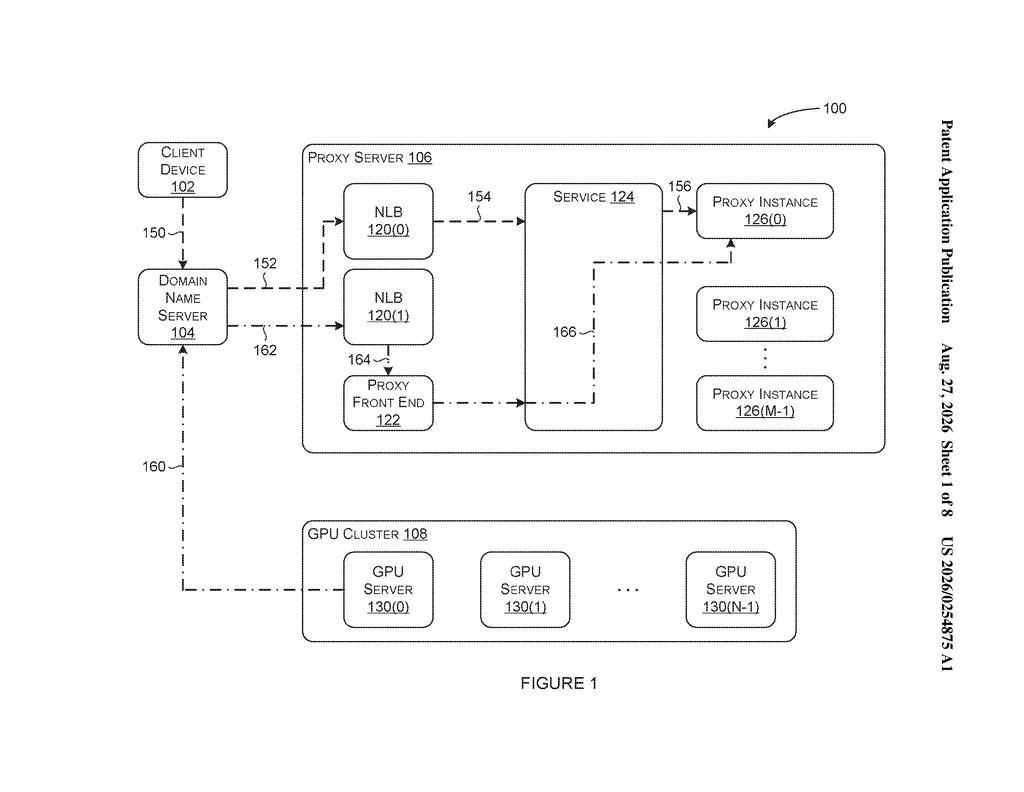
How Nvidia's reversed connection relay actually works
Every time a remote service tries to contact a computer sitting behind a corporate firewall, the firewall says no. The outside caller doesn't have a valid address to reach, so the request dies before it starts.
Nvidia's patent describes a fix where a middle-layer processor holds open two separate connections at once. Your device (the client) connects to that processor the normal way. Then, instead of the processor trying to call the hidden server, the server calls the processor, flipping the usual order. Once both lines are open, the processor stitches them together and passes traffic in both directions.
The result: your request gets to a server that, technically, you could never have reached on your own. The server never needs a public address, and nothing about your side of the connection has to change.
receive, from a client device via a first connection, a client request to perform a function with a server that is not addressable by the client device …
Translation: The system gets a request from a user to talk to a server that is normally hidden or unreachable from the outside.
Inside Nvidia's two-connection handoff architecture
The patent describes a processor with circuits designed to manage two simultaneous network connections and bridge them.
Connection one is a standard HTTP connection from a client device (a laptop, a phone, any normal requester). The processor receives that request and holds it open.
Connection two works in reverse. The processor places a stateful work request (essentially a standing instruction that remembers context over time) into a message queue. The server, which is polling that queue, picks up the work request and then opens its own outbound connection back to the processor. Because the server is the one initiating, it bypasses the firewall rules that would block an inbound call.
Once both connections are live, the processor acts as a transparent bridge:
- Data arriving from the client goes out to the server.
- Data arriving from the server goes back to the client.
- Neither side needs to know about the other's network constraints.
The transport layer uses UDP (a lightweight, fast protocol normally used for video or games) running in this reversed direction, while the client-facing side speaks standard HTTP (the protocol behind every webpage). The processor translates between them.
… a technique for routing generic HTTP traffic over a reversed UDP stream includes receiving, from a client device via a first connection, a client request to perform a function with a server that is not addressable by the client device …
Translation: This method sends standard web traffic through a special reverse connection to reach servers that are otherwise blocked.
What this means for AI workloads behind firewalls
Firewall traversal is one of the quieter headaches in enterprise computing. If you're running an AI inference server or a data-processing node inside a tightly locked corporate or cloud network, getting traffic in and out without punching holes in the firewall is genuinely hard. Nvidia's approach solves that without requiring changes to the client, changes to the server's software stack, or new firewall rules, which is the trifecta IT teams want.
Nvidia makes the chips and networking silicon that power a large share of today's AI infrastructure, so a patent like this fits a clear operational need: keeping GPU clusters reachable from outside without exposing them. The new tech patents covering AI networking infrastructure have been growing steadily as companies try to lock down the plumbing that connects models to the outside world.
Nvidia's 429th filing we've tracked since May adds to our Nvidia coverage that spans work like the manhole cover patent and the AI rounding shortcut.
The core idea here is software-defined behavior running on a processor, which means the shortest path to shipping this is a firmware or driver update rather than new silicon. That lowers the barrier considerably compared to patents that require custom hardware to exist first.
The message-queue approach is already common in cloud infrastructure, so Nvidia isn't inventing a new category of networking. What the patent does is formalize a specific arrangement where the relay logic lives inside a processor Nvidia controls, which matters for deployment in its own data-center products.
The main open question is latency. Bridging two connections through a middle layer always adds delay, and UDP-to-HTTP translation introduces overhead. Whether that overhead is acceptable depends entirely on the workload, and the patent document doesn't address it. That's the engineering gap between a filed patent and a shipped feature.
Get our take in your Top Stories
Liked this breakdown? Add Patentlyze as a preferred source on Google, and our plain-English take shows up more often in your Top Stories the next time Nvidia patent news breaks.
There are more where this came from
We read every patent application Big Tech publishes and send you the ones worth knowing. Plain English, free, every week.
The drawings
8 drawing sheets from US 2026/0254875 A1 · click any drawing to enlarge


Want this weekly breakdown for a company we don't cover? Patentlyze Pro →
Be the first to weigh in