
Nvidia Patents a Priority-Aware CAN Bus Authentication System for Autonomous Vehicles
Every sensor reading, brake command, and steering input in an autonomous vehicle travels over a CAN bus — a decades-old network protocol with almost no built-in security. Nvidia's new patent wants to fix that without slowing anything down.
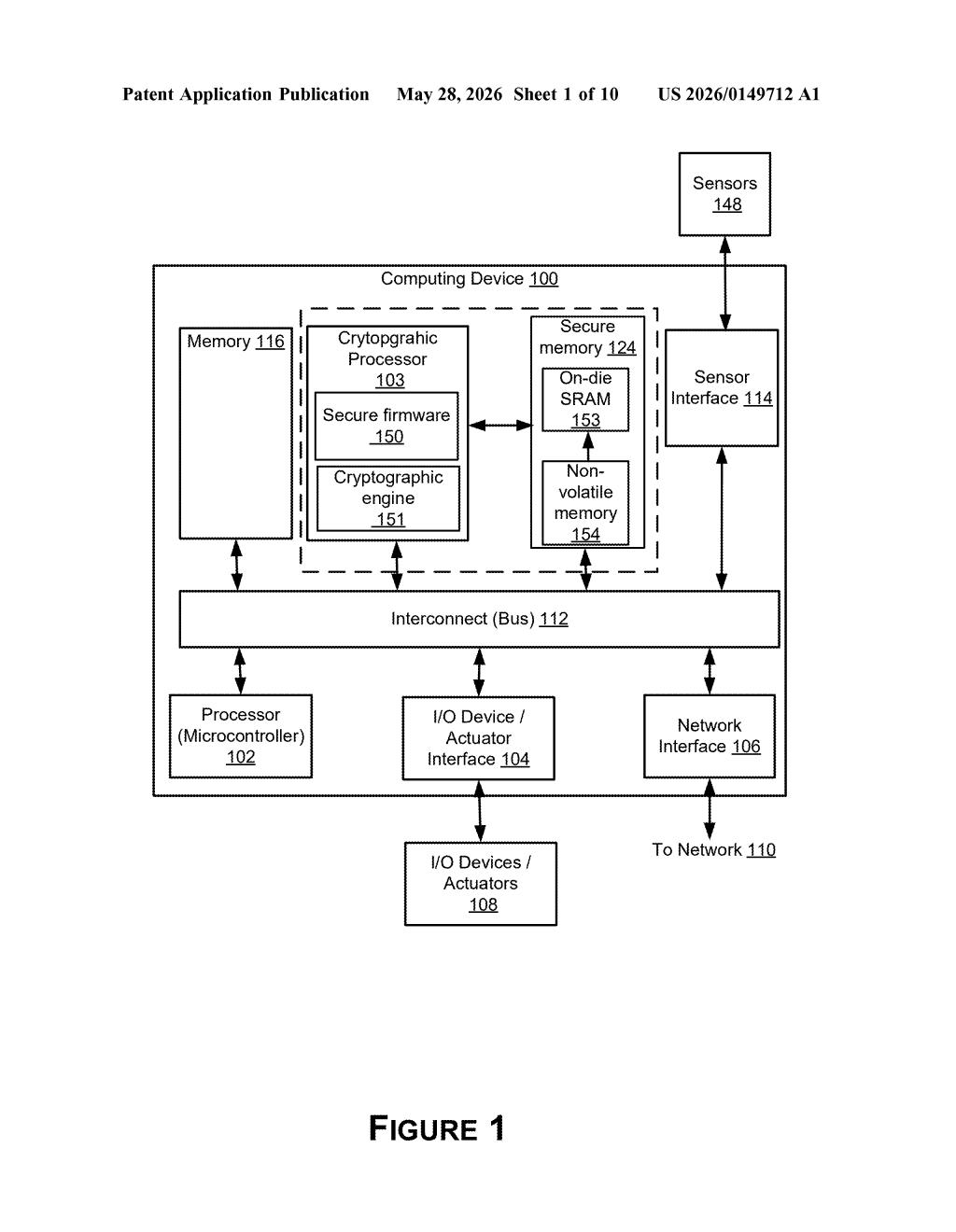
What Nvidia's CAN bus security system actually does
Imagine your self-driving car's internal network as a very busy walkie-talkie channel. Every sensor, every actuator, and every control system is shouting messages over the same wire. The problem? That wire was designed in the 1980s and has no way to verify whether a message is legitimate or has been tampered with.
Nvidia's patent describes a dedicated security chip — baked right onto the main processor die — that signs outgoing messages with a cryptographic tag, kind of like a wax seal on a letter. Any receiver can check that seal to confirm the message is genuine and hasn't been altered in transit.
The clever part is how it handles timing. Instead of holding up urgent brake-or-steer commands while it's busy signing a low-priority status update, the system breaks lower-priority messages into smaller chunks and only works on signing them during gaps when nothing critical needs attention. Your car's fast reflexes stay fast; the security happens quietly in the background.
How Nvidia's cryptographic engine signs low-priority packets
The patent centers on a cryptographic engine implemented as an on-die discrete processor — meaning it's a dedicated security core sitting right next to the main compute cores on the same chip, with its own isolated secure memory that normal application code can't touch.
When an application wants to send a message over the CAN (Controller Area Network) bus — the standard low-speed network that connects ECUs, sensors, and actuators inside a vehicle — the cryptographic engine intercepts it. It pulls a signing key from its secure memory and computes an authentication tag (a short cryptographic fingerprint, similar in spirit to an HMAC) that travels alongside the message. The receiver can recompute the tag independently and reject anything that doesn't match.
The standout mechanism is priority-aware packet scheduling. CAN is a shared bus where higher-priority messages (think: emergency braking) can preempt lower-priority ones (think: a periodic sensor health report). The patent's method:
- Splits low-priority messages into smaller discrete packets
- Computes the authentication tag for each packet separately, in time slices
- Pauses tag computation whenever a higher-priority message is waiting
- Resumes only when the bus is free
This prevents the cryptographic work from introducing latency on safety-critical traffic — a real constraint in real-time automotive systems.
What this means for security in self-driving systems
CAN bus security is a well-known gap in vehicle cybersecurity. The protocol was never designed for authentication, and most implementations today still ship without it. As autonomous and semi-autonomous vehicles add more networked components — and as regulators start demanding tighter cybersecurity standards (like UN ECE WP.29) — having hardware-backed message authentication on the bus itself becomes less of a nice-to-have and more of a requirement.
For Nvidia specifically, this fits squarely into its DRIVE platform ambitions. If you're selling the compute backbone for autonomous vehicles, owning the security layer at the silicon level is a meaningful competitive moat. It also suggests Nvidia is thinking carefully about the real-time constraints that automotive customers obsess over — getting the cryptography right without touching latency on safety-critical paths is exactly the kind of detail that wins design-ins.
This is a genuinely useful piece of engineering, not a speculative moonshot. CAN bus authentication is a real, unsolved problem in production vehicles, and doing it in a way that respects real-time priority constraints shows Nvidia understands the automotive domain's hard constraints. It's not flashy, but it's the kind of patent that quietly becomes standard practice in five years.
There are more where this came from
We read every patent application Big Tech publishes and send you the ones worth knowing. Plain English, free, every week.
Want this weekly breakdown for a company we don't cover? Patentlyze Pro →