
Nvidia Patents Software That Reads an Object's Position From a Single Image
Most computer-vision systems need multiple camera angles to figure out how an object is oriented in 3D space. This Nvidia patent describes a neural network that can work it out from just one image.
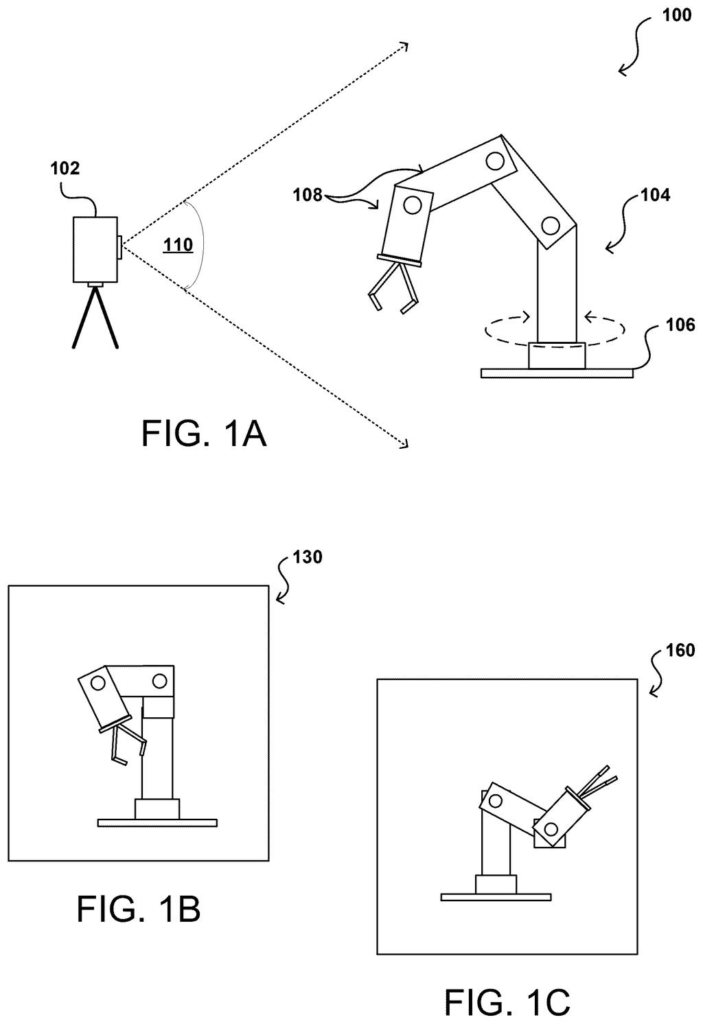
How Nvidia's single-photo pose trick works for robots
Figuring out the exact position and orientation of an object in three dimensions normally requires a lot of data: multiple cameras, depth sensors, or a sequence of frames taken from different angles. It's a tricky problem, and the extra hardware or data it demands is one reason autonomous systems are still expensive to build and run.
Nvidia's patent describes a neural network trained to answer that question from a single photograph. You give it one image of an object, and the system estimates how that object is positioned and tilted in three-dimensional space, including both where it is and which way it's facing. The target is specifically autonomous objects, the kind of machines that need to understand the world around them to move through it.
The promise is simpler, cheaper perception: instead of juggling a full sensor array, a robot or self-driving system could lean on one camera and a well-trained model to understand what it's looking at.
Apparatuses, systems, and techniques are presented to determine a pose of an object. In at least one embodiment, a network is trained to predict a pose of an autonomous object based, at least in part, on only one image of the autonomous object.
Translation: New technology lets AI figure out where an object is located using just one picture.
How the network infers 3D orientation from one frame
The patent covers a neural network trained to perform pose estimation (determining the position and orientation of an object in 3D space) from a single 2D image. Most classical approaches to this problem rely on either multiple views or depth data, because a flat photo inherently throws away one dimension. The network here is trained to recover that missing dimension from learned visual cues.
The claim covers applying this to autonomous objects, meaning machines that navigate or operate independently, such as robots or vehicles. The network takes one image as input and outputs a predicted pose, encoding both the object's location relative to the camera and its rotational orientation (which direction it's pointing in three axes).
The training process is where most of the engineering work lives. A network learns to associate the appearance of an object in an image with its true 3D configuration. Done well, this lets the model generalize to objects it hasn't seen before or to new environments, which is exactly what you need for real-world deployment.
The patent is broad in scope: it doesn't specify a particular network architecture, sensor type, or scene domain, which suggests Nvidia is staking out the general principle rather than one narrow implementation.
What single-image pose reading means for autonomous machines
For robotics and autonomous vehicles, knowing where things are and how they're oriented is a core problem. Today's systems often depend on expensive sensor combinations (lidar plus multiple cameras, for example) to build a reliable picture of the world. A network that can extract reliable pose information from a single camera frame could reduce that hardware burden significantly.
This matters to your everyday life because the cost and complexity of autonomous systems is a big reason they're not yet widely deployed in warehouses, hospitals, or delivery fleets. If single-image pose estimation becomes reliable enough for production use, it lowers one of the main barriers to getting those machines out of the lab. Nvidia's track record in robotics perception patents suggests this is part of a longer-term investment in the sensing stack for autonomous systems.
Nvidia's 71st filing we've tracked since May in our self-driving sensing race builds on teaching AI to fix blind spots and testing for missed dangers.
Getting a robot to understand where it is and how it's oriented by looking at a single photo is a useful trick, and this filing describes training software to do exactly that. No new chip or sensor is required, which means the barrier to shipping is lower than it might sound.
The open questions are practical rather than exotic: how accurate is it, what kinds of objects can it recognize, and how does it behave when it sees something unfamiliar? The filing doesn't answer those, which is normal for a patent but means there's no way to judge readiness from this document alone.
The most plausible near-term home for this is Nvidia's existing robotics software lineup, where perception and positioning tools are already part of the pitch to warehouse and factory customers. Nothing here requires waiting for new hardware to exist.
There are more where this came from
We read every patent application Big Tech publishes and send you the ones worth knowing. Plain English, free, every week.
The drawings
44 drawing sheets from US 2026/0289808 A1 · click any drawing to enlarge


Want this weekly breakdown for a company we don't cover? Patentlyze Pro →
Be the first to weigh in