
Samsung Patents a Way to Give AI Chatbots a Much Longer Memory
Every AI chatbot has a limit on how much conversation it can hold in mind at once. Samsung is patenting a system that offloads older pieces of a conversation to storage and pulls them back when they become relevant again, effectively stretching that limit.
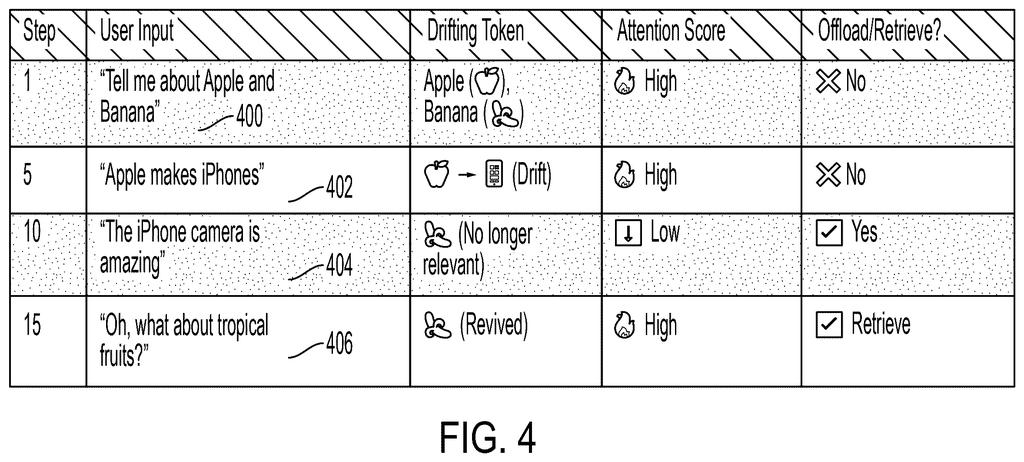
How Samsung's AI memory extension actually works
You're in a long back-and-forth with an AI assistant, and halfway through you reference something you said twenty minutes ago. The AI has already forgotten it. That blank-slate problem is one of the most frustrating limits of today's chatbots, and it's not a software bug so much as a hard architectural constraint.
Samsung's patent describes a system that monitors each chunk of text in the conversation (these chunks are called tokens) and decides how important each one still is. If a chunk seems less important and the conversation has moved on to a different topic, the system moves that chunk out of the AI's active working memory and into a separate storage area, freeing up space.
When something later in the conversation triggers a need for that stored chunk, the system pulls it back and combines it with the current context. The AI can then answer as if it never forgot in the first place. Think of it like a well-organized desk: you move papers you're done with into a drawer, but you can grab them back the moment you need them.
… detect importance of the first token being below a threshold importance; detect a semantic shift of the first token; store a first representation of the first token in the storage device based on determining the importance of the first token and further based on identifying the semantic shift; …
Translation: The system saves older conversation data to storage when it decides the information is no longer crucial right now.
How the system scores, shelves, and recalls old tokens
Every AI language model works with a context window, which is the maximum amount of text it can actively process at one time. Once a conversation exceeds that window, the oldest material gets dropped. Samsung's system tries to work around that limit without simply buying a bigger window.
The patent describes three distinct evaluation steps the system runs on each token (a token is roughly a word or word-fragment):
- Importance scoring: the system measures whether a token still carries significant weight in the conversation.
- Semantic shift detection: it checks whether the topic has meaningfully changed since that token appeared (a "semantic shift" is basically a change in subject or theme).
- Trigger detection: later, if something in the conversation signals that a stored token is relevant again, it gets pulled back from storage.
When a token scores low on importance and a topic shift has been detected, the system moves its internal representation (the numerical form the model uses internally) to a storage device rather than keeping it in active memory. This is similar to how a computer moves rarely-used files to a slower hard drive to free up fast RAM.
When the trigger fires, the stored representation is retrieved and merged back into the active context so the model can use it alongside everything it is currently processing.
A first representation of the first token is retrieved from the storage device based on detecting the trigger. The first representation of the first token is combined with one or more second representations of one or more second tokens associated with an active context.
Translation: When a relevant cue appears later, the chatbot pulls the saved memory back out and mixes it with the current conversation.
What longer AI memory means for your conversations
The context-window limit is a real pain point for anyone who uses AI assistants for long research sessions, extended writing projects, or multi-step technical work. A system that intelligently parks and retrieves old context could make those sessions feel far more coherent, without requiring the massive hardware upgrades that simply expanding a context window demands.
Samsung has been filing around on-device AI efficiency since at least 2024, and this patent fits that pattern. The approach is also device-agnostic in the claim text, which means it could apply to a cloud server, a phone, or any processor-plus-storage setup. If Samsung implements this in a Galaxy AI feature, the practical payoff for users would be AI that actually remembers what you said at the start of a long conversation.
Samsung's 24th filing we've tracked since June in our AI assistants that remember you watchlist builds on earlier work like the paused-show recap patent and the VR-to-real-device memory transfer.
Claim 1 is written broadly. It does not specify what model architecture is involved, what hardware the storage device is, or how importance and semantic shift are actually measured. That breadth is a double-edged thing: it gives Samsung wide coverage if the claim survives, but it also makes the claim a target for prior-art challenges, since vague claims invite the patent office to look harder for earlier work doing something similar.
The practical scope of what this claim would cover, if granted, is genuinely wide. Any system that scores token importance, detects topic changes, stores low-importance tokens, and retrieves them on a trigger would fall inside it. That description fits a meaningful slice of ongoing research into memory-augmented language models.
Whether Samsung can hold that broad a claim through examination is the real question. The underlying idea, moving low-priority context to secondary storage and fetching it back, is intuitive enough that the novelty will live or die on the specific combination of importance scoring plus semantic shift detection as a joint eviction condition. That two-factor gate is the most defensible part of the filing.
There are more where this came from
We read every patent application Big Tech publishes and send you the ones worth knowing. Plain English, free, every week.
The drawings
8 drawing sheets from US 2026/0300626 A1 · click any drawing to enlarge


Want this weekly breakdown for a company we don't cover? Patentlyze Pro →
Be the first to weigh in