
Samsung Patents a System That Fixes Screen Distortion Before the Image Reaches Your Eyes
Before an image ever reaches your eyes, Samsung wants a device to rearrange every pixel so that lens or screen distortion cancels out perfectly. The trick is a pre-built lookup table that does it fast enough to keep up with live video.
What Samsung's image pre-warping lookup table actually does
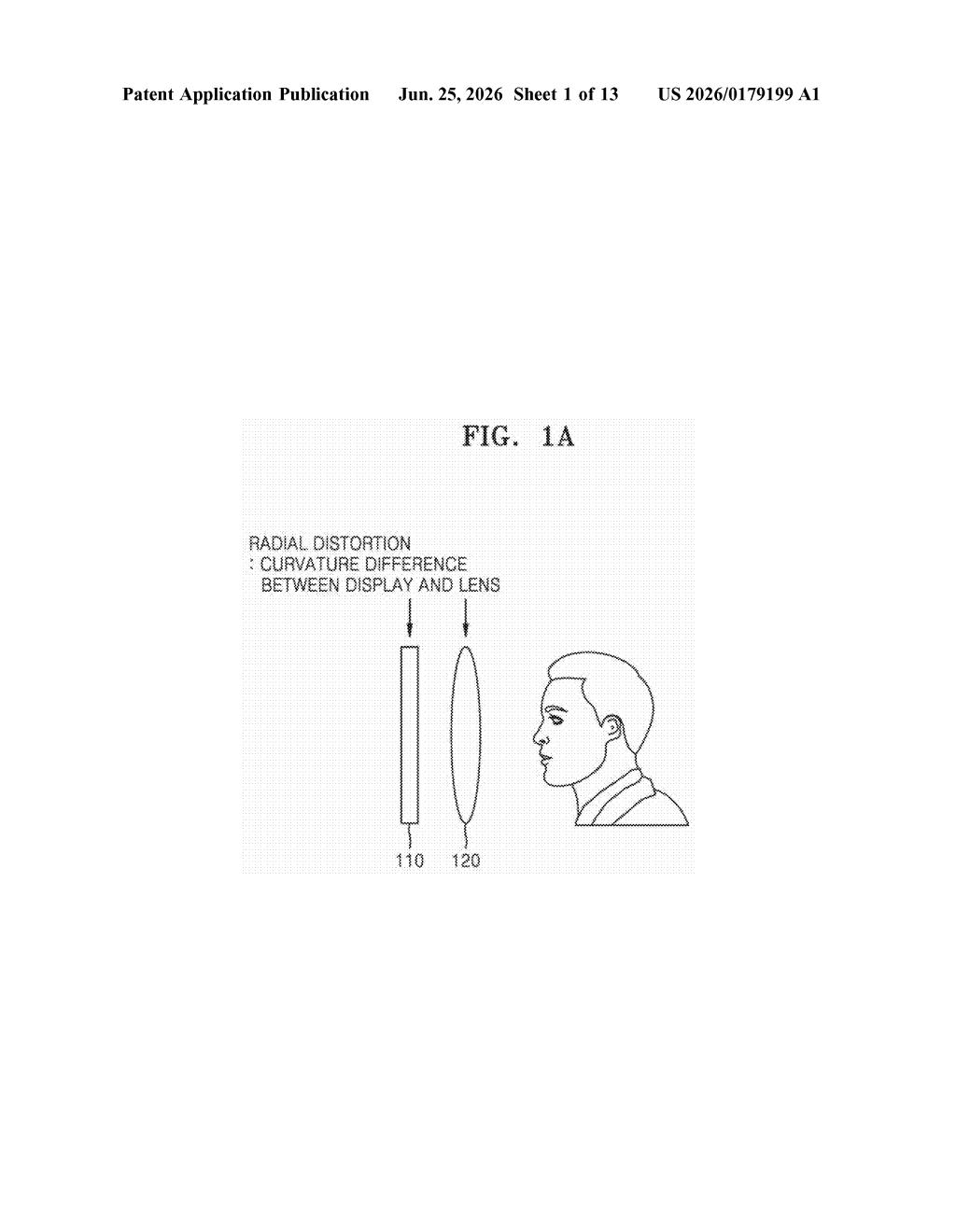
Imagine putting on a VR headset and noticing the edges of the screen look stretched or bent. That warping comes from the lens sitting between your eye and the display. One fix is to pre-warp the image in the opposite direction before it's shown, so the lens distortion and the pre-warp cancel each other out and you see something straight.
Samsung's patent describes a method for doing exactly that. The device uses a pre-built table, a kind of cheat-sheet that says "pixel at position A should actually go to position B," and applies it to every pixel in the image before the image is sent to the screen. Because the table is already computed, the device doesn't have to run heavy math on every single frame in real time.
The table itself is tuned to a scaling parameter, meaning it can adapt to different output sizes or zoom levels. So whether you're watching something full-screen or in a cropped window, the correction stays accurate.
How the lookup table remaps pixels before output
The patent describes a four-step pipeline running on an electronic device:
- Identify the target image and its pixels.
- Look up a second pixel coordinate for each original pixel using a pre-generated lookup table (LUT). The LUT was built ahead of time using a scaling parameter tied to the intended output size.
- Generate a predistorted image by placing each original pixel's color data at the remapped coordinate.
- Output that predistorted image to the display or lens system, where the physical distortion then cancels the pre-distortion.
The core efficiency gain is the lookup table approach. Instead of computing a distortion-correction formula for every pixel on every frame (expensive), the device pre-computes the pixel mapping once and stores it. At render time, it just looks up the destination coordinate, which is a much cheaper operation.
The scaling parameter is what keeps the table flexible. If the output resolution or zoom level changes, a new table tuned to the new scaling factor is selected or generated, so the correction doesn't drift.
What this means for Samsung's AR glasses and curved screens
This technique is particularly relevant for AR and VR headsets, where lenses reliably introduce barrel or pincushion distortion. Getting that correction right without burning through compute budget is a real engineering constraint, especially for lightweight wearables with limited chips.
Samsung has been building out its Galaxy XR ecosystem, and a patent like this fits squarely into display pipeline work for that hardware. It could also apply to projectors or curved-screen TVs where the output geometry doesn't match a flat grid. The practical payoff for you as a user is simply a sharper, undistorted picture with less processing overhead draining your battery.
This is foundational display-pipeline plumbing, not a flashy feature. Lookup-table-based predistortion is a well-understood technique in computer graphics and lens calibration. Samsung filing a patent on a specific implementation tied to a scaling parameter is more about locking in IP around their particular approach than introducing something entirely new to the field. Worth noting as a signal of serious XR display work, but don't expect a press release about it.
There are more where this came from
We read every patent application Big Tech publishes and send you the ones worth knowing. Plain English, free, every week.
Want this weekly breakdown for a company we don't cover? Patentlyze Pro →