
Qualcomm Patents an Encrypted RFID Tag That Finds Lost Items Without Exposing Your Identity
Qualcomm has filed a patent for an RFID-based lost-and-found system that lets you locate a missing item through a crowd of strangers' readers — without ever revealing who owns it.
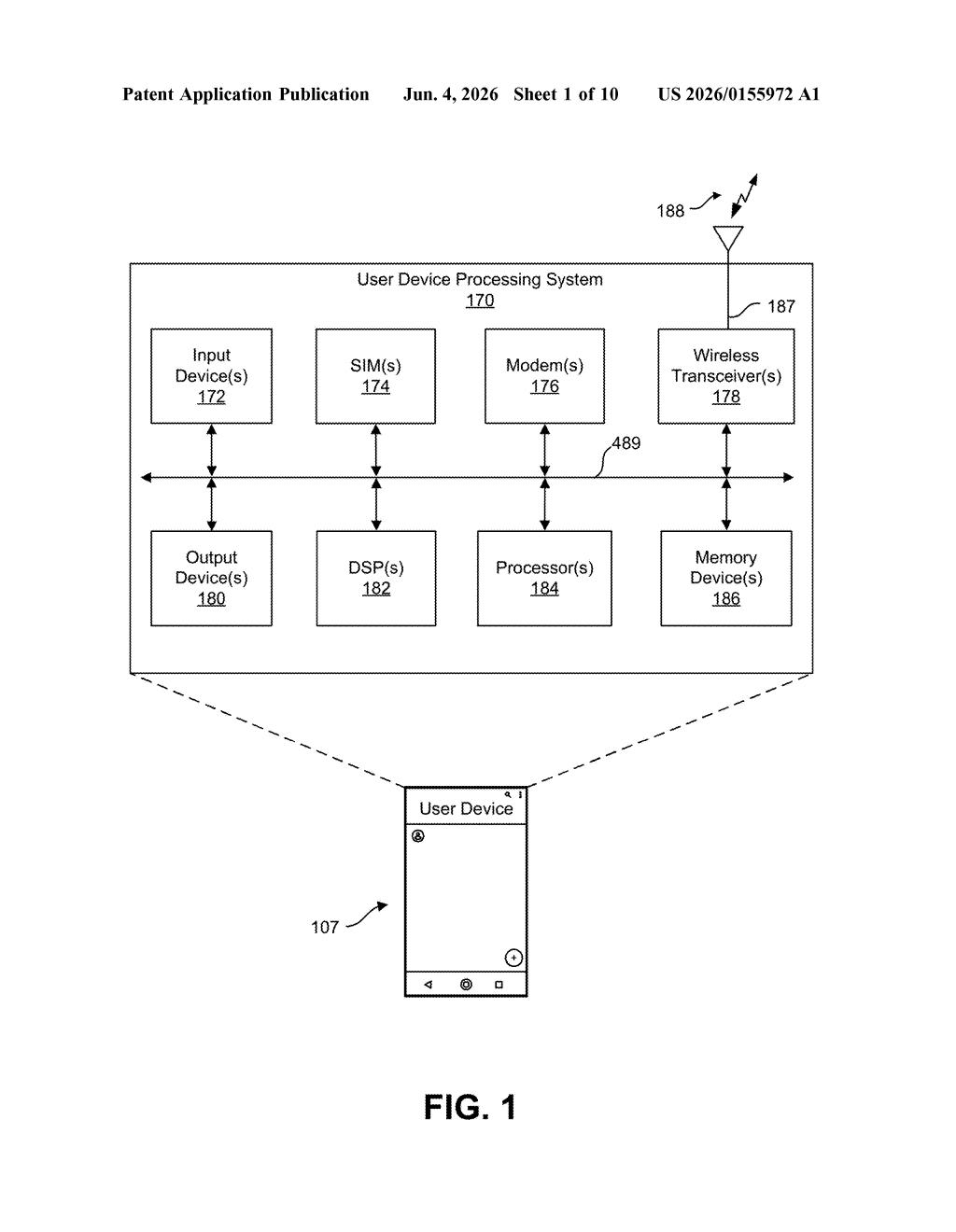
How Qualcomm's private RFID tracking actually works
Imagine you lose your bag at an airport. There are RFID readers everywhere — at gates, shops, baggage carousels — but you have no way to use them to find your stuff, and even if you could, you wouldn't want every reader broadcasting your name and address to anyone within range.
Qualcomm's patent describes a system that solves both problems at once. Your RFID tag (think a tiny chip sewn into your luggage tag) generates a scrambled, encrypted code every time it's pinged by a reader. That code means nothing to the reader or the people running it — but a server can log it. When you report your item lost, only you can decrypt the server's location data using your private key, because only you have the secret that generated the code in the first place.
The result is a lost-and-found network built on top of everyday RFID infrastructure — retail scanners, logistics checkpoints, transit gates — without requiring any of those operators to know whose belongings they're seeing. Your privacy stays intact, and you still get your bag back.
How the cryptographic backscatter system hides your identity
The system works in two halves: the passive RFID tag (which has no battery and draws power from incoming radio signals) and a network-side registration and lookup service.
On the tag side, a small processing system applies a cryptographic algorithm (a mathematical scrambling function) to identifying information using a secret key stored on the chip. When a reader sends an energizing radio signal — which is how passive RFID tags get powered up — the tag responds with a backscatter signal (it reflects the reader's own signal back, modulated with data) containing this encrypted, private identifier. Crucially, the output looks random to anyone without the key.
On the network side:
- An owner's device registers the encrypted identifier and a corresponding public key with a server.
- When a reader anywhere in the world picks up the tag, the server logs the reader's location — but encrypts that location using the public key before storing it.
- Only the item's owner, holding the matching secret key, can decrypt the location record and find out where their item was last seen.
This design means the server itself never stores plaintext locations tied to identifiable owners — a meaningful step up from simpler tracking tags.
What this means for AirTag-style privacy in the RFID world
AirTags and similar Bluetooth trackers already do something like this for Apple's ecosystem, but RFID infrastructure is vastly more widespread — it's in every retail store, shipping warehouse, and airport security lane on the planet. A privacy-preserving lost-and-found layer built on top of that existing hardware could work anywhere those readers are deployed, without requiring a dedicated finder network of phones.
For you as a consumer, this would mean a passive tag (potentially dirt-cheap, no battery needed) could piggyback on commercial RFID deployments you never think about. For Qualcomm, this positions the company to offer chipsets and server-side infrastructure for a privacy-safe item-tracking standard — particularly relevant as regulators in the EU and US push harder on the data-exposure risks of existing tracking devices.
This is a genuinely well-considered approach to a real privacy gap in item tracking. The insight — use the already-pervasive RFID reader network as a passive location oracle, but encrypt everything so no intermediate party learns anything useful — is elegant. Whether it ships as a consumer product depends heavily on ecosystem buy-in from the retailers and logistics operators who own those readers, which is a much harder problem than the cryptography.
There are more where this came from
We read every patent application Big Tech publishes and send you the ones worth knowing. Plain English, free, every week.
Want this weekly breakdown for a company we don't cover? Patentlyze Pro →