
Samsung Patents a Fix for Probability Drift at Video Tile Boundaries
When a video decoder chops a frame into processing tiles, the math it uses to decode the edges of each tile can drift out of sync — and Samsung thinks it has a fix worth patenting.
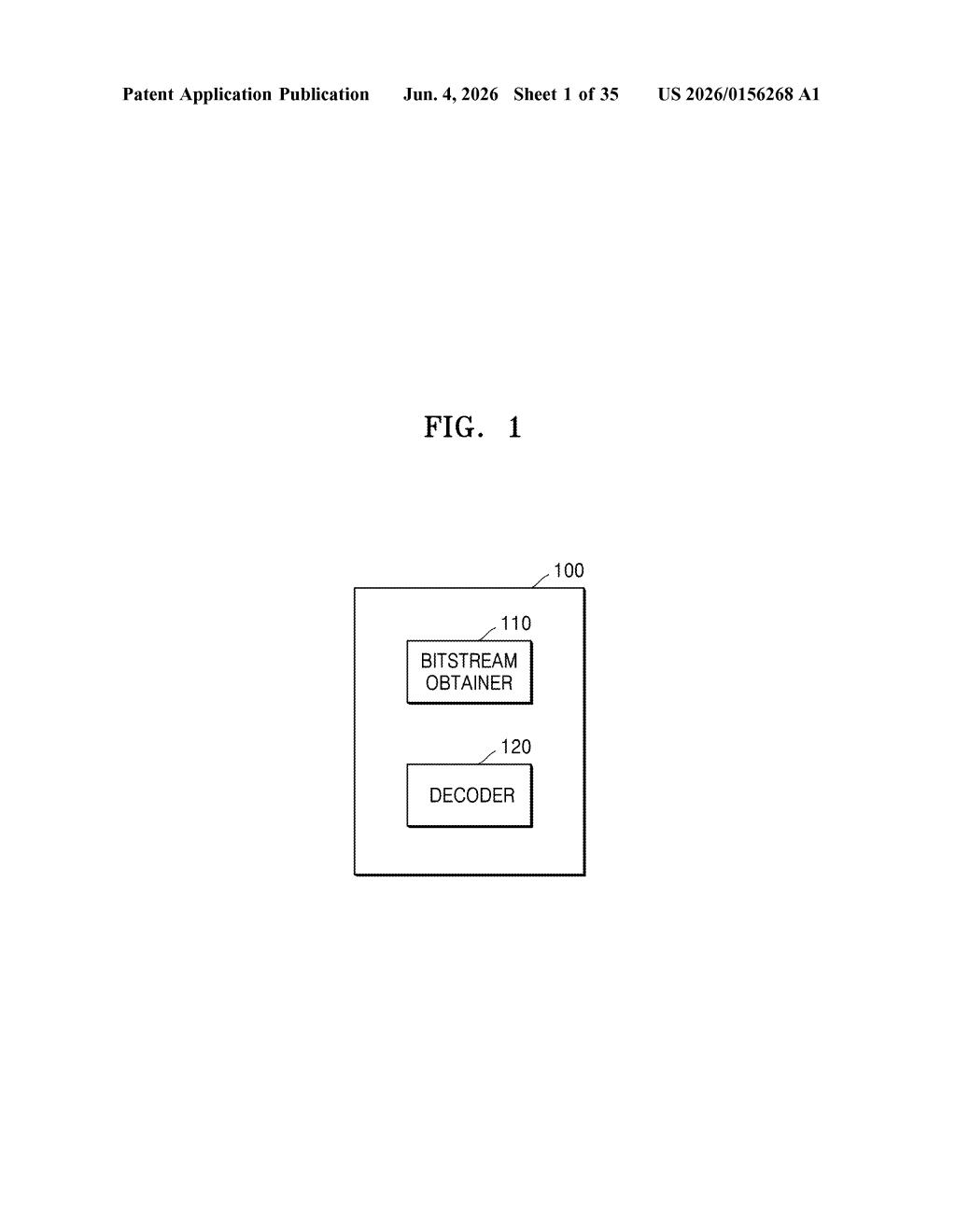
What Samsung's video tile boundary fix actually does
Imagine a jigsaw puzzle where each piece is decoded by a different worker. To decode their piece efficiently, each worker uses a running guess about what kind of data they'll see next. The problem is that when a worker starts a new piece, their guess is based on incomplete information — they missed the data that was right at the edge of the previous piece.
Samsung's patent tackles exactly that blind spot in video compression. When your phone, TV, or streaming device decodes a compressed video, it uses a math technique called entropy decoding to turn compressed bits back into image data. That process relies on continuously updated probability guesses. At the borders between processing regions — called Largest Coding Units — those guesses can go stale.
The fix: save a small snapshot of the edge data from the previous tile, then use it to correct the probabilities before decoding the next tile begins. The patent also caps how much snapshot data can be stored, keeping memory use in check.
How the bin-storing update corrects the probability model
The patent describes an improvement to CABAC (Context-Adaptive Binary Arithmetic Coding — the entropy coding stage used in modern codecs like HEVC and VVC). CABAC works by maintaining a probability model for each "context" — a category of syntax data — and updating that model after each decoded binary symbol (called a bin).
The core problem is parallelism. Modern decoders split a frame into independent rectangular regions called Largest Coding Units (LCUs), also known as CTUs, so multiple cores can work simultaneously. But because each LCU resets its probability model, the coding units sitting at the right and bottom edges of one LCU — which would naturally inform the probabilities for the neighboring LCU — never get to contribute. That's wasted context.
Samsung's method:
- After decoding a first LCU, store the bins (decoded binary symbols) from coding units along its right and lower boundaries, keyed by their context.
- When starting a new LCU, initialize probabilities from a second already-decoded LCU, then apply the stored bins to update those probabilities before the current LCU's decoding begins.
- Enforce hard caps: the total bins stored across all contexts must not exceed a first threshold, and bins stored per individual context must not exceed a second threshold — preventing memory bloat.
The result is a probability model that better reflects the true local statistics of the video signal at each tile boundary.
What this means for next-gen video codec efficiency
Entropy coding efficiency is a multiplier — a more accurate probability model means fewer bits are needed to represent the same image quality, or equivalently, better image quality at the same bitrate. This matters most in parallel-decoded, tile-based video, which is exactly how high-resolution and low-latency streams are handled in VVC (Versatile Video Coding) and similar next-gen codecs.
For you as a viewer, the downstream effect would be marginally sharper video at the same streaming bandwidth, or the same quality at a lower data cost. For Samsung, whose semiconductor division supplies video codec silicon to a wide range of devices, even small efficiency gains in the entropy stage can translate to real power and bandwidth savings at scale. The bounded memory caps in the claim also suggest this is designed for practical hardware implementation, not just a theoretical improvement.
This is a narrow but technically legitimate improvement to a well-understood bottleneck in parallel video decoding. It won't make headlines on its own, but codec patents like this accumulate into real royalty leverage in standards bodies — and Samsung is one of the most active filers in the HEVC/VVC space. Worth tracking if you follow video codec IP.
There are more where this came from
We read every patent application Big Tech publishes and send you the ones worth knowing. Plain English, free, every week.
Want this weekly breakdown for a company we don't cover? Patentlyze Pro →